Thirty-nine days on a Fijian beach will strip a human being down to bone, salt, and paranoia.
I have spent years watching people starve on television, and if you look closely at the eyes of a finalist on night thirty-nine, you do not see triumph. You see a specific kind of hollowness. Their skin is blistered from tropical sun and sand fleas. Their ribs press against mud-caked cotton like the frame of a battered tent. For nearly six weeks, they have traded their integrity for a cup of lukewarm rice, lied to people they grew to love, and dismantled their own moral compasses piece by piece—all for a shot at a single, brutal binary outcome. One person walks away with a million dollars. Everyone else walks away with a slightly elevated bank account, a shattered nervous system, and the lifelong ache of wondering what they did wrong. Meanwhile, you can explore other events here: When the Harmony Breaks and Two Voices Must Sing for Three.
Television loves a binary ending. Winners and losers. Conquerors and cautionary tales. That ruthless arithmetic is the engine that has kept Survivor running for over two decades, turning ordinary teachers, bartenders, and lawyers into desperate Machiavellian tacticians.
Then, on a live stage in Los Angeles in December 2016, a woman wearing an oversized black-and-white wig with a giant bow walked out from the studio audience and broke the math entirely. To see the complete picture, check out the excellent report by Variety.
The Night the Stage Lights Changed
Nobody in the CBS studio knew she was coming. Not the producers, not the camera operators, and certainly not Tai Trang, a gentle, soft-spoken gardener from San Francisco who had just finished third on Survivor: Kaôh Rōng.
Tai had spent his season doing something practically illegal in modern reality television. He had cried over a severed tree branch. He had rescued a baby chicken named Mark from the cooking pot and kept him alive until the final tribal council. He had played with a raw, unguarded tenderness that made him terrible at cutthroat strategy and impossible not to love. When the jury votes were read, Tai got zero. He sat on the bleachers under the harsh studio lights, smiling politely while someone else claimed the check, absorbing the quiet, familiar humiliation of being the beloved runner-up who goes home empty-handed.
Then Jeff Probst looked toward the crowd.
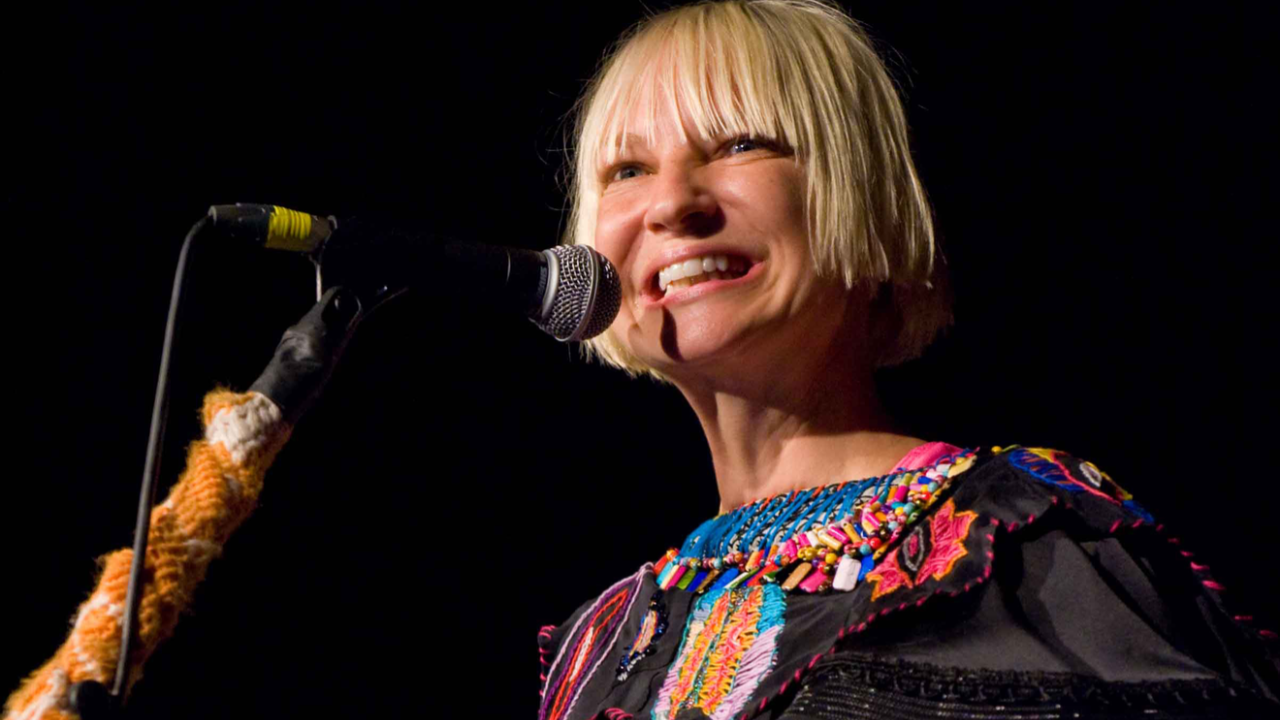
Sia—the fiercely private Australian singer-songwriter who famously hides her face behind architectural wigs to avoid the corrosive glare of celebrity—stepped onto the stage. She was trembling slightly, holding a microphone, dressed in a sharp black suit. She told Tai that his kindness, his refusal to abandon his humanity when every incentive in the game screamed at him to be ruthless, had moved her to tears from her living room couch.
She handed him $50,000 for himself. Then she handed him another $50,000 for an animal charity of his choice.
One hundred thousand dollars. Out of thin air. No network sponsorship, no corporate tie-in, no tax-deductible publicity stunt engineered by a network marketing department. Just a woman sitting at home on her sofa, watching a stranger refuse to let a chicken die, deciding on a whim that decency deserved a payout.
It felt like a glitch in the broadcast. Reality television is built on manufactured scarcity; the entire premise relies on the idea that there is only one pie, and you must stab your neighbor in the back to get a slice. By walking onto that stage with her personal checkbook, Sia introduced an invisible variable that no contestant could strategize against. She created what fans and players quickly began calling the Sia Prize—an unofficial, unpredictable shadow-game running parallel to the actual broadcast.
The Economics of Hunger and Grace
To understand why this mattered so much to the people standing on those beaches, you have to understand the hidden financial reality of being a reality television contestant.
Viewers at home see the million-dollar grand prize and assume everyone on the screen is getting rich. They aren't. While the winner takes home seven figures—roughly $600,000 after federal and state taxes take their cut—the players voted out early receive modest stipends that barely cover the rent they missed while starving in the South Pacific. Even making it to the finale does not guarantee financial security; a third-place finisher might walk away with $85,000 before taxes, a sum that vanishes quickly once you factor in lost wages, medical recovery from tropical parasites, and the psychological toll of returning to a normal desk job after being broadcast to ten million strangers.
Consider a hypothetical contestant—let's call her Maya. Maya is a public school teacher from Ohio who takes an unpaid leave of absence to play the game. She survives thirty-two days on coconuts and rainwater. She loses twenty pounds. On day thirty-three, she is blindsided by her closest ally because she was deemed "too likable" to sit next to at the end. She flies home, steps back into a fluorescent-lit classroom with chipped linoleum floors, and spends the next six months waking up in a cold sweat whenever she hears the rustle of dry leaves. She played with honor, she inspired thousands of kids watching at home, and her reward for finishing fifth is just enough money to pay off an old Honda Civic and a lingering dental bill.
That is the cold, transactional truth of the industry. Networks monetize human vulnerability, sell the commercials, and hand out one grand prize to justify the spectacle.
Sia looked at that system and quietly subverted it. Over the course of nearly eight years, from Kaôh Rōng in 2016 until she officially retired the tradition in May 2024, Sia gave away over $1 million of her own personal money to Survivor players.
Not a single dollar went to an actual winner.
Let that sink in. Across fourteen seasons, she bypassed the champions entirely. She sought out the misfits, the underdogs, the quiet caretakers, and the people whose stories resonated with her own messy, deeply human struggles with addiction, grief, and survival.
A Pattern of Unlikely Heroes
Look at the roster of people who received that sudden phone call or surprise stage visit, and a clear emotional blueprint emerges. Sia wasn't rewarding dominant gameplay. She was rewarding resilience.
Take Davie Rickenbacker from David vs. Goliath, a social media manager from Atlanta who played with infectious joy and relentless optimism despite being targeted from the very first week, walking away with $14,000 from Sia after finishing sixth. Or Rick Devens, the morning news anchor from Macon, Georgia, whose sheer refusal to quit during Edge of Extinction earned him $100,000 after he lost a heart-stopping fire-making challenge just one step shy of the final three.
Then there was Carolyn Wiger from Survivor 44.
If you watched Carolyn on television, you saw someone who looked completely out of place in a genre obsessed with polished, telegenic athletes. A drug counselor from Minnesota in recovery, Carolyn wore her emotions like neon paint. She screamed when frustrated, wept openly when overwhelmed, and made faces that became instant internet memes. The other players routinely dismissed her as erratic and unstrategic. They talked over her at camp. They treated her like a mascot rather than a threat.
Yet beneath the chaotic exterior was a sharp, fiercely loyal woman who had clawed her way back from the brink of addiction in real life—a battle that made starving on an island look like a minor inconvenience. When she reached the final three, the jury still couldn't see past her unconventional demeanor. She received zero votes.
Days later, Sia called her. She gave Carolyn $100,000.
"I felt so unseen out there," Carolyn said afterward, her voice cracking with the kind of raw disbelief you cannot fake for a camera. For someone who had spent years feeling misunderstood in recovery rooms and strategy circles alike, that check wasn't just money. It was validation from a stranger who saw the exact thing the jury had missed.
The list kept growing. Jamal Shipman received $15,000 after using his time on Island of the Idols to have painful, deeply nuanced conversations about race and privilege. Elaine Stott, a factory worker from Kentucky with a booming laugh and a heart the size of a pickup truck, got $100,000. Drea Wheeler received $100,000. Jesse Lopez, a political science PhD who pulled off one of the greatest blindsides in the show's history to provide for his family—only to lose at fire-making in fourth place—received $100,000 so he could finally buy a house for his kids. Katurah Topps, a civil rights attorney who survived a harrowing upbringing in a cult before making it to the final four of Survivor 45, walked away with $100,000—the final major gift before Sia stepped back from the tradition.
Why a Pop Star Became a Patron Saint of Losers
To understand why a multi-platinum recording artist would quietly wire six-figure sums to strangers from a reality show, you have to look at Sia's own relationship with visibility and survival.
Before she became a global hitmaker with songs like "Chandelier" and "Titanium," Sia Furler spent years drowning in the wreckage of sudden loss, chronic pain, and severe addiction. In 1997, her first love, Dan Pontifex, was killed by a taxi in London just days before she was supposed to fly out to meet him. She spent the next decade spiraling through alcohol, painkillers, and suicidal ideation, culminating in a 2010 hotel room breakdown where she wrote a suicide note before a friend happened to call and pull her back from the edge.
When she finally rebuilt her life and achieved massive commercial success in her late thirties, she famously refused to show her face in public. She wore wigs that covered her eyes. She performed facing away from the audience. She knew firsthand how toxic the spotlight could be, and she knew what it felt like to fight a private war while the rest of the world judged you from the outside.
Watching Survivor from her couch wasn't passive entertainment for her. It was a mirror.
Think of the Sia Prize like a lighthouse built on the wrong side of the harbor—not to guide the massive cargo ships safely into port, because they already have tugboats and radar, but to illuminate the small wooden fishing boats getting battered against the rocks just outside the breakwater. She had the wealth, she had the privacy, and she recognized the specific kind of courage it takes to go onto national television and refuse to become a monster just to win a game.
There was never a formal application process. There were no criteria published in a rulebook. Some seasons she gave away $100,000 to a single player; other seasons she split $200,000 among two or three contestants whose humanity struck a nerve. Sometimes she showed up in person; during the pandemic and the show's "New Era," when live reunion shows were replaced by on-island aftershows in Fiji, she simply reached out through producers or contacted players directly on social media, wiring life-changing money without cameras rolling or press releases waiting in the wings.
The Invisible Ripple Effect on the Beach
By the late 2010s, something subtle began shifting in the psychology of the players actually competing in Fiji.
Previously, if you realized on day twenty-eight that you had zero chance of winning a jury vote, your only logical move was to turn villain—to blow up camp, hoard food, or play kingmaker out of spite. You had nothing left to lose.
Suddenly, there was a ghost in the machine. Players started joking on the beach about "playing for the Sia money," half-teasing and half-serious. While nobody could manufacture the kind of genuine vulnerability that caught her eye—Sia had a radar for authenticity sharper than any casting director—the mere existence of her generosity altered the emotional atmosphere of the show. It reminded contestants and viewers alike that winning the title of Sole Survivor was not the only metric of worth.
Producers initially didn't know what to make of it. Network executives spend millions carefully calibrating prize structures, legal clearances, and broadcast contracts. Having an A-list pop star spontaneously hand out an extra hundred grand during a live commercial break was an unprecedented logistical curveball. Yet Jeff Probst embraced it wholeheartedly, recognizing that Sia had tapped into the exact human pulse that kept the franchise alive after forty-plus seasons.
When Jeff Probst announced in May 2024 that Sia had decided to bring the eight-year run to a close—having officially crossed the $1 million threshold in personal gifts—the reaction across the Survivor community felt less like the end of a promotional gimmick and more like the quiet departure of a beloved benefactor.
No corporate sponsor stepped in to replace her. You cannot buy that kind of grace with a branded segment or a logo slapped onto a reward challenge. The magic of the Sia Prize was precisely that it owed nothing to television, ratings, or commerce. It existed purely in the space between one human being watching from a dark living room and another human being shivering in the rain thousands of miles away.
Somewhere in a modest house in Minnesota, or a newly purchased family home in North Carolina, or a sunlit garden in San Francisco, there are people living entirely different lives today because a woman who hid her own face refused to look away from theirs.



