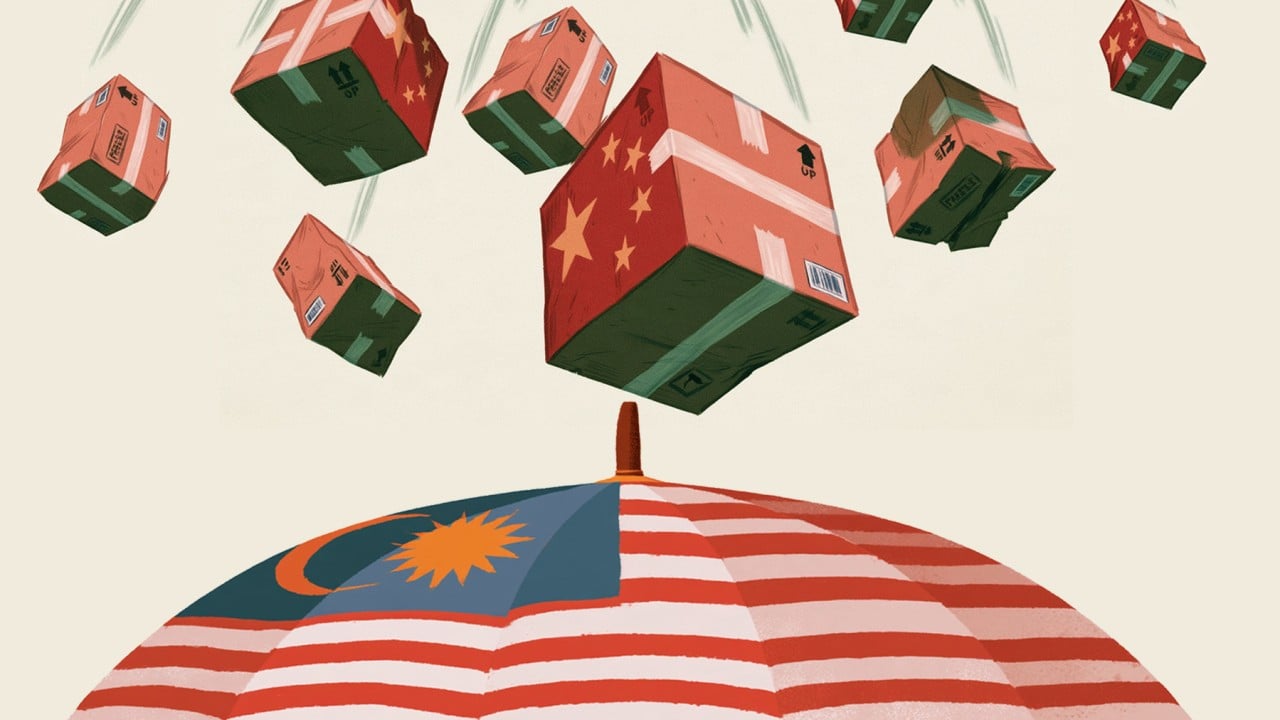
Everybody loves a clean break. When geopolitical tensions flare up, policy makers in Manila look at global supply chains and decide they want out of Beijing's gravitational pull. The strategy sounds incredible on paper. Align closely with Washington, court Western and Japanese capital, and turn the archipelago into a premier manufacturing hub that completely sidesteps Chinese industrial dominance.
Reality is rarely that neat. Pushing a heavily engineered, alternative supply chain strategy without the foundational architecture to back it up creates massive vulnerabilities. It is an expensive gamble that could leave the Philippine economy exposed on multiple fronts. For a different look, check out: this related article.
The Infrastructure Reality Check
You cannot build advanced technology and high-end assembly lines with pure optimism. Manufacturing requires immense amounts of reliable, cheap power, deep-water ports, and logistics networks that do not buckle under regular strain.
Energy costs in the Philippines remain among the highest in Southeast Asia. Industrial power prices frequently eat into the razor-thin margins that attract foreign assembly plants in the first place. When international conglomerates weigh where to drop billions of dollars for semiconductor packaging or electronics fabrication, power reliability is a dealbreaker. Similar analysis on this matter has been provided by Reuters Business.
Promises of upcoming infrastructure corridors sound nice during press conferences. But execution delays and lingering inefficiencies mean that factories opening today often face severe logistical bottlenecks. Without lower baseline operational costs, investors will hesitate to anchor their most critical production lines locally, no matter how much diplomatic pressure Washington applies.
The Geopolitical Tightrope
Tying industrial policy directly to great-power competition carries a steep price tag. By branding national economic strategies around a deliberate exclusion of China, the country invites direct economic retaliation and diplomatic friction from its largest regional trading neighbor.
Trade isn't a faucet you can turn off and on without spilling water everywhere. Disengaging from established procurement networks means local small and medium enterprises lose access to affordable raw materials and components that China supplies cheaply and efficiently. When alternative inputs cost significantly more, domestic producers struggle to compete globally.
Maritime disputes in the South China Sea already create a volatile security backdrop. Adding aggressive industrial decoupling to the mix turns commercial zones into geopolitical flashpoints. Any sudden flare-up in disputed waters risks immediately terrifying foreign investors, freezing capital flows, and stranding trade routes.
Workforce Realities and Value Chains
For decades, the country has excelled at certain niches like business process outsourcing and basic semiconductor assembly, testing, and packaging. Moving up the value chain into advanced technology manufacturing requires a massive technical workforce overhaul.
Technical education programs often lag behind fast-moving industrial shifts. Engineering and specialized vocational training pipelines do not scale overnight. When multi-national firms arrive looking for thousands of specialized technicians and advanced data engineers, they frequently encounter local talent shortages. Companies end up having to import expensive foreign expertise just to keep complex plants running, eroding the local cost advantage.
Rushing into high-tech initiatives like the US-backed technology supply chain frameworks without the local technical depth risks turning the country into a glorified assembly floor rather than a true innovation hub.
Fixing these structural gaps requires ruthless prioritization. Policymakers need to stop chasing glamorous geopolitical headlines and focus heavily on lowering power costs, streamlining local bureaucracy, and scaling actual technical education. Until those baseline issues are solved, betting the house on an aggressive supply chain pivot is less of a masterstroke and more of a high-stakes roll of the dice.