Every pundit in Tel Aviv and Washington is celebrating the Israeli opposition’s latest maneuver like a checkmate. They are wrong. Rallying behind former IDF Chief of Staff Gadi Eisenkot to lead a post-Netanyahu coalition is not a stroke of political genius—it is the exact same tactical error that has kept Benjamin Netanyahu in power for over a decade.
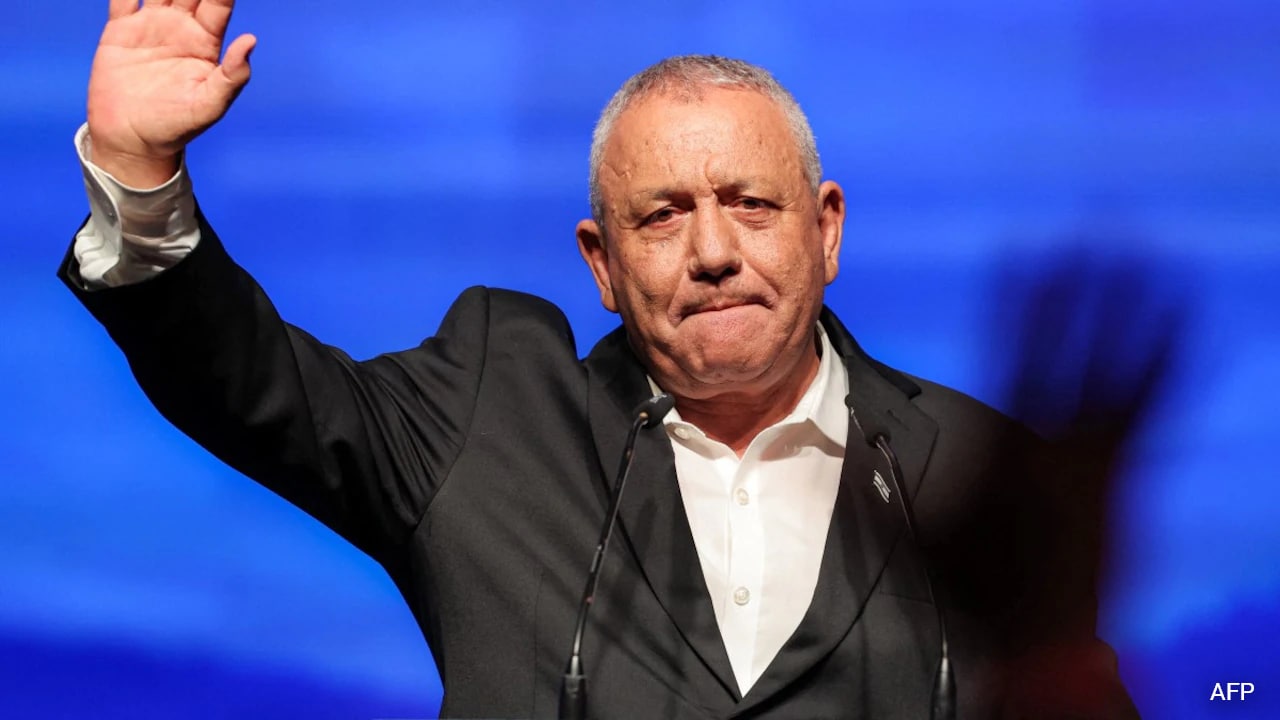
The lazy consensus goes like this: Israeli voters are exhausted by chaos, terrified of security failures, and desperate for an adult in the room. Enter Eisenkot. He is stoic, unimpeachable, a bereaved father who paid the highest possible price in Gaza, and a career military man with zero ideological baggage. On paper, he is the ultimate consensus candidate.
In reality, he is a political phantom.
By choosing a figure defined entirely by what he is not—not corrupt, not polarizing, not Netanyahu—the opposition has walked straight into a structural trap. You cannot beat a populist movement built on fierce ideological grievance with a technocratic placeholder.
The "Anyone But Bibi" Trap Is a Mathematical Dead End
I have spent twenty years analyzing parliamentary coalitions across the Mediterranean and Europe, and I have watched opposition blocs burn millions in campaign capital making this exact mistake. When a fragmented opposition unites solely around removing an incumbent, they mistake arithmetic for alignment.
Look at the mechanics of the Knesset. Israel uses a pure proportional representation system with a 3.25% electoral threshold. To form a government, you need 61 seats out of 120.
When the opposition coalesces around a generic centrist general like Eisenkot, they do not expand the pie; they just shuffle the slices. Votes move from Yair Lapid’s Yesh Atid or Benny Gantz’s National Unity into the new Eisenkot column. Meanwhile, the structural bloc required to reach 61 seats remains fundamentally broken.
To get to 61 without Netanyahu’s Likud and his ultra-Orthodox allies, an Eisenkot-led coalition has to bridge an impossible chasm:
- The secular right-wingers (like Avigdor Lieberman’s Yisrael Beiteinu) who demand aggressive military posture and zero concessions on Palestinian statehood.
- The liberal center-left (like Yair Golan’s Democrats) who view the judicial overhaul and West Bank settlements as existential threats to democracy.
- The Arab parties (Ra'am or Hadash-Ta'al), whose support—even from outside the coalition—is mathematically required if the Zionist opposition falls short of 61 seats on its own.
Imagine a scenario where Eisenkot wins a plurality of seats tomorrow. On day one of coalition negotiations, Avigdor Lieberman demands a hardline annexationist policy in the Jordan Valley, while Mansour Abbas demands massive civil budgets and a freeze on settlement expansion. Eisenkot’s famed "consensus" evaporates before the ink on the presidential mandate is dry. We saw this exact movie in 2021 with the Bennett-Lapid "change government." It collapsed in twelve months because a shared hatred of one man is not a governing platform.
Why Voters Always Choose the Original Over the Imitation
There is a well-documented phenomenon in political science—championed by researchers like Cas Mudde in his work on populism—that mainstream parties fail when they try to defeat right-wing populists by mimicking their aesthetic without offering their conviction.
For years, the Israeli center-left has operated under a delusion: if they just put a tough-looking general at the top of the ticket, right-wing voters will feel safe enough to abandon Likud. They tried it with Ehud Barak. They tried it with Shaul Mofaz. They tried it with Benny Gantz—three times.
It never works.
Soft-right voters do not vote for Benjamin Netanyahu because they think he is a nice guy or a clean administrator. They vote for him because he articulates a specific, unapologetic worldview about Jewish nationalism, skepticism of international institutions, and resistance to diplomatic pressure. When you offer those voters Gadi Eisenkot, you are offering them "Likud-Lite" without the ideological backbone. Given the choice between an authentic ideological fighter and a cautious general who speaks in bureaucratic euphemisms, the Israeli electorate picks the fighter every single time.
The General’s Fallacy
Israeli politics suffers from a chronic addiction to retired Chiefs of Staff. The assumption is that managing the Israel Defense Forces translates seamlessly to managing a fractured parliament.
The opposite is true.
Military command is hierarchical, insulated from public opinion, and obsessed with operational consensus. A Chief of Staff presents options to the cabinet; he does not have to sell a painful compromise to angry voters in Beersheba or hold together a fragile coalition during a budget crisis. Eisenkot’s greatest strength in uniform—his measured, cautious, non-ideological temperament—is a fatal liability on the campaign trail. Politics is not a staff meeting at the Kirya military headquarters. It is a street fight. Netanyahu understands that politics is about narrative dominance. Eisenkot treats it like a logistics problem.
Dismantling the "Unifier" Myth
If you search for what political analysts are asking right now, the dominant question is: Can Gadi Eisenkot unite the Israeli center-left and pull votes from Likud?
That is the wrong question entirely.
The real question is: Does the Israeli opposition actually have a coherent vision for the country’s borders, economy, and identity once Netanyahu is gone?
Right now, the answer is no. By anointing Eisenkot, party leaders are deliberately avoiding the hardest conversations in Israeli society:
- The Ultra-Orthodox (Haredi) Draft: Will a future government actually enforce conscription through financial sanctions, or will it cut a quiet backroom deal to peel Shas and United Torah Judaism away from Netanyahu? Eisenkot has criticized the exemptions, yet the math of Israeli politics constantly tempts centrist leaders to appease the Haredi parties to break Netanyahu’s bloc.
- The Day After in Gaza and the West Bank: Does the opposition believe in a viable diplomatic horizon with a reformed Palestinian Authority, or is it selling permanent military control with better public relations? Eisenkot’s pragmatism masks a massive divide inside his own camp between those who want separation and those who want indefinite security control.
- The Constitutional Crisis: Will the next government pass a formal constitution with a bill of rights to prevent another judicial overhaul, or will it leave the system broken so it can wield the same unchecked executive power?
Voters are not stupid. They can smell strategic ambiguity from miles away. When an opposition refuses to state clearly where it stands on the core existential questions facing the state, voters conclude—correctly—that the opposition only cares about taking the wheel, not where the car is going.
What the Opposition Must Do Instead
If the Israeli opposition actually wants to end the Netanyahu era rather than just temporarily pause it, they need to abandon the "general-as-savior" playbook immediately.
First, stop chasing the mythical moderate Likudnik. That voter is a statistical rounding error. Elections in polarized democracies are won through differential turnout—energizing your own base so thoroughly that they drag their neighbors to the polls, while demoralizing the opponent's base so they stay home. You do not energize a base with bland centrism. You energize them with moral clarity.
Second, build a pre-election policy contract, not a personality cult. Before a single ballot is cast, the opposition parties need to publish a binding, ten-point governing charter. Spell out the exact terms of Haredi conscription. Define the exact red lines on West Bank annexation. Commit to a specific constitutional framework. Force the electorate to vote on a concrete blueprint for the state, rather than a referendum on one man's personality.
Third, redefine strength. For twenty years, the Israeli right has held a monopoly on the definition of "security," framing it exclusively as military force and diplomatic defiance. A smart opposition would aggressively dismantle that definition. True national security means economic resilience, technological leadership, ironclad regional alliances, and internal social cohesion. Make the argument—relentlessly and unapologetically—that perpetual conflict and international isolation are existential security threats.
The Downside of Ideological Clarity
I will admit the obvious risk to this approach: clarity alienates people. If the opposition takes a hard, unambiguous stand on secular-religious relations, judicial reform, and regional diplomacy, they will immediately lose the comfortable ambiguity that lets them poll well in hypothetical matchups. Some soft-right voters will recoil. Some coalition partners will balk.
You might lose a few percentage points in the short-term polls.
But polling well six months before an election means nothing if your coalition implodes six months after it. A smaller, ideologically aligned bloc that knows why it exists will outlast a bloated, contradictory tent held together by duct tape and resentment.
The Reality Check Nobody Wants to Hear
Gadi Eisenkot is an honorable public servant who has given everything to his country. That does not make him the answer to Israel’s political paralysis.
By hiding behind a decorated general to avoid making hard ideological choices, the Israeli opposition is proving that it still doesn't understand the game it is playing. Netanyahu doesn't win because he is invincible. He wins because his opponents keep showing up to an ideological war armed with a resume.