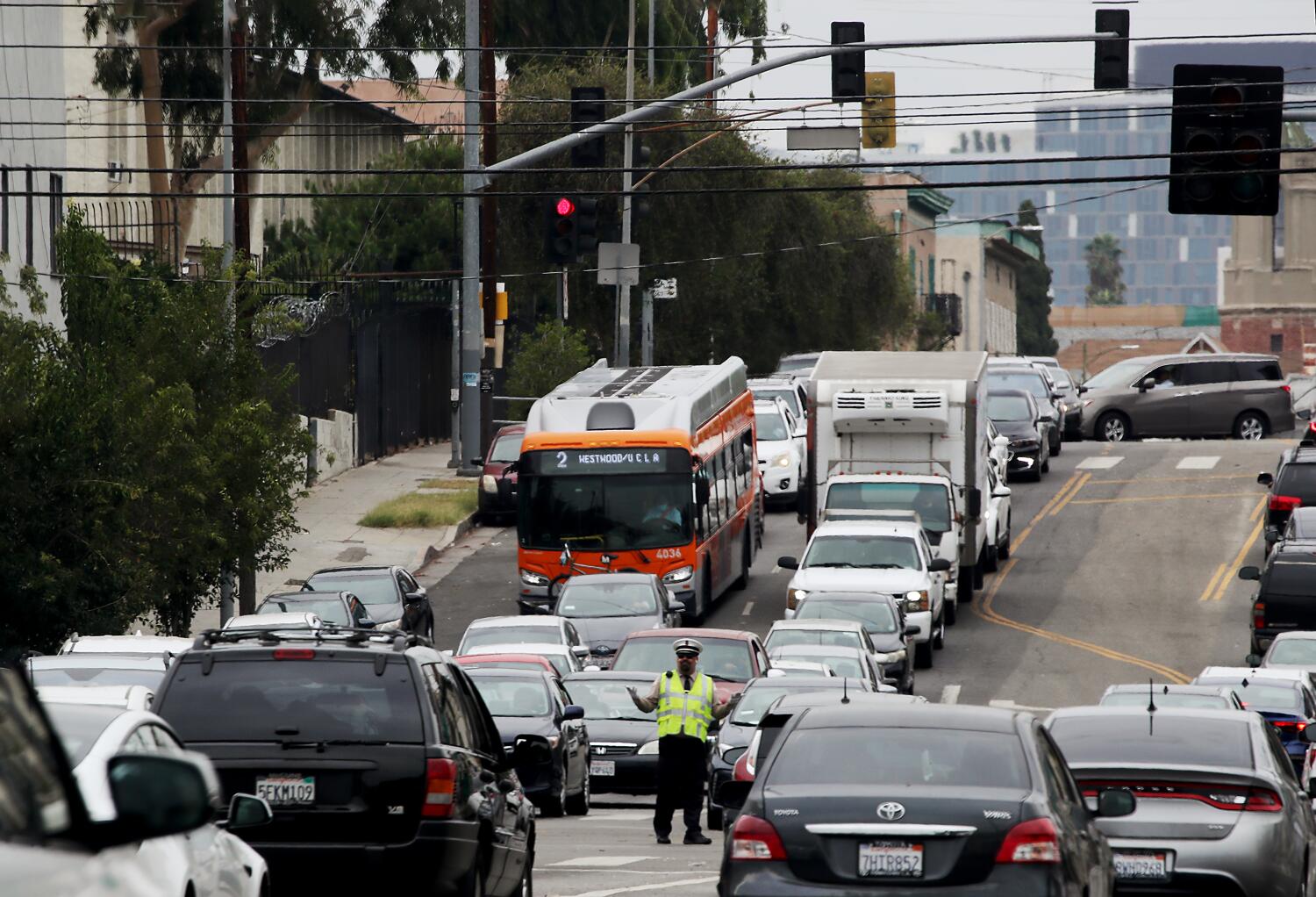
If you drive down Pico Boulevard during rush hour, you know the vibe. It’s loud, fast, and occasionally terrifying. For decades, this massive east-west artery has served as a high-speed bypass for commuters trying to avoid the gridlock of the 10 freeway. But now, a major clash is brewing over the future of the street. The city wants to install bike lanes on Pico Boulevard to curb rising traffic injuries and deaths. Meanwhile, local merchants are terrified that losing street parking will kill their businesses.
Honestly, we've seen this movie before in Los Angeles. Every time a stripe of paint threatens a parking spot, panic ensues. But this heated debate is built on a massive misunderstanding of how modern streets actually work and who spends money in local shops.
The Grim Reality of Pico Boulevard
We have to look at the numbers first. Los Angeles has a speed problem, and Pico Boulevard is one of its worst offenders. The street is officially designated as part of the city’s High Injury Network. If you aren't familiar with the term, it means Pico is among the 6% of city streets that account for a staggering 65% of all severe and fatal traffic crashes.
People are dying here. Pedestrians get struck trying to cross four lanes of speeding traffic. Cyclists are forced to squeeze between fast-moving SUVs and the "door zone" of parked cars.
LA High Injury Network Reality:
- Only 6% of city streets are on the network.
- They account for 65% of all severe/fatal crashes.
- Pico Boulevard is a major corridor on this list.
The Los Angeles Department of Transportation (LADOT) wants to implement changes from the city's Mobility Plan 2035. The goal is simple. Slow down the cars, protect the vulnerable, and give people options other than driving a two-ton metal box to grab a loaf of bread. But to make room for dedicated bike lanes on Pico Boulevard, something has to give. That something is almost always street parking or a vehicle lane.
Why Local Merchants Are Panicking
Walk into any legacy business along Pico and the anxiety is thick. Shop owners, restaurateurs, and service providers are convinced that removing street parking is a death sentence.
Their logic seems straightforward. If a customer can't park directly in front of the store, they’ll drive to a strip mall with a giant parking lot instead. For small businesses operating on razor-thin margins, even a 10% drop in foot traffic can mean missing rent.
They also worry about deliveries. Where do the box trucks double-park if the curb lane is transformed into a protected bike lane? How do elderly customers get dropped off safely? These are fair, practical questions.
But the fear of the "parking apocalypse" is almost always overstated.
The Myth of the Drive-By Customer
Here is a hard truth that business owners hate to hear. Drivers going 45 miles per hour on Pico Boulevard are not looking at your window displays. They aren't stopping to buy your goods. They are trying to get to Santa Monica or Downtown as fast as humanly possible.
Study after study shows that business owners consistently overestimate how many of their customers arrive by car.
A famous study by Portland State University looked at economic data before and after street redesigns in multiple cities. The researchers found that while cyclists and pedestrians might spend less per visit than drivers, they visit more often. Over the course of a month, non-driving patrons actually spent more money overall than their driving counterparts.
When you slow traffic down and make a street pleasant to walk on, people linger. They notice shops they never saw from behind a steering wheel. They stop for a coffee. They pop into a boutique. Safety creates economic vitality. Drag strip conditions do not.
Painted Gutters Are Not the Answer
If the city does push forward, they need to avoid their favorite cheap shortcut. Putting a couple of white lines on the asphalt and calling it a day is a recipe for disaster.
No one wants to ride in a painted gutter next to a semi-truck going 40 miles per hour. It doesn't make cyclists feel safe, and it doesn't slow down drivers. If Los Angeles is going to install bike lanes on Pico Boulevard, they must be physically protected lanes. Use concrete curbs, plastic bollards, or grade-separated paths.
The Hierarchy of Street Safety:
1. Grade-Separated Paths (Best): Completely independent of vehicle traffic.
2. Protected Lanes (Great): Physical barriers like curbs or planters separate bikes from cars.
3. Painted Lanes (Poor): Just a line of paint. Cars frequently encroach, offering zero physical safety.
If you don't build real protection, you get the worst of both worlds. You anger the merchants by taking away parking, but you fail to attract the casual riders who would actually patronize those businesses.
A Compromise That Works for Everyone
We don't have to choose between thriving businesses and safe streets. Other cities have cracked this code, and LA can too.
First, the city must optimize side-street parking. Most commercial corridors on Pico are flanked by residential zones. Implementing smart parking management, like clear signage pointing to municipal lots or utilizing alleys for business deliveries, can offset the loss of curb spots.
Second, think about loading zones. Instead of continuous bike lanes that block every inch of the curb, create dedicated loading bays for delivery drivers and rideshare drop-offs at regular intervals. This keeps the bike lanes clear and prevents trucks from blocking active traffic lanes.
Finally, try parklets. Transforming a couple of underutilized parking spaces into outdoor dining areas or green spaces can draw more people to the block than a single parked car ever could.
The city has to stop treating street design as a zero-sum game. With some creative engineering and genuine collaboration with the merchants, Pico can become a destination rather than just a noisy speedway.
If we want a livable city, we have to start building one. That means prioritizing human lives over the convenience of empty car storage on our public streets. It's time to reshape Pico.