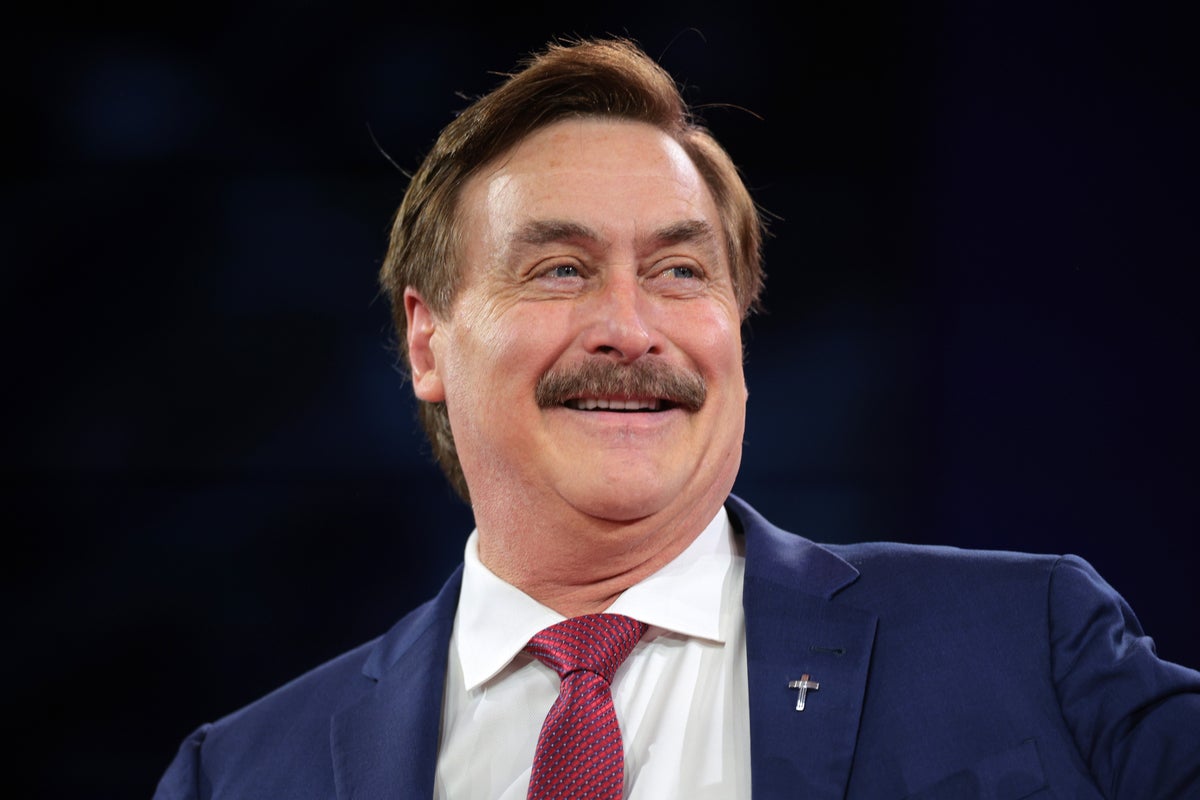
The foam factories hummed in Chaska, a steady background rhythm of polyurethane and promise. For two decades, that sound meant something specific to millions of Americans. It meant late-night infomercials, the enthusiastic endorsement of a man whose mustache practically bounced with conviction, and a brand built entirely around a restless entrepreneur's personal crusade for a better night's sleep. But the machines are losing their loudest champion. Mike Lindell is walking away from the executive suite of MyPillow.
He is leaving the foam behind for the jagged, unpredictable arena of state politics. Minnesota is calling. Or rather, he believes Minnesota is waiting.
To understand why a businessman worth tens of millions decides to trade manufacturing floors for campaign trails, you have to look past the spreadsheets and the balance sheets. You have to look at obsession. Lindell did not build MyPillow through quiet corporate strategy. He built it through relentless repetition, sheer volume of will, and an unyielding belief that if you shout loud enough, people will listen. That same operating system is now being pointed at the state capitol in St. Paul.
Let us step back for a moment and look at the trajectory.
Years ago, the story was simple. A reformed addict finds redemption, invents a pillow, and turns a kitchen-table idea into a manufacturing juggernaut. It was the quintessential American dream, packaged in poly-foam and sold through wall-to-wall television advertising. Customers loved the product, or they loved the man behind it, or both. The company became his identity. Every promotional video bore his stamp, his face, his personal guarantee.
Then came the pivot.
The public sphere changed. Politics swallowed culture whole, and Lindell stepped willingly into the maw. His subsequent crusade regarding election integrity made him a lightning rod, transforming him from a quirky commercial fixture into a polarizing figure of national significance. Retailers pulled his products. Partnerships dissolved. The cultural headwinds turned into gale-force winds. Yet, through it all, he remained anchored to his dual roles: the defiant corporate executive and the tireless political activist.
Until now.
Stepping down from MyPillow is not a casual retirement. It is a calculated severance. Running a statewide campaign in Minnesota requires an entirely different kind of stamina. It means knocking on doors in freezing rain, debating policy nuances on local radio, and navigating the intricate machinery of party politics. You cannot run a billion-dollar pillow empire while simultaneously trying to overhaul a state government, especially when your corporate brand has become inextricably tied to your personal political battles.
Consider the logistical reality.
When your name is the brand, every controversy the owner courted bled directly onto the balance sheet. Sales fluctuated wildly based on the news cycle. By stepping away from the daily operations of MyPillow, Lindell is attempting a clean break. He is trying to separate the businessman from the candidate, even if the public has spent years viewing them as the exact same person.
Will it work?
Minnesota politics is notoriously pragmatic. The state has a long history of electing colorful, unconventional outsiders—from professional wrestlers to independent reformers who broke the traditional two-party mold. Yet, Minnesota also demands a deep grasp of local tax structures, agricultural supply chains, funding formulas for public education, and the mundane, unglamorous mechanics of state administration. The leap from selling comfort to governing a state of 5.7 million people is vast.
The air in St. Paul is different from the air in a television studio. It is less about performance and more about process. Committees, subcommittees, legislative trade-offs, and bitter partisan stalemates define the actual work of a governor.
Lindell's transition marks a fascinating chapter in the intersection of modern celebrity, corporate identity, and populist politics. He spent a lifetime convincing people that they could not live without his pillow. Now, he faces a much harder sell. He has to convince a skeptical electorate that they cannot live without his leadership.
The factories in Chaska will keep running. The foam will be cut, stuffed, and shipped. But the man who put his face on every box is gone, chasing a different kind of validation under the grey skies of the Midwest. The pillow maker is gone. The candidate is here. And the vote is coming.