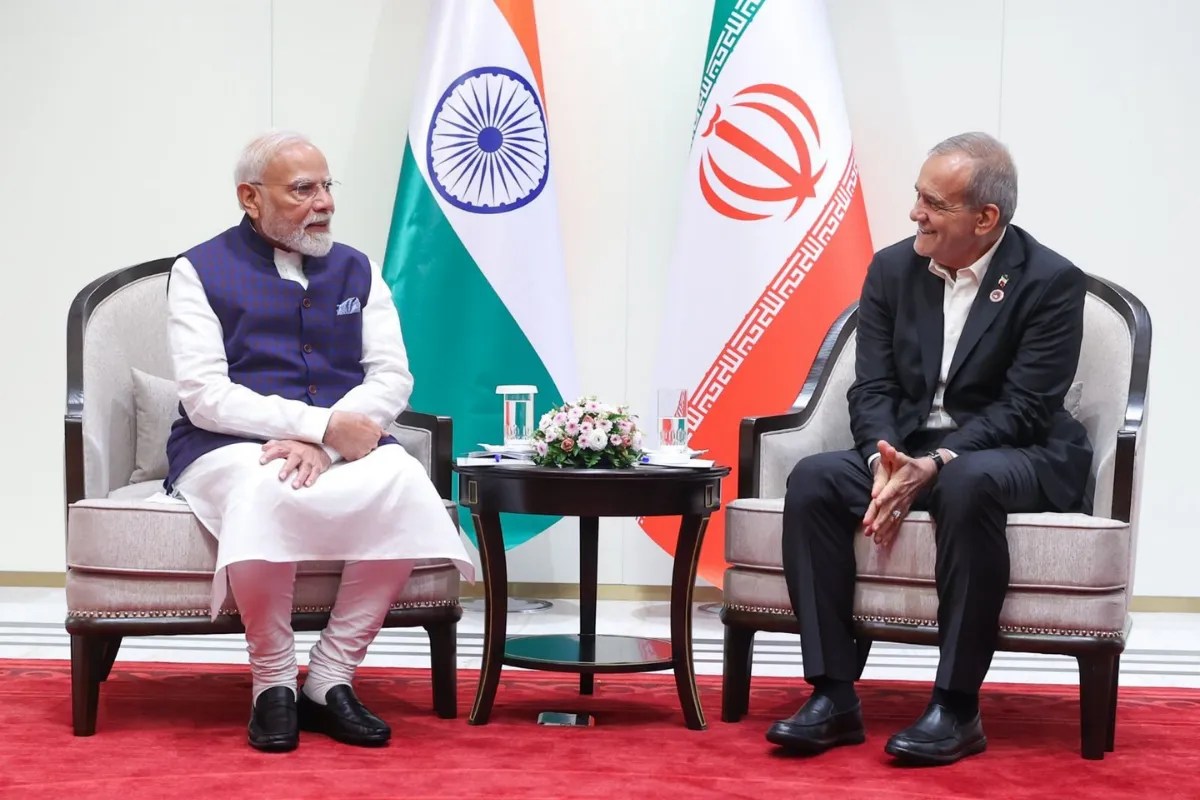
When Indian Prime Minister Narendra Modi and Iranian President Masoud Pezeshkian sat down across from each other in Bishkek, the stakes couldn't have been higher. Taking place on the sidelines of the Shanghai Cooperation Organisation (SCO) summit, this high-profile bilateral talk marked their first face-to-face interaction since the devastating outbreak of the US-Israel conflict with Iran earlier in the year.
Most analysts missed the quiet urgency behind this handshake. While global media fixates on battlefield updates and missile exchanges, New Delhi and Tehran are quietly carving out a diplomatic lifeline. If you want to understand how middle powers navigate a fractured geopolitical order, look right here.
Behind Closed Doors in Bishkek
The setting was the Kyrgyz capital, but the shadow cast over the room stretched straight across the Gulf and the Strait of Hormuz. Since the war broke out following aggressive military actions by the US and Israel, commercial shipping lanes have turned into hazardous zones.
PM Modi didn't mince words. He made it clear that civilian infrastructure, commercial shipping, and everyday seafarers must remain completely protected no matter how intense the regional fighting gets. India relies heavily on its extended neighborhood for energy transit and diaspora safety, meaning prolonged instability hits New Delhi's core interests directly.
President Pezeshkian used the platform to press India into a more active diplomatic role. Tehran knows New Delhi maintains working relationships with Washington, Jerusalem, and regional capitals alike. Pezeshkian openly urged Modi to use India's diplomatic weight to pull conflicting parties away from total escalation and back toward a table of dialogue.
Trade, Sanctions, and the Chabahar Reality
It wasn't all crisis management. Both leaders spent considerable time untangling economic ties that have suffered under heavy American sanctions. Modi expressed a clear desire to expand and diversify the bilateral trade basket, signaling that India has no intention of abandoning its long-term strategic investments in Iran—including the crucial Chabahar port project.
Tehran is feeling the pinch of economic isolation, making economic partnerships with independent voices like India vital for survival. Pezeshkian emphasized that joint efforts can effectively neutralize the impact of unilateral Western restrictions. They are looking past immediate wartime turbulence to secure a long-term economic footprint.
What Comes Next for India and Iran
The timing of this summit adds an extra layer of intrigue. Modi formally invited Pezeshkian to visit India for the upcoming BRICS summit, setting up another major diplomatic touchpoint.
India is walking a diplomatic tightrope. It condemns civilian casualties and champions freedom of navigation without alienating an old strategic partner. Tehran, meanwhile, is betting that multilateral frameworks like the SCO and BRICS can dilute Western hegemony and open alternative financial corridors.
Watch how these diplomatic channels translate over the next few months. If India successfully leverages its independent foreign policy to ease maritime tensions, it proves that middle-power diplomacy still carries real weight in a world dominated by superpowers.



