You cannot simply ignore an ecological collapse when it swallows an entire regional economy whole. Right now, the Po Delta in Italy faces a biological invasion so severe that local fishermen are staring at total financial ruin. The culprit isn't a mysterious virus or shifting weather patterns alone. It is the blue crab. This aggressive predator has arrived from distant waters, taken over the brackish lagoons, and started devouring the iconic local clams known locally as vongole.
If you love authentic Italian pasta alle vongole, you need to pay attention to this disaster. The Venice lagoon and the wider Po Delta wetlands produce a massive share of Europe's prized clams. When foreign predators wipe out these mollusks, the damage ripples outward. Local cooperatives lose their livelihoods. Processing plants shut down. Restaurants across the continent suddenly find their menus stripped of a staple ingredient.
The Predator That Ate the Delta
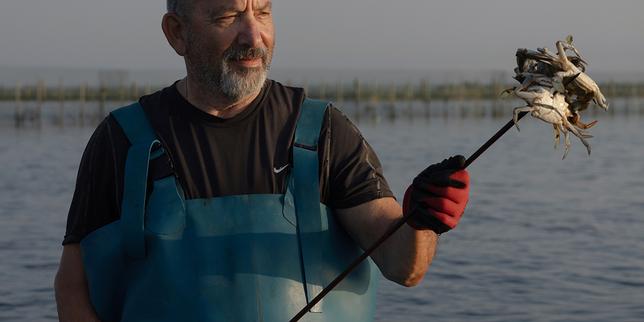
How did a foreign crustacean turn the Po Delta upside down? The blue crab is a master of survival. It swims fast, reproduces rapidly, and possesses a crushing claw strength that makes short work of clam shells. Local fishers in towns like Goro and Comacchio used to harvest thriving beds of Manila clams with reliable consistency. Now, they haul up nets filled with angry, thrashing blue crabs instead of marketable seafood.
Scientists point to warming waters and ballast water discharge from international cargo ships as the primary vectors. The Adriatic Sea has warmed significantly over the past decade. This temperature spike created the exact subtropical conditions the blue crab loves. Native species simply cannot compete with an armored omnivore that eats everything in sight, from small fish to juvenile shellfish.
Fishermen describe pulling up nets where every single clam has been crushed and emptied. It is a slow-motion catastrophe. The ecosystem is completely out of balance. When you remove the apex grazers and replace them with an unchecked tyrant, the entire food web collapses.
Economic Devastation on the Water
Numbers paint a grim picture for the communities living along the delta. Entire families have relied on clam farming for generations. It is a specialized trade passed down through decades, requiring intimate knowledge of tides, salinity, and sediment composition. That heritage is vanishing in real-time.
When local yields drop by eighty percent or more, revenue disappears overnight. Cooperatives that used to process tons of seafood daily now struggle to stay afloat. Government emergency funds provide a temporary bandage, but they do not solve the underlying crisis. You cannot subsidize an entire industry forever without fixing the biological imbalance in the lagoons.
Markets have tried to adapt. Some entrepreneurs started catching and selling the blue crabs themselves, turning the invader into a commercial product for export, particularly to countries with high demand for crab meat. Yet, this strategy falls short. The sheer volume of crabs dwarfs human consumption capacity. You cannot fish your way out of this infestation using traditional artisanal methods alone. The reproductive rate of the crab completely outpaces the commercial harvest effort.
What Needs to Happen Now
Solving this mess requires abandoning passive observation and adopting aggressive intervention. Scientists and local authorities must work hand in hand to deploy specialized traps on a massive industrial scale. We need coordinated eradication programs during the breeding season before females can release millions of eggs into the Adriatic current.
At the same time, diversification is essential for the surviving fishing families. Relying entirely on Manila clams is no longer viable in a warming, interconnected world. Transitioning toward protected aquaculture zones, experimenting with hardier native species, or modernizing processing infrastructure can offer a lifeline.
The Po Delta is a UNESCO biosphere reserve and a vital European wetland. Letting it turn into a barren marine wasteland is not an option. If you care about biodiversity, regional economies, or simply preserving the culinary traditions of coastal Italy, support local producers who are fighting to keep their heritage alive against impossible odds. The crisis in the delta proves that environmental neglect always comes due with a brutal price tag.