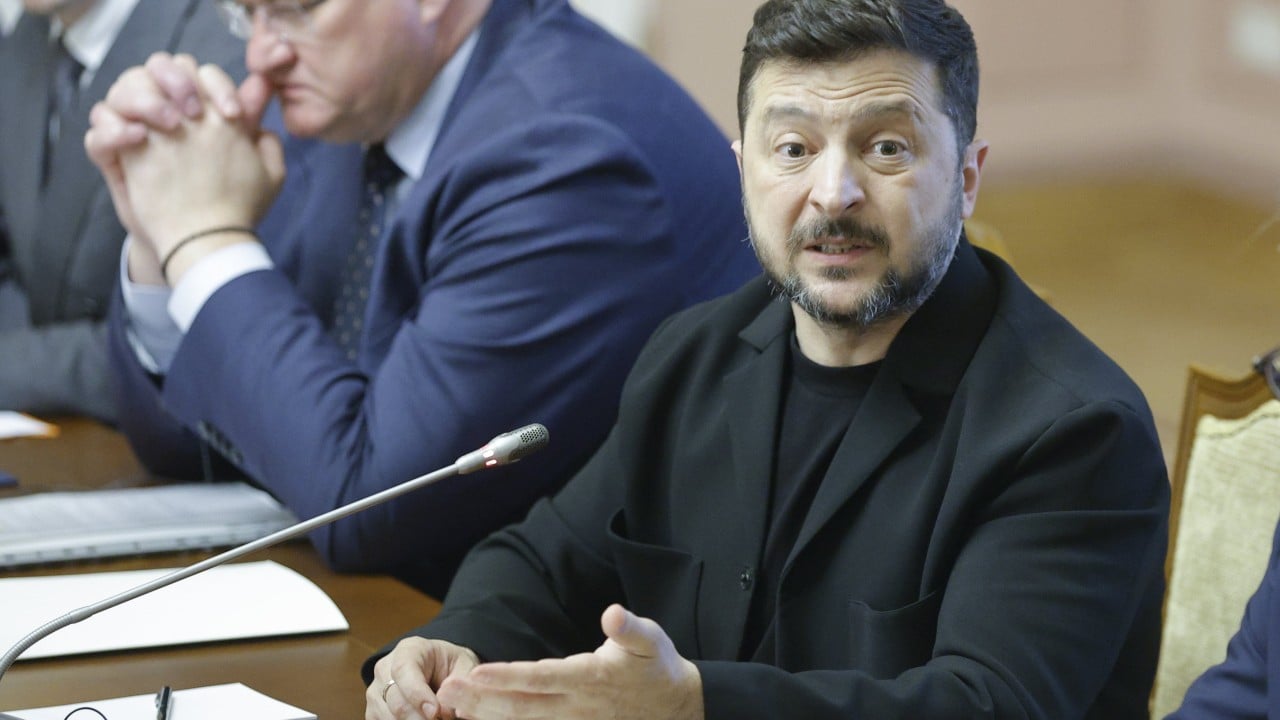
Geopolitics usually bends to the realities of modern warfare, but history just proved it can still punch a hole straight through the strongest military alliances. Polish President Karol Nawrocki officially stripped Ukrainian President Volodymyr Zelensky of Poland’s highest state honor, the Order of the White Eagle. It's a massive diplomatic rupture that shows how raw 80-year-old wounds remain, even when both nations face a common enemy in Moscow.
The move wasn't a sudden whim. It’s the climax of weeks of escalating fury in Warsaw. The breaking point came when Zelensky signed a decree naming a Ukrainian special forces unit "Heroes of the UPA"—the Ukrainian Insurgent Army. To Ukrainians, the UPA represents anti-Soviet resistance and the fight for independence. To Poles, they are the perpetrators of the Volhynia massacres, a brutal campaign between 1943 and 1945 that left around 100,000 Polish civilians dead.
Nawrocki didn't mince words, calling Ukraine's decision "outrageous, incomprehensible and deeply disappointing." While he quickly added that this doesn't change Poland’s strategic security policy regarding Russia's threat, the damage to bilateral trust is real.
The weight of the White Eagle
Losing this award is a big deal. The Order of the White Eagle is Poland's oldest and highest decoration, dating back over 300 years. It isn't handed out lightly. Former Polish President Andrzej Duda gave it to Zelensky in April 2023 to honor his defense of human rights and his role in deepening ties between the two neighbors.
Stripping someone of it is incredibly rare. In the order's modern history, it has basically only happened once before, back in 1933 when a three-time prime minister, Wincenty Witos, was stripped of it during a politically motivated trial. The fact that Nawrocki invoked this extreme measure against a sitting wartime ally tells you everything you need to know about how deeply the UPA issue cuts in Polish society.
The political fallout was instant. Ukrainian Foreign Minister Andrii Sybiha called the revocation a "strategic mistake" that only serves Russian propaganda. In protest, Sybiha announced he is returning his own Polish state decoration, the Commander's Cross, which he received in 2022. Even former Polish President and legendary Solidarity leader Lech Walesa weighed in, declaring he would stop wearing his signature Ukrainian flag lapel pin, saying Zelensky had insulted the memory of murdered compatriots.
A legal headache in Warsaw
While Nawrocki made the announcement, the internal mechanics of Polish politics mean this story isn't entirely over. Poland is currently managed under a tense cohabitation. Nawrocki is a nationalist historian backed by the right-wing opposition, while Prime Minister Donald Tusk leads a centrist government.
Tusk’s position is complicated. He openly criticized Zelensky’s decision to honor the UPA, noting that it violates Polish historical sensitivity. Yet, he is desperate to avoid a public meltdown with Kyiv. Tusk warned that the only true beneficiary of this public spat is Vladimir Putin.
Legally, there's a big debate happening behind closed doors in Warsaw. The Polish constitution isn't entirely clear on whether a president can revoke a state honor without the countersignature of the prime minister. If Tusk decides to withhold his signature to protect diplomatic stability, it could spark a massive constitutional crisis inside Poland right as the country prepares to host a major international conference on Ukraine's reconstruction in Gdańsk.
Blood on the border
To understand why a military unit's name can derail a multi-billion-dollar defense partnership, you have to look at what happened in Volhynia and Eastern Galicia during World War Two. Polish historians classify the UPA’s wartime actions as genocide. Whole villages were wiped out, mostly women and children, often with extreme cruelty. Ukraine acknowledges the tragedies but views them as a complex, two-sided conflict that included Polish reprisal killings of thousands of Ukrainians.
Kyiv insists that the modern soldiers who requested the "Heroes of the UPA" designation had zero anti-Polish intent. They were looking for historical symbols of anti-Russian resistance to boost morale on the front lines. But in international politics, perception often trumps intent. For Poland, celebrating the UPA is a non-negotiable red line.
Nawrocki put it bluntly, warning that Ukraine’s path toward the European Union requires an honest confrontation with its past. You can't join a European community built on the rejection of totalitarianism while simultaneously celebrating groups linked to ethnic cleansing.
What happens next
This fight moves far beyond medals and press releases. Public sentiment in Poland has already been sliding. After years of incredible generosity welcoming millions of Ukrainian refugees, the Polish public is showing signs of fatigue, worsened by trade disputes over Ukrainian grain imports.
The immediate test for both leaderships will be the upcoming reconstruction summit in Gdańsk. If Zelensky and Nawrocki can't find a way to partition their historical grievances from their current security needs, the structural alignment that has kept Western aid flowing through Poland into Ukraine could begin to fracture. Both capitals need to establish formal, quiet channels to handle historical issues instead of letting them play out via social media decrees. Without a joint historical commission that actually has teeth, these ghosts will keep tearing apart the alliance.