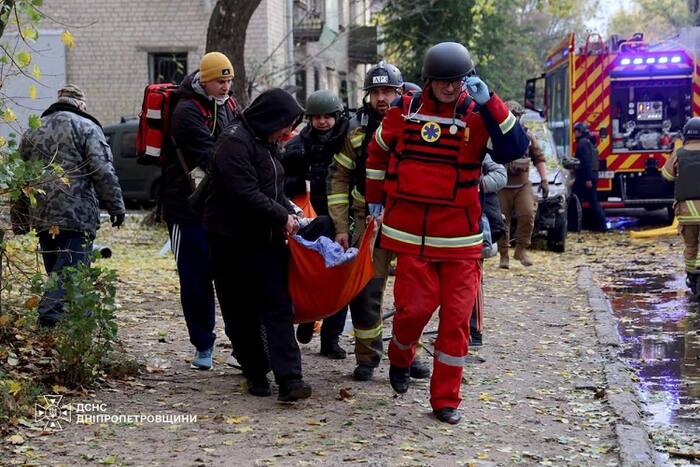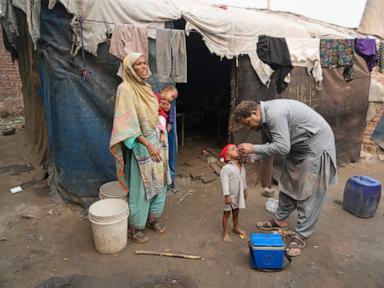
Two more dead police officers in Pakistan. Another pair of grieving families. Another headline dutifully filed by wire services reporting that suspected militants gunned down security personnel guarding polio vaccinators.
And then, right on cue, the international public health establishment offers the exact same broken prescription it has pushed for over a decade. More guns. More checkpoints. Tighter security perimeters.
They are wrong. Dead wrong.
The lazy consensus in global health circles treats the assassination of polio workers and their guards as a purely kinetic security problem. The prevailing logic goes like this: militants hate vaccines, so we must surround health workers with armed state forces to compel compliance and protect life.
In reality, militarizing a public health campaign in regions with deep historical grievances against the central government does not protect vaccinators. It paints a massive, state-sanctioned bullseye on their backs.
If you want to understand why Pakistan—alongside neighboring Afghanistan—remains the final reservoir of wild poliovirus on Earth, stop looking at the militants' triggers and start looking at the optics of the convoy.
The Militarization Trap
When a female health worker walks down a dusty lane in Khyber Pakhtunkhwa or Balochistan flanked by men carrying AK-47s, she ceases to be a neighbor offering medicine. She becomes an instrument of state surveillance.
I have spent years analyzing public health logistics in conflict zones, and the pattern never changes. When international donors and federal ministries bypass local trust-building in favor of armed enforcement, the vaccine stops being medicine and becomes a political proxy.
To understand the mechanics of this failure, you have to understand the environment. In Pakistan’s tribal belt and rural peripheries, the relationship between the citizenry and the state apparatus is fractured by decades of neglect, military operations, and political marginalization. Local populations frequently view uniformed officers not as protectors, but as enforcers for an absentee government in Islamabad.
When the polio eradication program wraps itself in police uniforms, militants do not even have to work hard to sell their propaganda. They simply point at the armed escorts and tell villagers: "If those drops were really meant to help your children, why do they need an army to force them down their throats?"
The wire stories report the tragedy of the fallen officers—and make no mistake, the men and women wearing those uniforms are paying the ultimate price for a flawed strategy—but the journalism completely misses the causal chain. The escorts are not merely defending the campaign; their presence actively fuels the insurgency's recruitment and justification for violence.
The Ghost of 2011
You cannot talk honestly about polio security in Pakistan without addressing the elephant in the room that polite NGO reports bury in footnotes.
In 2011, the Central Intelligence Agency used a fake hepatitis B vaccination drive in Abbottabad, led by a local physician named Shakil Afridi, to collect DNA samples and confirm the presence of Osama bin Laden.
That single covert operation set global public health back by decades.
Before 2011, vaccine hesitancy in Pakistan existed, largely driven by isolated religious misinterpretations or rumors about Western sterilization plots. After 2011, paranoia became verifiable fact. Militant factions like the Tehrik-i-Taliban Pakistan (TTP) suddenly had concrete proof that medical teams could be covers for foreign intelligence agencies and state security forces.
Think about the cognitive dissonance required by Western policymakers today. They express shock that armed groups target polio teams, while simultaneously insisting that those exact same teams travel under heavy state security through territories where foreign and domestic intelligence agencies spent twenty years hunting insurgents.
When you pair a population traumatized by drone strikes and intelligence operations with heavily armed police escorts knocking on doors every few weeks, violence is not an anomaly. It is the mathematically predictable outcome.
What Everyone Gets Wrong About Vaccine Hesitancy
Search any mainstream news outlet covering these attacks, and you will find the exact same framing: backward, anti-science extremists attacking modern medicine.
It is a comforting narrative for Western readers because it requires zero self-reflection. It reduces a complex geopolitical failure into a simple cartoon of good versus evil.
Here is the uncomfortable truth that public health bureaucrats hate admitting: in many of the regions where polio teams are attacked, communities do not actually hate vaccines.
They hate hyper-verticalized aid.
Imagine a scenario where your village has no clean drinking water. Your local clinic has no antibiotics for childhood pneumonia. Your roads are washed out, your schools have no roofs, and your children are visibly malnourished.
Now imagine that despite this total abandonment, every single month without fail, a heavily armed convoy rolls into your village—not to fix the water pump, not to treat the pneumonia, and not to bring food—but exclusively to put two drops of polio vaccine into your child's mouth, before driving away again.
How would you react?
You would become intensely suspicious. You would ask why the government and billionaire foreign foundations care so fanatically about one specific virus that rarely causes visible paralysis in your immediate circle, while letting your children die of diarrhea and measles right in front of you.
Researchers at institutions like Aga Khan University in Karachi have documented this exact phenomenon for years. Zulfiqar Bhutta, a towering figure in global maternal and child health, has repeatedly pointed out that vertical, single-disease eradication programs alienate impoverished communities when basic primary healthcare is completely absent.
When you ignore every acute medical need a community has and enforce a single preventative measure at gunpoint, you breed conspiracy theories. Rumors that the drops cause infertility or contain forbidden ingredients are not born out of thin air; they are a rationalizing mechanism for communities trying to figure out why a neglectful state is suddenly so desperate to medicate their kids.
The Economics of Perverse Incentives
There is another layer to this crisis that rarely makes the evening news: the internal bureaucracy of the Global Polio Eradication Initiative (GPEI) and local administration.
Over the past three decades, billions of dollars have poured into polio eradication. That massive influx of capital has created an entire ecosystem of jobs, stipends, security budgets, and administrative fiefdoms.
Let's look at how the system operates on the ground:
- Underpaid Frontline Workers: The Lady Health Workers—the actual heroes walking door-to-door—often face delayed stipends, miserable working conditions, and immense social pressure, all while carrying the highest physical risk.
- Coercive Metrics: District administrators are judged relentlessly on coverage numbers. To hit 98% or 99% coverage targets demanded by international donors, local officials frequently resort to administrative coercion.
- Weaponized Bureaucracy: In several districts across Pakistan, authorities have periodically threatened parents who refuse the vaccine with the suspension of their national identity cards, the blocking of mobile phone SIM cards, or outright arrest.
Think about what happens when you combine coercive administrative threats with armed police escorts. You turn a public health intervention into a state shakedown.
Meanwhile, the sheer scale of the polio apparatus distorts local governance. In some districts, local police forces are stretched dangerously thin because hundreds of officers are pulled off regular crime prevention and counter-terrorism duties to babysit vaccination teams for days on end. Those officers are often poorly equipped, standing static on street corners or walking predictable routes, making them sitting ducks for motorcycle-borne assassins.
Every time an attack happens, the institutional reflex is to double down. More money for security. More police deployments. More high-level condemnations from Geneva and New York. Nobody ever stops to ask whether the delivery model itself is fatally compromised.
Dismantling the Common Myths
If you look up questions people ask online about the polio crisis in Pakistan, the search queries reveal just how deeply entrenched the superficial narratives are. Let's tear down the three biggest misconceptions.
"Why don't they just arrest the militants attacking the workers?"
This question assumes the attackers are a finite, easily identifiable gang operating outside society. In reality, the perpetrators operate within porous border regions and sympathetic or intimidated local networks. You cannot arrest your way out of an insurgency that feeds on state heavy-handedness. Every aggressive security sweep that follows an attack often alienates more locals, creating the next generation of recruits.
"Aren't the militants strictly against all modern medicine?"
No. This is pure fiction. Militant commanders and their families routinely seek modern medical treatment, surgeries, and pharmaceuticals in major Pakistani cities like Peshawar, Quetta, and Karachi. Their opposition is rarely theological; it is tactical. Attacking high-profile, internationally funded vaccination campaigns guarantees global headlines, humiliates the Pakistani state, and disrupts government presence in contested areas—all at a remarkably low operational cost.
"If we pull the police escorts, won't all the health workers be slaughtered?"
If you simply pull the guards tomorrow without changing the campaign structure, yes, it would be a bloodbath. The point is not to leave workers defenseless in a hostile environment. The point is to stop running centralized, state-branded, door-to-door campaigns that require armed guards to enter a neighborhood in the first place.
What Actually Works (And Why Nobody Wants to Do It)
If armed escorts and top-down mandates are failing, what is the alternative?
The answer is boring, slow, and strips power away from centralized bureaucracies—which is precisely why it faces so much resistance.
First, kill the standalone polio campaign. Polio drops must be fully integrated into comprehensive, community-led primary healthcare packages. When a health post offers clean birthing kits, fever medication, nutrition supplements, maternal care, and routine immunizations under one roof, the suspicion evaporates. Parents bring their children to the clinic voluntarily because their immediate needs are being met. You do not need an AK-47 to guard a clinic that a community actually wants.
Second, hand the keys to local elders and trusted religious leaders—for real, not as PR. For years, NGOs have paid lip service to "community engagement" by flying a few clerics to conferences in Islamabad for photo ops. That changes nothing on the ground. Real engagement means letting local tribal councils, village elders, and neighborhood influencers manage the rollout, hire the local workers, and set the schedule without uniformed state officials hovering over their shoulders.
Third, abandon coercive state threats. Arresting fathers or blocking SIM cards over vaccine refusal is an absolute gift to militant propagandists. Public health is built on consent. The moment you use the penal code to enforce a medical intervention, you destroy the very trust required to eradicate a disease.
The Downside Nobody Mentions
I am not naive. Shifting from militarized vertical campaigns to integrated, community-owned healthcare has serious, undeniable drawbacks.
It is vastly slower. When you stop forcing door-to-door sweeps under police guard, vaccination coverage numbers will initially dip in hard-to-reach pockets. International donors, who operate on rigid fiscal quarters and demand tidy upward-sloping graphs, will panic.
Furthermore, decentralizing control means accepting higher levels of administrative messiness and potential local corruption. Handing resources directly to local structures in areas with weak institutions carries financial risks that compliance officers in Geneva hate dealing with.
And finally, even in the best-case scenario, eliminating the last 1% of virus transmission in active conflict zones is excruciatingly difficult. There will still be pockets where extremist groups actively block all outside aid simply to maintain totalitarian control over a population.
Those are real, gritty trade-offs.
Yet compare those trade-offs against the current reality. Right now, Pakistan is spending fortunes, exhausting its police force, alienating millions of its own citizens, failing to eradicate the virus, and burying dead officers every few months.
Stop Counting Shells and Start Counting Trust
The tragedy of the two officers killed guarding polio workers is not just that two men lost their lives doing their duty. The tragedy is that their deaths were entirely preventable—not by giving them thicker body armor, but by recognizing that a public health campaign cannot be won at the barrel of a gun.
As long as the global health establishment treats security forces as a substitute for community trust, the cycle will repeat. The convoys will roll out. The shots will ring out. The press releases will mourn the fallen. And the poliovirus will quietly survive in the shadows of a war it never started.
Take the uniforms off the campaign, put basic healthcare back in the clinics, and stop asking police officers to die for a strategy that has already failed.