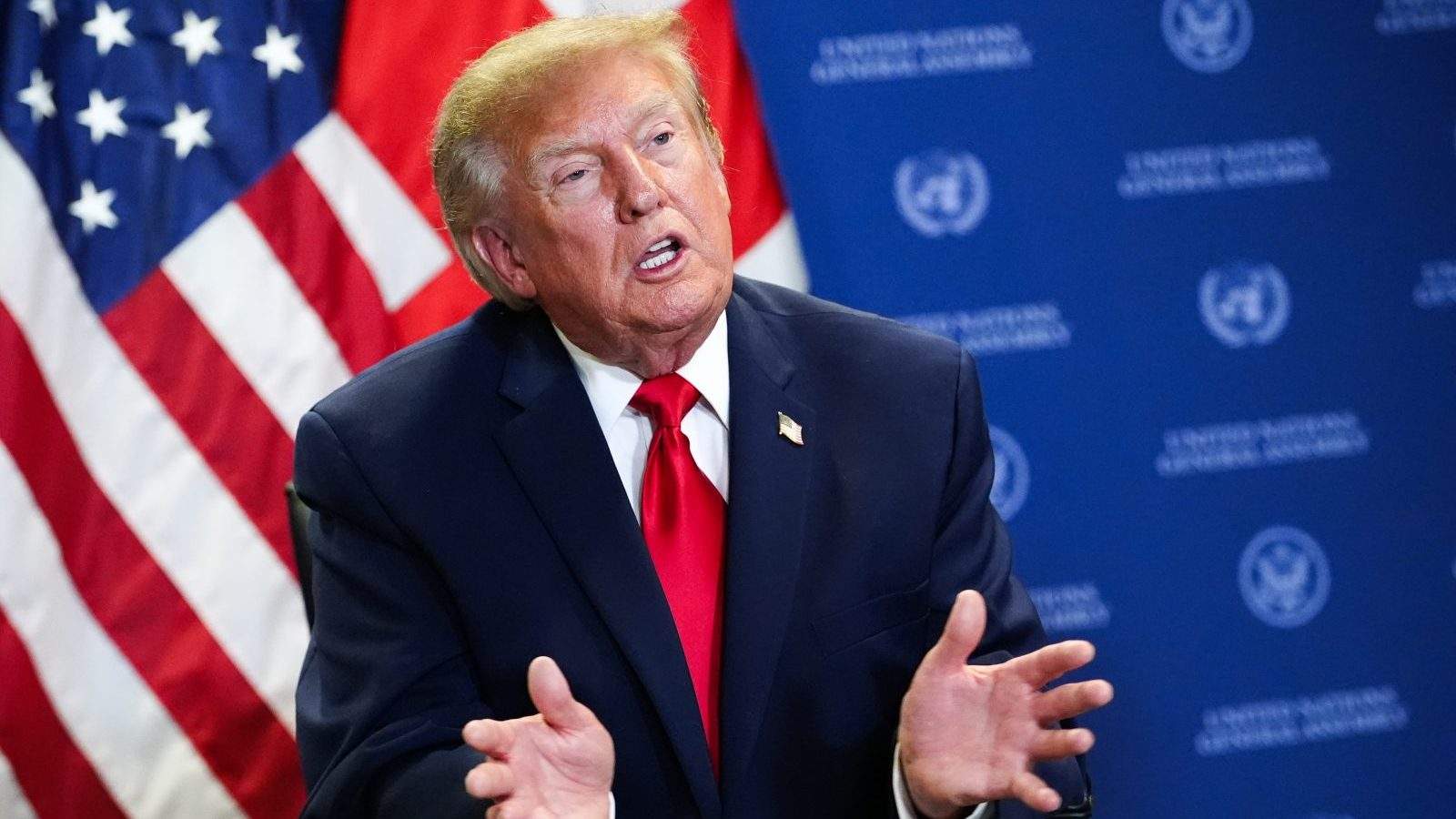
Municipal nomenclature is rarely neutral. When the Ottawa City Council voted unanimously to strip the designation of Trump Avenue from a residential street in its Central Park neighborhood, the decision was interpreted widely through the lens of diplomatic friction and escalating trade disputes. However, municipal renaming initiatives operate under specific economic, administrative, and psychological frameworks that extend far beyond immediate political retaliation. Understanding why municipalities alter geographic identifiers requires deconstructing the cost function of municipal identity, the friction of civic re-indexing, and the utility of symbolic signaling in international relations.
The Cost Function of Municipal Renaming
To evaluate the decision to rename a urban thoroughfare, one must first isolate the transactional friction involved. Municipal re-indexing carries concrete administrative overhead:
- Database Re-Mapping: Emergency response routing software, municipal land registries, utility billing databases, and commercial parcel delivery systems require explicit updates.
- Private Asset Deprecation: Commercial and residential property owners face identity transition costs, including legal address modifications, stationery reprints, and credential updates across financial institutions.
- Public Expenditure: Signage fabrication, installation labor, and administrative notification workflows demand direct municipal outlays.
Historically, these transactional costs act as a natural deterrent against frequent renaming. In 2021, when residents of the same Ottawa street held a vote on whether to remove the designation, the motion resulted in a deadlock, balancing the friction of administrative disruption against social sentiment. The shift from a tied vote to a unanimous council endorsement indicates a recalibration of this cost function. When the perceived social and political liability of a namesake outweighs the institutional friction of re-addressing a corridor, the threshold for administrative action is cleared.
Structural Drivers of Geographic Re-Designation
Geographic nomenclature serves as a permanent public registry of community values. Urban planning literature categorizes street names into three functional typologies: utility markers, historical commemorations, and thematic motifs.
Trump Avenue originated as part of a localized thematic cluster within the Central Park development—a subdivision featuring nomenclature derived from New York City landmarks and associations, established during an era when the namesake functioned primarily as a commercial real estate developer. The geopolitical evolution of the namesake from private enterprise to head of state fundamentally altered the semiotic value of the street sign.
When a thematic marker transforms into a flashpoint of international tension—characterized by bilateral trade disputes, tariff implementations, and macroeconomic pressures—the baseline assumption of neutral urban design collapses. Municipal authorities are compelled to intervene because the physical asset ceases to function as a passive spatial identifier and begins to operate as an active political signal.
The Mechanics of Public Consultation and Transition Management
A strategic municipal renaming requires a structured public consultation phase to mitigate resident friction and ensure legal compliance. The process adopted by municipal administrators follows a strict sequential protocol:
- Community-Led Identification: Empowering affected property owners and local ward representatives to propose alternative designations that reflect local heritage or neutral regional themes.
- Impact Assessment: Auditing the operational dependencies of registered businesses and residents on the affected corridor to stage the database transition.
- Legislative Ratification: Formalizing the new monikers through municipal bylaws to ensure seamless integration into federal postal and emergency dispatch systems.
This phased rollout minimizes legal challenges and administrative bottlenecks, transforming what could be an arbitrary executive imposition into an orderly civic transition.
Strategic Implications for Municipal Diplomacy
The actions taken by the capital of Canada underscore an emerging trend where local governance structures increasingly intersect with geopolitical strategy. While municipal councils lack jurisdiction over foreign policy, trade agreements, or tariff structures, they maintain absolute authority over municipal assets. Controlling local infrastructure provides sub-national entities with a low-cost, high-visibility mechanism for alignment with broader national sentiment.
As cross-border economic friction persists, municipalities will likely continue utilizing spatial nomenclature as an instrument of cultural and political demarcation. The economic cost of changing a street sign remains fixed, but the signaling value of aligning urban geography with national consensus scales directly with geopolitical volatility.
Ottawa council votes to rename Trump Avenue
This video provides local news coverage and footage regarding the unanimous municipal vote in Ottawa to remove the president's name from the residential street amid deteriorating bilateral relations.


