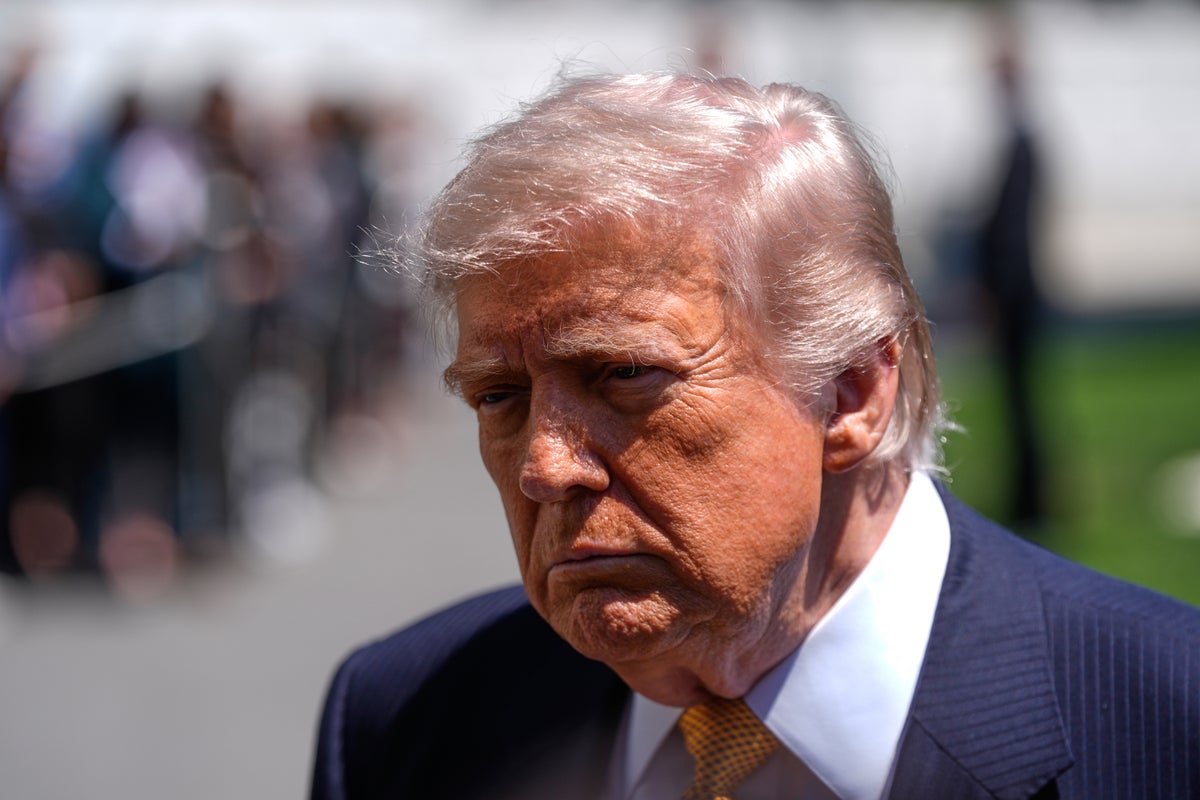
The legacy media is currently hyperventilating over Donald Trump’s recent comments regarding the use of the military or ICE at polling stations. The standard narrative is predictable: it’s a direct assault on democracy, a precursor to martial law, and a violation of the Posse Comitatus Act. Every pundit from D.C. to New York is recycling the same "unprecedented" and "existential threat" scripts they’ve been using since 2015.
They are missing the point entirely.
This isn't about an actual deployment of troops. It’s about the psychology of optics and the strategic exploitation of a legal grey area that neither party actually wants to fix. While the mainstream press treats these statements as a literal logistical plan, they fail to realize they are being played by a candidate who understands that the threat of oversight is often more effective than the oversight itself.
The Posse Comitatus Myth
The go-to argument against any mention of domestic military use is the Posse Comitatus Act of 1878. Critics scream that it's "illegal" to use the military for domestic law enforcement. That is a half-truth that ignores the massive, barn-door-sized exceptions that have been carved out over the last century.
The Act generally prohibits the use of federal military personnel to "execute the laws." However, it does not apply to the National Guard under state control (Title 32). It doesn't override the Insurrection Act of 1807, which gives the President nearly unilateral authority to deploy troops domestically if they believe local authorities are failing to protect constitutional rights.
We saw this in the 1950s and 60s. Eisenhower used the 101st Airborne to enforce school integration in Little Rock. Kennedy used the military in Mississippi. In those instances, the "interference" was hailed as a victory for civil rights. The mechanism is the same; only the political lens has changed. To suggest that the mere mention of federal intervention is a "shattering of norms" is to ignore the actual history of American governance.
The ICE Red Herring
The inclusion of ICE (Immigration and Customs Enforcement) in this conversation is a tactical genius move designed to bait the opposition. By mentioning ICE, Trump isn't actually planning to have agents checking IDs at every precinct in suburban Ohio. He’s signaling to his base that the sanctity of the vote is tied to the border—a core pillar of his platform.
Logistically, ICE doesn't have the manpower to monitor 100,000+ polling places. The agency is already stretched thin handling actual enforcement duties. The media’s obsession with this specific detail ignores the reality of bureaucratic capacity. They focus on the "horror" of the visual while ignoring the impossibility of the execution.
If you want to understand what's really happening, stop looking at the agents and start looking at the deterrence effect. The goal isn't to arrest people at the ballot box; it’s to create a high-friction environment where anyone whose eligibility is even slightly questionable feels a sense of risk. It’s a move straight out of a corporate litigation playbook: you don't have to win the case if you make the cost of entry too high for the other side to show up.
Why the "Democracy in Peril" Narrative Fails
The "lazy consensus" among political analysts is that these comments depress turnout by intimidating voters. This is a fundamental misunderstanding of voter behavior in a polarized era.
- The Backfire Effect: Threatening "security" at the polls often acts as a massive mobilization tool for the opposition. Anger is a more potent motivator than fear in modern American politics.
- The Security Satisfaction: For the other half of the country, the idea of ICE or the military at the polls isn't a threat—it’s a promise of "fairness." They see it as a necessary guardrail against perceived (though often unproven) irregularities.
By framing this as a purely negative "threat to democracy," the media fails to account for the millions of Americans who view the current system as fundamentally broken and see any radical intervention as a net positive. You cannot dismantle a strategy you refuse to understand.
The Efficiency of Chaos
In my years analyzing high-stakes crisis management, I've learned that the loudest person in the room usually has the weakest hand. If a candidate actually intended to execute a silent, military-backed takeover of the electoral process, they wouldn't announce it on a podcast or during a rally.
The announcement is the product.
By saying "I'd do anything necessary," the candidate forces the Department of Justice, state governors, and local election boards to divert resources into "contingency planning" and "legal challenges." It’s a DDoS attack on the administrative state. You clog the pipes with hypothetical scenarios so they can’t focus on the actual mechanics of the election.
The Actionable Reality
If you are an election official or a concerned citizen, stop falling for the rhetorical trap. The real threat to election integrity isn't a line of soldiers in fatigues; it's the erosion of trust caused by the constant cycle of "unprecedented" outrage.
Here is what actually happens on the ground:
- State Control Wins: Ultimately, elections are run by the states. Governors hold the keys to the National Guard. Unless a President invokes the Insurrection Act—a move that would trigger an immediate constitutional crisis and potential military refusal—the "troops at the polls" scenario remains a fever dream.
- The Paper Trail: The move toward paper ballots and decentralized counting makes a centralized military interference almost impossible to hide or execute effectively.
- The Legal Firewall: Any attempt to use federal agents for polling oversight would face an injunction within minutes.
The media wants you to be afraid because fear generates clicks. The politician wants you to be afraid because fear generates votes. Both are using the same set of "troops and ICE" keywords to keep you from looking at the boring, messy, and remarkably resilient reality of local election administration.
Stop reacting to the ghost stories. The "authority" being projected is a performance. When you strip away the hyperbole, you’re left with a standard political play: maximize the perception of power to compensate for a lack of actual control over a decentralized system.
The military isn't coming to your local library to watch you fill out a bubble sheet. But as long as you believe they might, the people telling the story have already won.
Go vote. The boogeyman isn't real, but the distraction is.