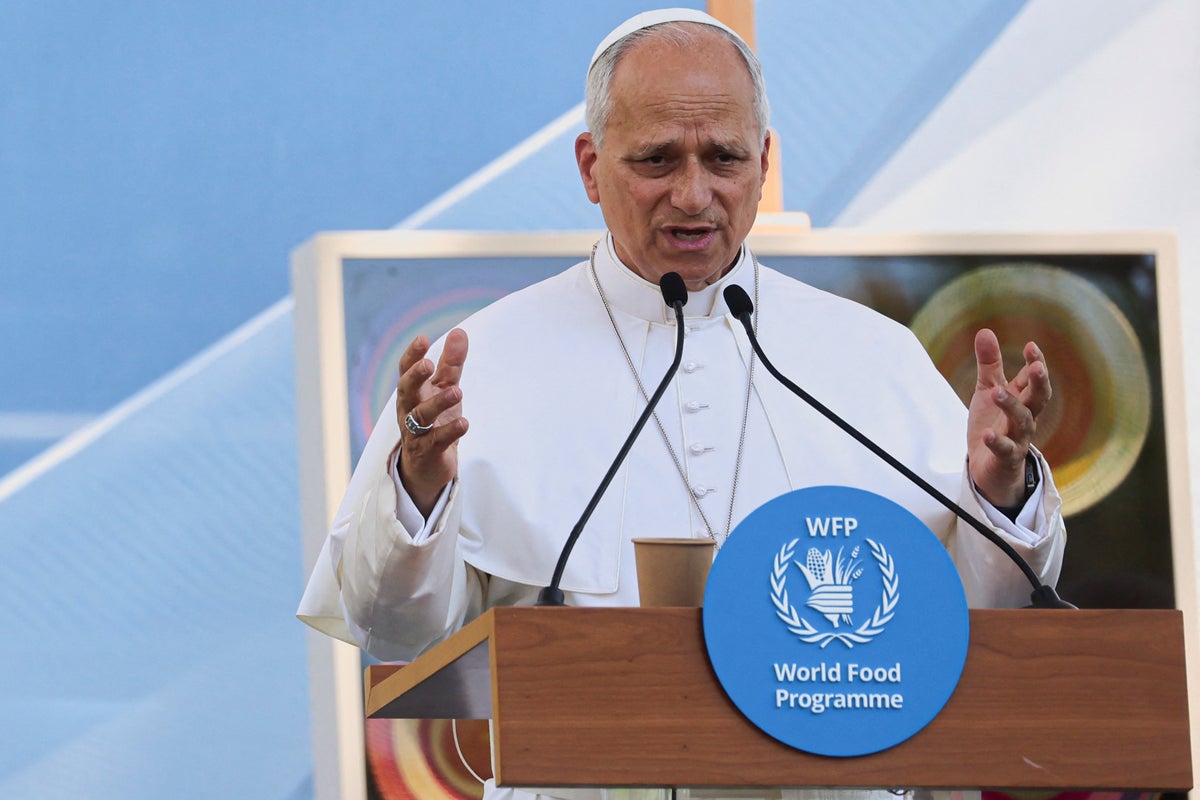
We have a massive logistics problem, but it has absolutely nothing to do with broken supply chains or ships stuck in ports. It’s entirely about what we choose to build and who we choose to protect. On Monday, Pope Leo XIV walked into the Rome headquarters of the UN World Food Programme and laid bare an uncomfortable truth that most politicians try to balance away with careful rhetoric. He didn't mince words. He pointed out that world leaders find it incredibly easy to keep weapons flowing into bloody conflicts, yet they completely stumble when it comes to sending grain to starving children.
"Conflicts are 'fed' more readily than people are nourished," the pope said. It’s a gut-punch statement. It cuts right through the sterile language of international diplomacy. The reality is that rockets and artillery shells bypass customs checkpoints, clear bureaucratic hurdles, and cross oceans with remarkable speed. Meanwhile, bags of rice and emergency medical kits get held up by red tape, ideological posturing, and closed borders. It’s a moral failure on a global scale.
The Massive Math Problem in Global Humanitarian Aid
If you think the global community is doing its best but simply running out of cash, you're wrong. The numbers tell a completely different story. The World Food Programme is currently scrambling to raise $13 billion for its 2026 operations. That sounds like a fortune until you compare it to what the world spends on national defense and weapons manufacturing. We're talking about a tiny fraction of global military expenditures.
The funding crisis hitting food agencies isn't an accident. It’s a policy decision. Over the last few years, global food assistance funding plummeted by roughly 59%. Think about that drop. Needs have broken records due to overlapping crises in places like Ukraine, Gaza, Sudan, and Afghanistan, but the cash dried up.
The United States recently threw a life support line to the WFP with an $800 million pledge. That money will help feed about 38 million people across dozens of countries. It’s a massive deal, especially since the previous administrative shifts in Washington saw deep cuts to foreign assistance programs. But even with that cash injection, the WFP remains deeply underfunded. The agency is constantly forced to play a twisted game of triage, deciding which starving population gets smaller rations so another group can survive.
Weaponizing Hunger is a Historic Failure
Pope Leo, who has stepped up his political commentary significantly since taking office, is highlighting something much darker than simple budget shortfalls. He’s calling out how hunger is used as a deliberate tool. Last year, during an address at the Food and Agriculture Organization, he pointed out that starving people to death is a remarkably cheap way to wage war. It’s a brutal tactic, and it’s happening right now in multiple conflict zones.
When armies burn fields, slaughter livestock, and blockade ports, they aren't just fighting an enemy military. They're destroying the basic means of human survival. The pope labeled this reality an ethical derailment and a historic offense. We live in an era where scientific advancements have pushed life expectancy further than ever before, yet millions of people are dying simply because they can’t get bread.
What world leaders consistently fail to realize is that food security isn’t separate from national security. They treat them like two different line items on a budget. You can't build a stable world when hundreds of millions of people don't know where their next meal is coming from. Empty stomachs drive migration, fuel insurgencies, and create the exact geopolitical instability that politicians then spend trillions of dollars trying to contain with bombs and soldiers.
Moving Past Red Tape and Skewed Priorities
If we want to actually fix this, the strategy has to change from the top down. International organizations and governments need to treat humanitarian access with the same urgency they grant to military logistics. Here is what actually needs to happen next to shift the balance:
- De-link food aid from geopolitics: Food assistance shouldn't be a bargaining chip. Governments must stop conditioning humanitarian funds on whether a local regime aligns with their foreign policy goals. Access to food is a fundamental right, not a reward for good political behavior.
- Streamline customs corridors for aid: Weaponry moves seamlessly because governments prioritize the infrastructure to move it. Nations need to establish permanent, fast-tracked customs agreements specifically for emergency food and medical supplies to bypass local bureaucratic delays.
- Commit to multi-year funding blocks: The WFP and similar agencies shouldn't have to beg for money month-to-month. Western nations need to lock in predictable, multi-year funding structures so aid workers can plan agricultural restoration and supply networks ahead of time instead of reacting after a famine hits.
The pope’s message shouldn't just be viewed as a religious homily. It’s a direct challenge to the current international order. Right now, our collective priorities are completely upside down, and the cost of that distortion is being paid in human lives.