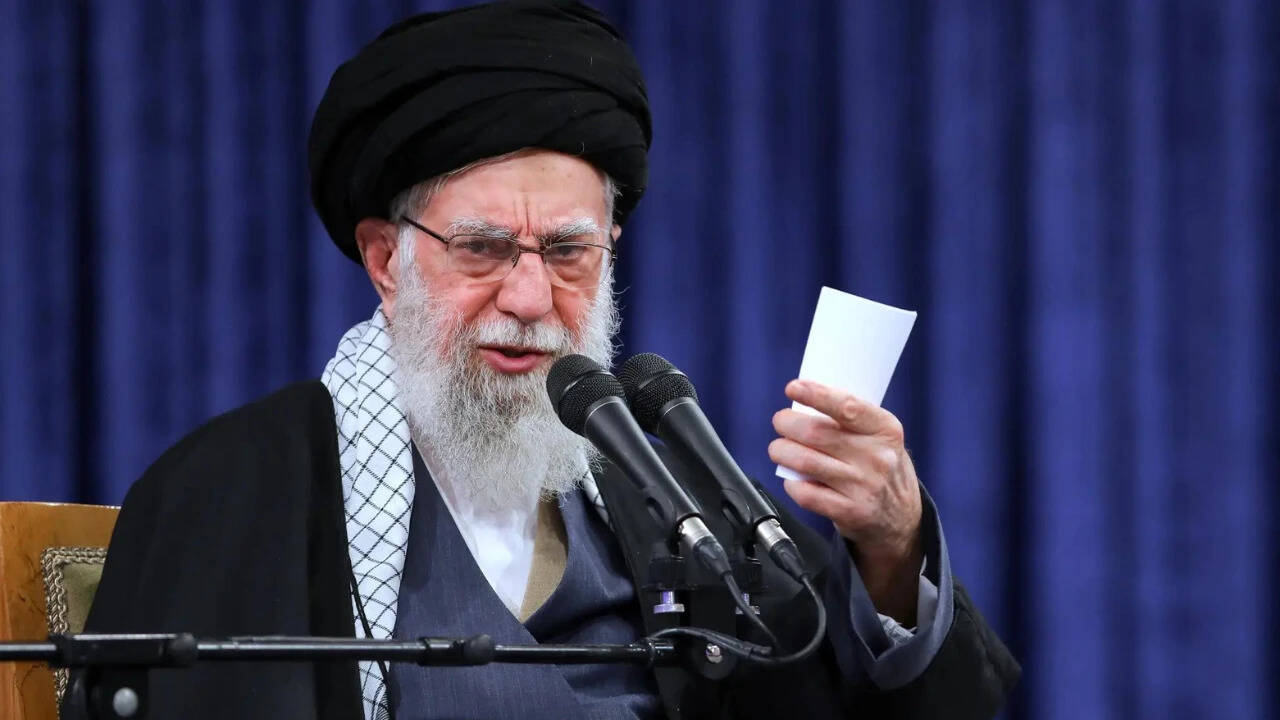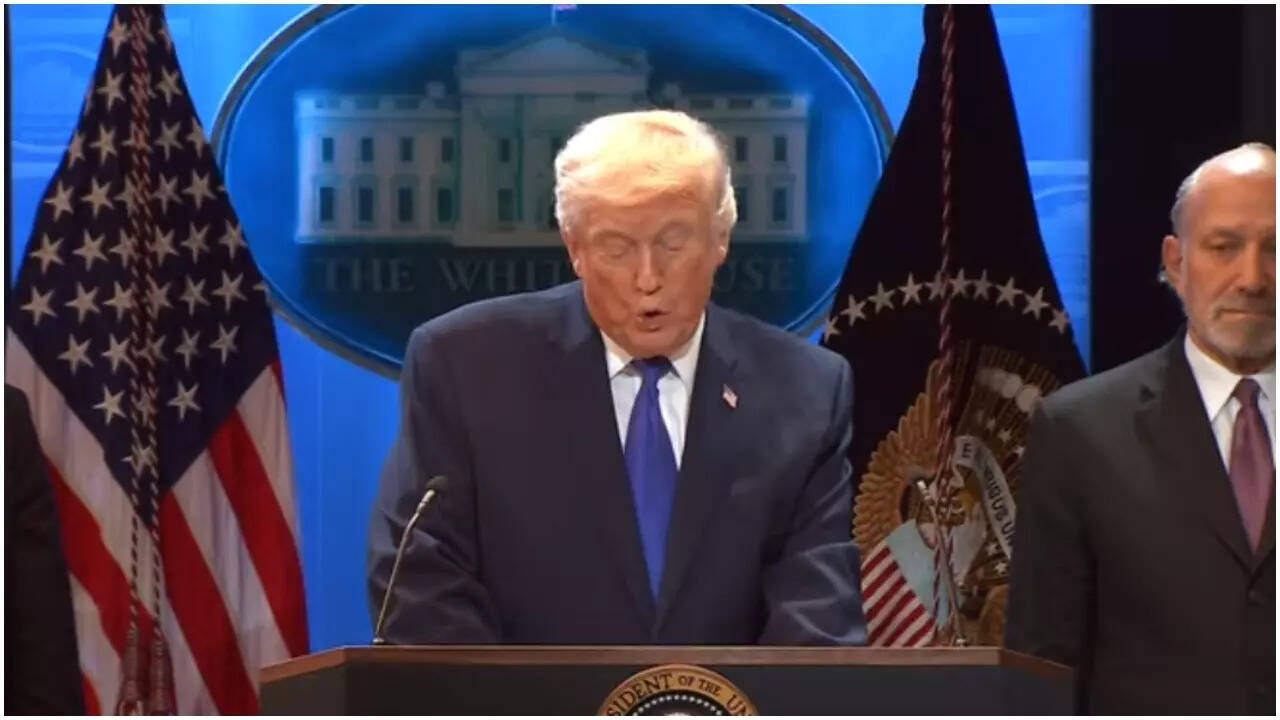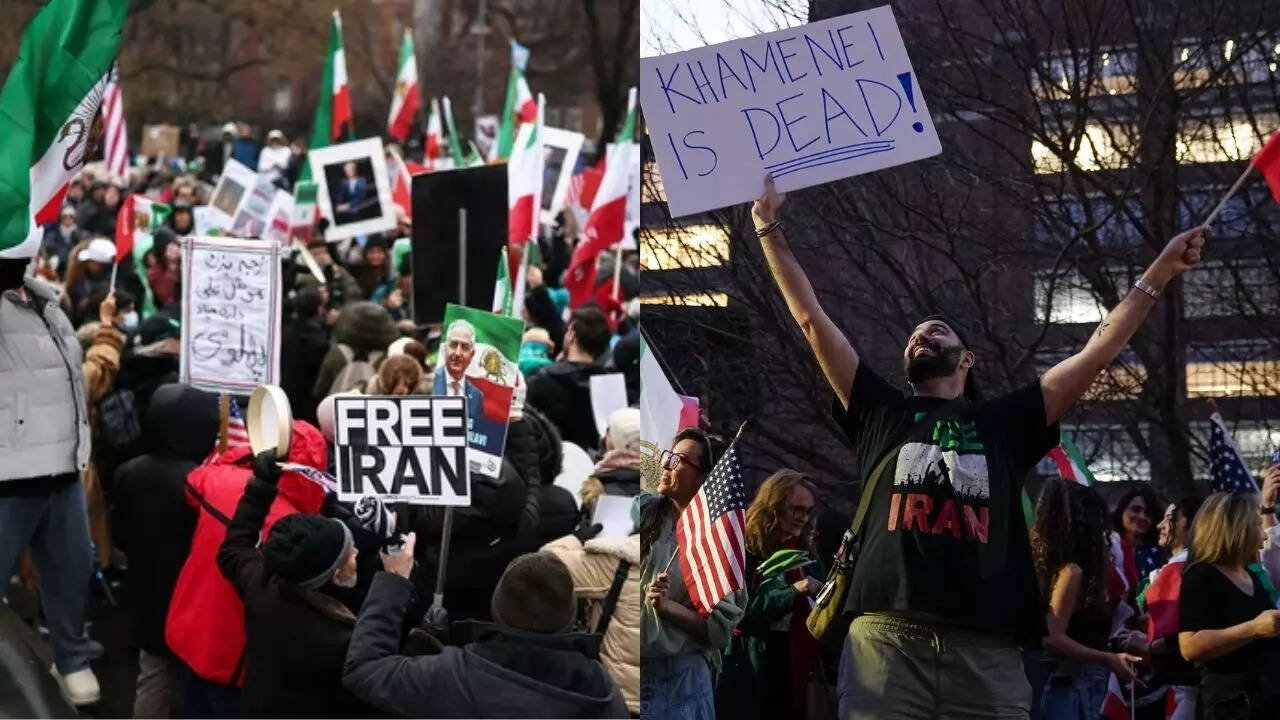
The death of Supreme Leader Ali Khamenei has not just ended an era. It has detonated a long-fused bomb at the heart of the Islamic Republic. As reports of his passing filtered through state media and encrypted messaging apps, the initial shock shifted almost instantly into a chaotic, multi-front struggle for the soul of Iran. In Washington, the reaction from the Trump administration was swift and predictable. The President’s call for protesters to seize the moment and "take over" the machinery of the state sounds like a rallying cry for democracy, but it ignores the brutal structural reality of how the Iranian regime is built to survive exactly this kind of crisis.
To understand why a simple "takeover" is more complicated than a tweet suggests, one must look at the dual-layered nature of Iranian power. The protesters are real. Their anger is justified by decades of economic mismanagement and social repression. However, they are facing a military-industrial complex that has spent forty years preparing for this specific moment of vulnerability.
The Assembly of Experts and the Shadow of the IRGC
The official process for replacing Khamenei rests with the Assembly of Experts, a body of 88 clerics. They are supposed to choose a successor based on piety and Islamic scholarship. That is the theory. The reality is that the Islamic Revolutionary Guard Corps (IRGC) holds the keys to the room. Over the last decade, the IRGC has evolved from a military wing into a sprawling conglomerate that controls more than a third of Iran’s economy, from telecommunications to construction and oil.
They are not just soldiers; they are the ultimate stakeholders. For the IRGC, the transition is not a religious matter but a survival maneuver. They require a leader who will maintain the status quo of "resistance" because that resistance justifies their massive budget and their grip on the nation’s ports. If a truly moderate or pro-Western figure emerged, the IRGC’s financial empire would be dismantled. They will not allow that to happen without a scorched-earth internal conflict.
Why Protests Rarely Topple Heavily Armed Ideocracies
The streets are currently filled with a demographic that has nothing left to lose. Inflation has decimated the middle class. The rial is in a freefall that makes basic groceries a luxury. When Trump calls for these people to take over, he is asking a civilian population to displace a paramilitary force of roughly 150,000 active members, backed by several million Basij militia volunteers.
History shows that street protests succeed only when one of two things happens: the security forces refuse to fire on the crowd, or a significant portion of the elite defects to the opposition. Currently, there is no evidence of a major fracture within the IRGC high command. The "takeover" Trump envisions requires a level of coordination and weaponry that the fragmented Iranian opposition currently lacks. Without a clear leader or a "shadow government" ready to step in, a vacuum in Tehran usually leads to a military junta, not a liberal democracy.
The Trump Strategy of Maximum Encouragement
The White House is operating on the belief that the Iranian regime is a house of cards. By providing rhetorical support and tightening the screws of "Maximum Pressure," the administration hopes to trigger a total systemic collapse. This strategy assumes that the Iranian people will see the U.S. as a liberator.
Yet, the memory of foreign intervention is long in the Middle East. While many young Iranians admire Western freedoms, they are also wary of the Libyan or Syrian scenarios—where the collapse of a central authority led to years of civil war and proxy battles. The administration’s rhetoric provides the hardliners in Tehran with a convenient narrative. They can label every student and worker in the street as an "agent of the Great Satan," justifying the use of lethal force as a matter of national sovereignty rather than domestic policing.
The Economic Engine of Repression
Sanctions were designed to starve the regime into submission. Instead, they have often had the opposite effect of centralizing power. When legitimate trade dies, the black market thrives. The IRGC, which controls the borders and the smuggling routes, has become the only entity capable of moving goods in and out of the country.
- Sanctioned Oil: Sold through "ghost fleets" and middle-men in Asia.
- Dual Exchange Rates: Used by the elite to profit from the currency's collapse.
- Internal Monopolies: Controlled by religious foundations (Bonyads) that answer only to the Supreme Leader.
This economic structure means that the people starving in the streets are not the people holding the guns. The men holding the guns have their own supply chains. They are insulated from the "Maximum Pressure" that Trump believes will force their hand.
The China and Russia Factor
Iran does not exist in a vacuum. To Moscow and Beijing, the Islamic Republic is a vital piece on the global chessboard. China needs Iranian energy and a foothold in the Persian Gulf. Russia needs a partner that can frustrate American interests in the Middle East. If the regime looks like it is truly on the verge of toppling, expect these powers to provide more than just diplomatic cover.
Intelligence sharing, surveillance technology, and even direct financial lifelines have been extended to Tehran in recent years. This "Axis of Outsiders" creates a safety net that previous revolutionary movements in the 20th century didn't have to contend with. The protesters aren't just fighting the clerics; they are fighting an international network of autocracies that cannot afford to see Tehran fall to a pro-Western movement.
The Fractured Opposition
One of the biggest hurdles to a successful "takeover" is the lack of a unified front. The opposition is split between the monarchists who want the return of the Pahlavi family, the MEK (Mojahedin-e-Khalq) which has a dark history and little support inside Iran, and a massive, leaderless youth movement that just wants "normalcy."
Each group has different goals and different visions for a post-Khamenei Iran. Without a singular figure to rally around—someone who can command the respect of both the secular youth and the traditional religious classes—the movement risks being picked apart by the regime's security services. The regime is a master of the "divide and conquer" strategy, often infiltrating protest groups to incite violence that alienates the general public.
The Risk of a Failed State
The most dangerous outcome of the current crisis is not the survival of the regime, but its messy, incomplete disintegration. If the IRGC splits into rival factions—some supporting a new cleric and others pushing for a pure military dictatorship—Iran could descend into a multi-sided internal conflict.
A destabilized Iran, a country of 85 million people with a sophisticated military and a long-standing nuclear program, would create a refugee crisis and a regional security nightmare that would dwarf the Syrian civil war. This is the nuance missing from the simplified calls for a "takeover." The transition from an autocracy to a stable alternative is a marathon, not a sprint triggered by a change in leadership.
The regime has survived the death of its founder, Khomeini, and it has survived decades of war and isolation. It is built for endurance. The protesters in the streets are showing immense courage, but they are fighting an apparatus that views their survival and the state's survival as the same thing.
The question is not whether the Iranian people want change—they clearly do. The question is whether they can dismantle a system that has spent forty years ensuring it is the only game in town.
Monitor the movements of the 15th Khordad Foundation and the Execution of Imam Khomeini's Order (EIKO). These are the financial heartbeats of the clerical establishment; if their leadership begins to shift assets or flee, it will be the first real sign that the internal structure is finally buckling from within.