The humid air of a Miami courtroom smells like stale coffee, floor wax, and cheap cologne. It is a million miles away from the red dust of Pétion-Ville, yet for weeks, the ghosts of Port-au-Prince packed the wooden benches of the federal courthouse in South Florida.
At the defense table sat Christian Emmanuel Sanon. For another look, consider: this related article.
He is a man in his mid-sixties with a graying beard, a soft voice, and the practiced, soothing cadence of a suburban pastor. For years, he lived a quiet, unremarkable life in Florida—filing for bankruptcy, running small businesses that never quite caught fire, and preaching to modest congregations. If you passed him in the aisle of a Broward County grocery store, you wouldn't look twice. You would see a polite grandfather reaching for a box of cereal.
You would not see a man who plotted to overthrow a sovereign nation. Related reporting on the subject has been provided by USA Today.
Yet, when the federal jury finally filed back into that Miami courtroom and delivered their verdict—guilty on charges of conspiring to kidnap and kill a foreign leader—they were not just convicting an aging doctor and preacher. They were exposing a terrifying truth about modern geopolitics. You do not need a rogue intelligence agency or a superpower's military budget to shatter a country. Sometimes, all it takes is a delusional man with a savior complex, a handful of predatory financiers, and a credit card with enough limit to rent a squad of mercenaries.
The Architecture of a Delusion
To understand how a bankrupt Florida pastor ended up at the center of the July 7, 2021 assassination of Haitian President Jovenel Moïse, you have to understand the intoxicating poison of exile politics.
I have spent years reporting from the fault lines where diaspora ambition meets fragile homeland reality, and the pattern is always the same. When a country bleeds for decades, the people who left it behind often develop a peculiar kind of phantom limb syndrome. They feel the pain of their homeland acutely, yet they are completely detached from the grinding, complex reality on the ground. In strip-mall cafés from Little Haiti to Montreal, men in pressed linen shirts sip bitter espresso and redraw maps on paper napkins. They talk about saving the nation as if it were a failing restaurant that just needed new management.
Sanon was a fixture in this orbit. He held medical degrees from the Dominican Republic, though he was never licensed to practice in the United States. He bounced between Florida and Haiti, positioning himself as a man of God and a man of science—a rare hybrid uniquely qualified to heal a broken republic.
By early 2021, Haiti was indeed breaking. President Jovenel Moïse was ruling by decree after failing to hold legislative elections. Kidnappings in Port-au-Prince had become a daily currency. Armed gangs controlled the arterial roads leading out of the capital, choking off fuel and food. Protesters filled the streets, demanding Moïse step down, arguing his constitutional term had already expired.
Into this vacuum stepped Sanon, armed with a YouTube video and a staggering lack of self-awareness.
In a series of recorded messages, Sanon spoke softly into his camera, condemning the corruption of Haiti’s political class and offering himself as a divine alternative. He wasn't a politician, he insisted. He was a vessel. To anyone watching with clear eyes, it looked like a vanity project.
To a group of South Florida security contractors and shadowy financiers, however, Sanon looked like something else entirely. He looked like a front man.
Renting a Coup on Credit
Consider what happens next.
In the spring of 2021, Sanon connected with CTU Security, a struggling private security firm operating out of a nondescript warehouse in Doral, Florida, just west of the Miami airport. The company was run by Antonio Intriago, a Venezuelan émigré who, like Sanon, was drowning in debt and desperate for a massive payday.
Think of this partnership like a classic confidence game, except the mark and the con artist were both trying to cheat history. Sanon wanted the presidential palace. Intriago and his financial backers—including Walter Veintemilla, a Florida lender who raised hundreds of thousands of dollars for the operation—wanted lucrative infrastructure, security, and reconstruction contracts once Sanon was installed in office.
They didn't have an army. So they outsourced one.
Using a network of recruiters, CTU Security began hiring retired Colombian soldiers. These were men who had spent decades fighting brutal jungle insurgencies against FARC guerrillas—hardened, disciplined, and largely destitute in retirement. They were told they were being hired for a legitimate VIP protection mission in Haiti, guarding important infrastructure and facilitating a lawful transition of power. Many were promised salaries of nearly three thousand dollars a month—a fortune compared to their meager military pensions in Bogotá.
In May 2021, Sanon flew to Port-au-Prince on a private jet. He wasn't traveling light. Accompanying him were his newly hired Colombian bodyguards, wearing crisp polo shirts and carrying concealed weapons.
When I first saw the photographs of Sanon stepping off that tarmac, what struck me wasn't the sinister nature of the entourage; it was the sheer, theatrical absurdity of it. Sanon walked across the concrete with the chin-up posture of a head of state arriving at a G7 summit. He genuinely believed that his arrival would trigger a peaceful, miraculous surrender of the Haitian government. He thought the U.S. State Department was quietly cheering him on from the shadows—a delusion fed to him by his co-conspirators, who falsely claimed to have high-level backing in Washington.
The reality was far more sordid. The entire coup was being financed on a shoestring budget, patched together with high-interest loans, wire transfers from South Florida shell companies, and equipment bought in bulk at local tactical stores. They didn't even have enough cash to properly feed the Colombian mercenaries once they arrived in Haiti. For weeks, over two dozen trained killers sat cooped up in safe houses in the hills above Port-au-Prince, eating cheap rice and beans, waiting for orders that kept changing.
The Night the Plan Mutated
Initially, the plotters claimed the mission was simply an arrest. They had obtained an old, dubious arrest warrant for President Moïse and planned to detain him at the airport or his residence, whisk him away, and install Sanon as the interim president.
Let us use a hypothetical scenario to understand the fatal flaw in this logic. Imagine you hire twenty-six heavily armed demolition experts, hand them sledgehammers, tell them to break into a locked house at midnight, and insist they only take one specific teacup without breaking anything else. The moment the door splinters, the nature of the tools dictates the outcome.
By late June 2021, the original plan had collapsed. Moïse wasn't traveling as expected. Money was running out. The Colombian mercenaries were growing restless, and the Florida organizers were panicking over their unrecoverable investments.
So, the mission changed. Arrest became assassination.
Around 1:00 a.m. on July 7, 2021, a convoy of black SUVs rolled up the winding, steep roads of Pétion-Ville toward Moïse’s private residence. The men inside were wearing tactical gear, carrying assault rifles, and shouting through megaphones in English and Spanish: "DEA operation! Everybody stand down! DEA operation!"
It was a lie designed to freeze the presidential guard in their tracks. And it worked.
The president’s elite security detail—men paid to take a bullet for the head of state—never fired a single shot. They stepped aside, confused or complicit, as the commandos breached the perimeter, blew open the doors of the residence, and stormed up the stairs to the master bedroom.
Jovenel Moïse was 53 years old. Whatever his political failings—and his critics in Haiti were legion, accusing him of authoritarian drift and economic mismanagement—he died alone on the floor of his bedroom in the dark, struck by twelve bullets. His wife, Martine, was shot multiple times and left bleeding on the floor, surviving only because the attackers assumed she was dead.
While gunfire echoed across the ridge of Pétion-Ville, where was Christian Emmanuel Sanon?
He wasn't leading the charge. He wasn't rallying the people in the streets. He was sitting in a house nearby, waiting for a phone call telling him the throne was empty.
The Collapse of the House of Cards
In the movies, a coup ends with a dramatic speech from a balcony. In real life, when amateurs try to play kingmaker, it ends in pathetic, frantic confusion.
Within hours of the assassination, the plot unraveled completely. The U.S. government did not step in to recognize Sanon as the new leader of Haiti. The Haitian National Police did not salute him. Instead, the police launched a massive manhunt.
Cornered in a compound near the Canadian embassy, the Colombian mercenaries engaged in a prolonged gun battle with Haitian police. Some fled into the Taiwanese embassy, where they were promptly arrested. Others were dragged out of bushes by angry mobs in the streets, beaten, and handed over to authorities.
And Sanon? He was arrested in Port-au-Prince shortly after the attack. When police searched his residence, they didn't find a blueprint for a functioning government. They found boxes of ammunition, holsters, twenty boxes of bullets, gun parts, four license plates from the Dominican Republic, and two cars.
Eventually, U.S. federal prosecutors stepped in, exercising jurisdiction because the conspiracy had been hatched, funded, and organized on American soil—a direct violation of the Neutrality Act and federal laws prohibiting conspiracies to kill or kidnap persons in a foreign country.
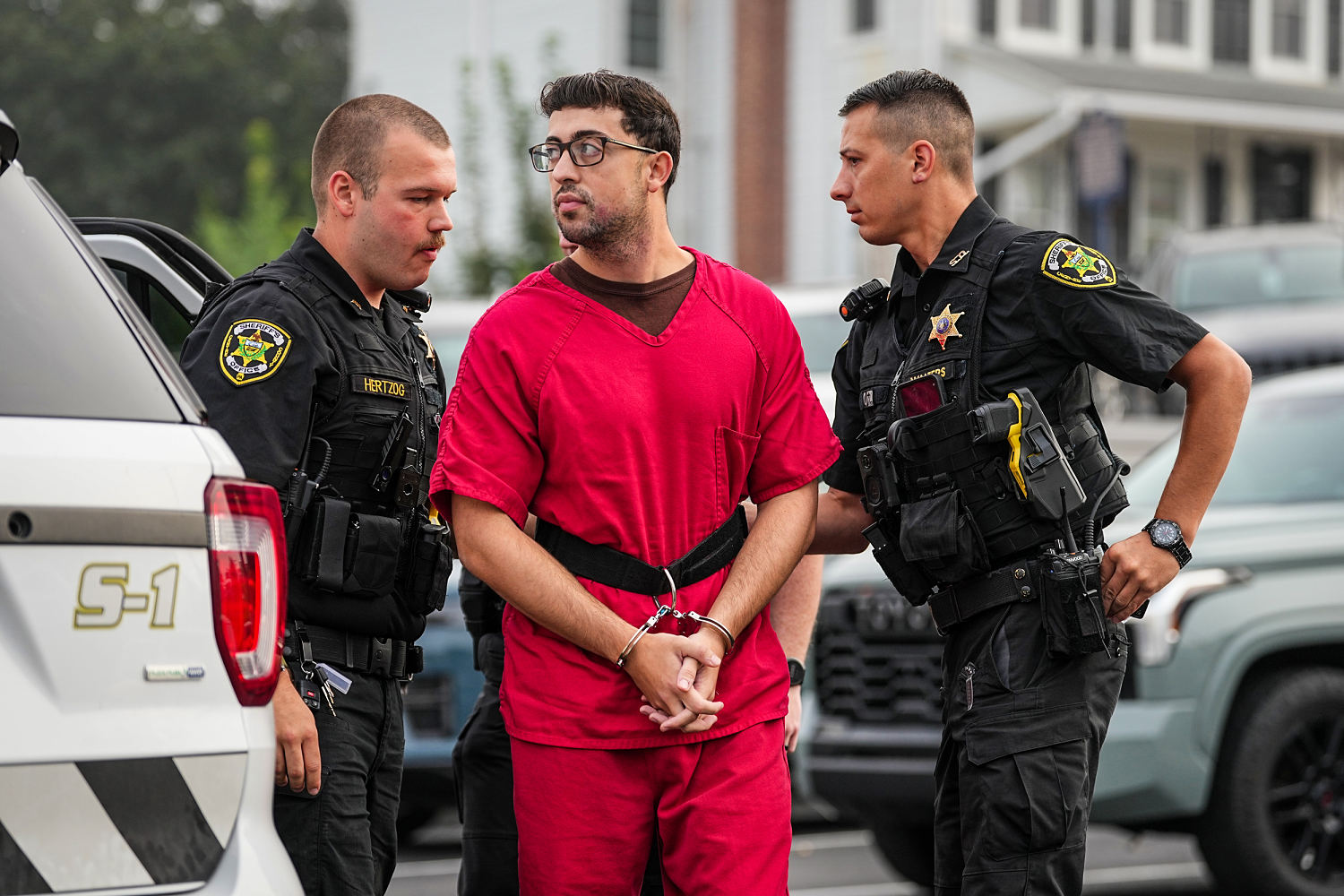
Sanon was extradited back to Miami in early 2023. The man who had flown out of South Florida dreaming of a presidential sash returned in handcuffs and an orange prison jumpsuit.
What the Guilty Verdict Actually Means
During his trial in Miami, Sanon’s defense attorneys tried to paint him as a gullible dupe. They argued he was a well-meaning humanitarian who had been manipulated by ruthless men like Intriago and Veintemilla—a naive pastor who genuinely thought he was helping his homeland through legal, peaceful means and had no idea the mission had turned into a murder plot.
It is a tempting narrative, especially if you want to believe that evil always looks like a villain.
The jury didn't buy it. Why? Because the digital trail was merciless. Text messages, voice notes, and financial records showed that Sanon wasn't a passive bystander; he was the linchpin. He recruited participants. He signed off on the chain of command. He promised state contracts to his financial backers in exchange for the cash used to buy the weapons and pay the killers. Even after the plan shifted from arrest to assassination, Sanon remained tethered to the operation, eagerly awaiting his elevation to power.
Ignorance is not innocence when you are the one holding the match.
The conviction of Christian Emmanuel Sanon closes a critical chapter in the U.S. federal prosecution of the Moïse assassination—a sprawling case that has already seen guilty pleas from key figures like Intriago, Veintemilla, and former Colombian military officers. Yet, if you walk the streets of Port-au-Prince today, the verdict in Miami offers very little comfort.
Since that night in July 2021, Haiti has not found its savior. Instead, it has descended into an abyss that makes the dark days of Moïse’s presidency look almost nostalgic. Without a functioning president, parliament, or supreme court, armed gang coalitions have seized control of nearly ninety percent of the capital. Millions face acute hunger. Hundreds of thousands have been displaced from their homes. The state itself has largely evaporated.
This is the invisible cost of Sanon’s vanity.
When a powerful nation invades another, the tragedy is obvious, monumental, and historical. When a bankrupt pastor from Florida teams up with a debt-ridden security contractor to assassinate a president on a whim, the tragedy feels almost insultingly small. It feels like a fatal car crash caused by a drunk driver—senseless, preventable, and utterly disproportionate to the devastation left behind.
The Ghosts in the Courtroom
History rarely turns on the grand designs of brilliant masterminds. More often, it hinges on the reckless arrogance of mediocre men who mistake their own ambition for destiny.
Christian Emmanuel Sanon will likely spend the rest of his natural life in a federal prison. He will grow old behind razor wire, far from the pulpits of Florida and the dusty hills of Port-au-Prince. There will be no presidential motorcade, no inaugural address, no statues erected in his honor.
In the end, the preacher who thought he could buy a country couldn't even afford his own defense.
Outside the federal courthouse in Miami, after the verdict was read, the afternoon sun beat down on the concrete plaza. Traffic hummed along North Miami Avenue. People hurried past, checking their phones, rushing to pick up their kids or catch a train, entirely oblivious to the fact that inside that building, twelve ordinary citizens had just passed judgment on the men who broke a nation.
A few miles away, at Miami International Airport, planes were taking off every few minutes, banking south over the turquoise waters of the Caribbean, carrying cargo, diplomats, and hopeful dreamers toward an island that is still burning from the fire a quiet pastor helped light.