The ink on a Vatican decree is always heavy, but it dries in absolute silence.
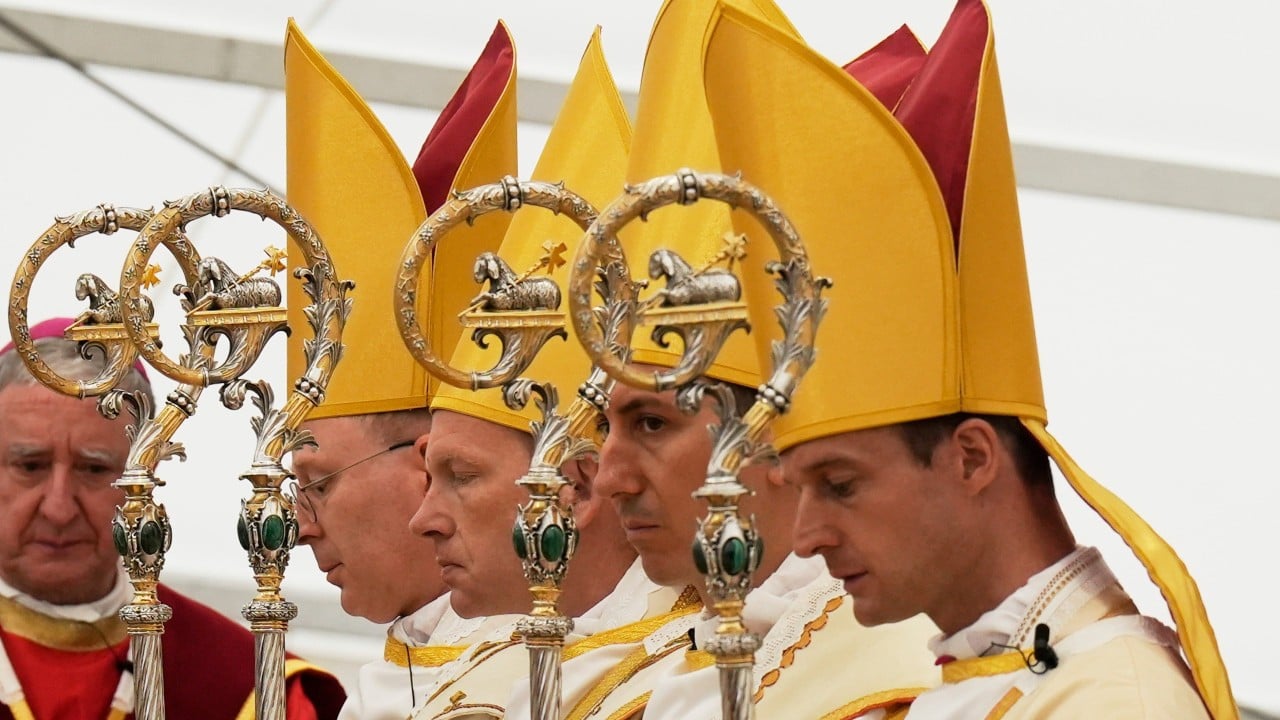
Somewhere in a quiet sacristy, far from the sun-drenched colonnades of St. Peter’s Square, a man dressed in the ornate vestments of a Catholic bishop stands before an altar. He is convinced he is saving the soul of the Church. He believes the modern world has gone mad, that Rome has drifted from its ancient moorings, and that he alone—along with a handful of like-minded brothers—holds the true, unadulterated flame of ancient faith.
Then, the letter arrives.
With a few lines of formal Latin text, the highest authority in the Roman Catholic Church cuts him away. It is called excommunication. To the secular world, it sounds like a medieval relic, a bureaucratic slap on the wrist from an aging institution. But to a believer, it is the ultimate exile. It is the formal declaration that you are no longer in communion with the global flock, that your sacraments are illicit, and that you have stepped outside the ark of salvation.
Six men recently chose this isolation. The Vatican formally announced the excommunication of six bishops belonging to a breakaway traditionalist faction, a rebel group that had long operated on the fringes of canonical law. The core facts are deceptively simple: these men ordained priests and consecrated bishops without the mandatory papal mandate. They defied Rome openly.
But behind the cold press releases lies a deeply human tragedy of fracture, pride, and the terrifying weight of absolute certainty.
The Fracture in the Sanctuary
To understand how a man climbs the hierarchy of the Catholic Church only to sever his ties with it, you have to understand the psychology of the traditionalist rebellion.
Consider a hypothetical young seminarian, let us call him Father Thomas, who joins a rebel traditionalist society. He does not see himself as a rebel. In his mind, he is a preservationist. He looks at modern society and sees chaos. He looks at modern Catholic parishes and sees a liturgy that feels too casual, sermons that feel too political, and a theology that feels too compromised by the secular world.
He wants the Latin Mass. He wants the rigid, uncompromising moral clarity of the Middle Ages. He wants the smell of heavy frankincense and the absolute assurance that every gesture he makes at the altar connects him directly to the saints of the first century.
This desire for timelessness is powerful. It draws people in. But it contains a hidden danger: the belief that the current authorities in Rome have betrayed the true faith. When that belief takes root, obedience dissolves.
The six bishops at the center of this recent Vatican decree crossed a line that the Church cannot ignore. In Catholicism, the pope is not just a CEO; he is the successor of Saint Peter, the earthly anchor of unity. When a bishop consecrates another bishop without the pope's permission, he is not just breaking a rule. He is creating a parallel church. He is slicing the seamless garment of Catholic unity.
Rome waited. The Vatican checked its watches. It issued warnings. It offered dialogue.
The rebels refused to bend.
The Illusion of the Pure Remnant
When the hammer finally fell, it was not a surprise, but it was a shock. Excommunication of this scale is rare. It echoes the great historic schisms that tore Europe apart in centuries past.
What happens to a community when its leaders are cast out? The immediate reaction among the followers of these six bishops is often a hardening of the heart. They don't see themselves as wrong. Instead, they embrace the identity of the "pure remnant." They tell themselves that the mainstream Church is corrupt, and that persecution is proof of their own righteousness.
But the psychological toll on the ordinary faithful who follow these bishops is immense.
Imagine an elderly woman who has gone to a traditionalist chapel for twenty years. She loves the Latin Mass. She loves the modesty of the community. Suddenly, she is told by the global Church that the priest she confesses her sins to has no legal authority to forgive them. She is told that the Sunday Mass she attends is an act of formal disobedience.
She is trapped between two loyalties: her love for the ancient traditions handed down by her local priests, and her desire to be a Roman Catholic in communion with the Pope.
The rebel bishops took that certainty away from her. In their quest to preserve the past, they created a profound spiritual anxiety in the present. They chose the purity of their ideology over the messy, complicated reality of communion.
The Echoes of History
This is not a new story. The Church has been fighting this exact battle since its inception.
Every few decades, a group emerges that believes the current pope is too liberal, too radical, or simply illegitimate. In the late twentieth century, it was Archbishop Marcel Lefebvre who led a similar revolt, consecrating four bishops without a papal mandate and triggering an automatic excommunication that took decades of delicate diplomacy to even partially heal.
The tragedy of these movements is that they always burn out in isolation.
Cut off from the main body, rebel groups almost inevitably begin to splinter within themselves. Without a central authority to appeal to, every man becomes his own pope. One bishop thinks the other is not traditional enough. Another suspects his brother of secret heresies. The pure remnant splits into an even purer remnant, until the community dissolves into tiny, bitter factions arguing over the precise Latin phrasing of a sixteenth-century text.
The Vatican’s decree is an act of institutional self-defense, but it is also a warning to those who think they can walk away from the collective table and build a better church in the wilderness.
The Solitude of the Altar
The headlines have moved on now. The six bishops are footnotes in ecclesiastical journals, their names recorded in the long, sad history of Christian division.
But the reality remains for the men themselves. To be an excommunicated bishop is to live in a strange, ghostly limbo. You possess the spiritual power to ordain and to consecrate, according to traditional theology, but you have no right to use it. You wear the ring and the miter, but you represent no one but yourself and your small circle of followers.
The heavy doors of the global Church have swung shut.
The next time one of these bishops steps up to the altar to light the candles and chant the ancient prayers, the words will sound exactly the same as they did the week before. The incense will still rise toward the ceiling in lazy, blue ribbons. The Latin vowels will still ring clear against the stone walls.
But outside the chapel doors, the world keeps spinning, and the vast, billion-strong global family from which they severed themselves continues to pray for a unity that these six men decided they no longer needed.