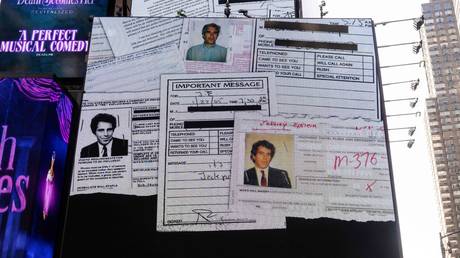
Money has no memory. It does not remember the hands that held it, the source from which it bled, or the quiet suffering buried beneath its transfer. It only moves.
Consider a mahogany-paneled office on Park Avenue. The air smells faintly of aged leather, expensive scotch, and absolute security. Inside, compliance officers stare at computer monitors displaying rows of numbers that should trigger immediate alarm bells. Routine cash withdrawals ranging from forty thousand to eighty thousand dollars, occurring multiple times a month. Suspicious wire transfers crossing international borders. Red flags waving frantically inside internal bank databases.
Yet, across fifteen years, more than one billion dollars flowed through accounts tied to Jeffrey Epstein at JPMorgan Chase alone.
When we talk about financial crimes of monumental proportions, our minds naturally drift toward Hollywood tropes. We imagine masked men, underground cartels, or frantic coded phone calls in dimly lit parking garages. But the machinery of modern corruption is far more mundane. It wears a bespoke Italian suit. It sits in a high-backed ergonomic chair on the thirtieth floor. It drinks artisanal coffee while clicking a mouse to override internal compliance warnings because a lucrative client is simply too valuable to lose.
Think of a compliance officer as a sentry standing watch at the gates of a medieval fortress. Day after day, this sentry notices irregularities—foreign currency moving strangely, structured cash withdrawals designed to evade federal reporting thresholds, accounts set up for young women at the direct behest of a convicted sex offender. The sentry raises the alarm. Notes are typed into digital logs. Memos are circulated.
Then comes the quiet override.
Internal records and investigative findings reveal that top executives at major financial institutions, including JPMorgan Chase, Deutsche Bank, and Bank of America, repeatedly chose to look the other way. They ignored federal anti-money laundering laws. They shielded a predator from federal scrutiny. Why? Because power attracts power, and Epstein was a master weaver of elite networks. He brought high-net-worth depositors to the firm. He brokered acquisitions. He mingled with billionaires, academics, and world leaders, transforming his social capital into an invisible shield that kept institutional gatekeepers docile.
To understand how a bank processes over a billion dollars for a man whose predatory nature was an open secret in certain high-society circles, we must look at the architecture of incentive. Wall Street institutions operate on fees, assets under management, and prestige. When a client commands hundreds of millions in accounts and introduces tech founders and global titans to the institution, the friction of moral hazard is smoothly smoothed over by corporate self-interest.
Imagine walking into a bank branch with a handful of cash and trying to open a checking account; you will face an avalanche of identity checks, source-of-wealth verifications, and suspicious activity screenings. Yet, at the highest echelons of global finance, scrutiny operates in reverse. The wealthier you are, the more doors unlock, and the quieter the rules become.
For years, internal warnings at JPMorgan were batted away. Even when senior legal counsel privately urged cutting ties, institutional inertia and powerful internal backers—such as investment banking executives who fought to keep the revenue stream alive—prevailed. It was only after Epstein's arrest and subsequent death in federal custody that the retrospective panic set in. Suddenly, retroactively filing thousands of suspicious activity reports covering billions of dollars became the damage-control strategy of choice. Banks scrambled to quarantine their reputations, paying hundreds of millions in settlements to victims and government entities while insisting they had no idea what was happening right beneath their noses.
Of course they knew. Or, more accurately, they chose a specialized form of blindness. They cultivated an environment where asking the obvious question was treated as a career hazard.
The human toll of these administrative blind spots cannot be measured on a balance sheet. While executives debated reputational risk and calculated retention metrics, real lives were being systematically dismantled in mansions and private islands. The money moving through those wire transfers was not abstract accounting data; it was the lifeblood of a trafficking operation hiding in plain sight.
When the history of this era is written, the true scandal will not merely be the monstrous actions of one individual. It will be the systemic complicity of institutions designed to protect the global financial system, which instead opened their vaults, counted the cash, and locked the door against the screams outside.