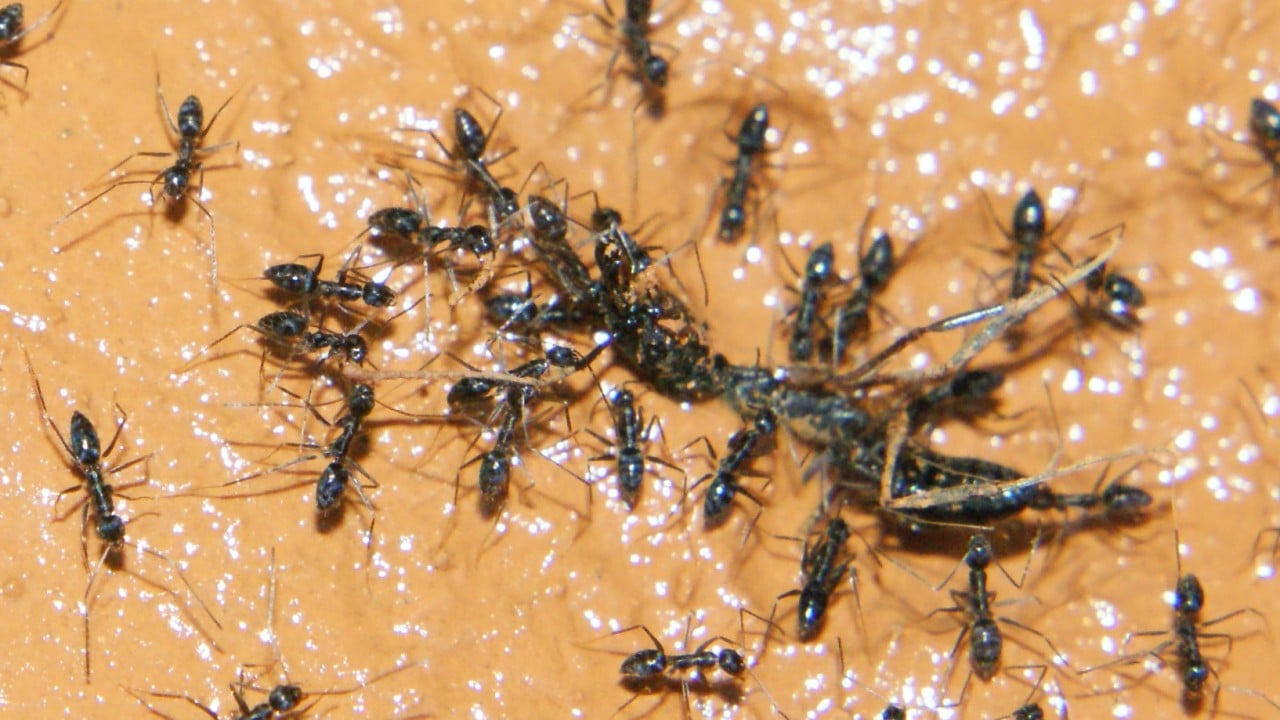
The room was dead silent save for the subtle scrape of silver on porcelain. A waiter stepped forward, holding a chilled crystal bowl containing a sphere of pale, citrus sorbet. Perched atop the ice sat a cluster of small black ants.
They were not an accident. They were not a sanitation failure. They were the main event.
When a guest lifts a spoon of that sorbet to their mouth, the first sensation is cold. Then comes the crisp texture. Finally, an unexpected burst of sharp, bright acidity hits the back of the palate—a distinct citrus flavor reminiscent of kaffir lime and lemongrass, produced naturally by the formic acid inside the insect's body. For culinary avant-gardists, this is pure magic. It is an exploration of terroir, a nod to ancient foraging practices, and a masterclass in modern gastronomy.
For state prosecutors in Seoul, however, it was a criminal offense punishable by prison.
When Art Collides with the Code
Behind the polished oak doors of a Michelin-starred establishment, brilliance often walks a thin wire over disaster. Chefs operate on instinct, memory, and a restless drive to push past the familiar. They look at the natural world and ask a simple question: What else can we taste?
The law asks a very different question: Has this exact organism been risk-assessed by a government tribunal?
In South Korea, the Ministry of Food and Drug Safety maintains a strict register of legal food ingredients. The list is precise. Mealworms are permitted. Grasshoppers have made the cut. Crickets and silkworm pupae are well-established staples with decades of commercial safety data behind them.
Wood ants, despite being consumed for generations in various rural traditions across the globe and featured on the menus of the world’s top restaurants, were not on that list.
To the bureaucrat reviewing the inspector's report, there was no nuance. No weight was given to the restaurant’s coveted Michelin star, nor to the glowing reviews in international food journals. There was only a binary reality: an unregistered biological specimen had been served on a plate for money.
Under South Korea’s Food Sanitation Act, serving unapproved ingredients isn't a minor regulatory slap on the wrist. It carries heavy penal consequences. A conviction can mean up to five years in prison or tens of millions of won in fines.
Consider the emotional arithmetic of that moment. A chef spends fifteen hours a day in a high-pressure kitchen, obsessing over temperatures, acid levels, and plating geometry. They pour their life savings and personal sanity into earning an international mark of excellence. Then, because of an insect measuring three millimeters in length, they find themselves sitting across a metal table from criminal investigators.
The Invisible Battle on the Plate
Innovation has always been a messy, uncomfortable business. Every culinary staple we take for granted today was once an untested gamble. Someone had to be the first human to look at a bruised raw oyster or a vein of blue mold inside a block of curdled milk and decide to put it in their mouth.
When wild ingredients enter haute cuisine, the risk escalates.
Hyper-local foraging requires immense trust. A chef foraging in forest soil or sourcing from specialized ethical gatherers assumes responsibility for every microgram of food that touches a patron’s tongue.
Metaphorically speaking, running an experimental kitchen is like navigating an uncharted forest without a compass. The creative impulse demands that you step off the paved road. The regulatory framework demands that you never leave the sidewalk.
In this case, the tension boiled over into the court system.
Public reaction split instantly. Food critics and culinary enthusiasts expressed outrage, calling the prosecution a heavy-handed assault on creative freedom that threatened to stifle South Korea's burgeoning fine dining scene. Regulatory advocates stood firm, counter-arguing that public safety laws cannot contain loopholes for elite establishments. If a street vendor cannot sell unapproved insects, why should a celebrated chef get a pass just because the dish costs three hundred dollars?
The dilemma highlights a deep cultural friction. As South Korea solidifies its position as a global cultural titan—dominating cinema, music, and now high-end dining—its legal apparatus remains deeply conservative regarding health and safety protocols.
The Human Reality Behind the Headlines
It is easy to treat a story like this as a quirky piece of viral news. We read the headline, laugh at the absurdity of ant sorbet, and scroll to the next distraction.
Real lives sit in the wake of those headlines.
Think of the kitchen staff who spent months harvesting, freezing, and testing combinations to ensure the dish was completely sterile and perfectly balanced. Think of the young line cooks whose livelihoods depend on the restaurant remaining open. Think of the founder, staring at the prospect of a criminal record that could strip away their business license and ruin a lifetime of labor.
The kitchen is a place of intense vulnerability. You cook to communicate who you are. You hand a part of your identity to a stranger on a spoon and wait for their judgment.
When that judgment comes not from a diner, but from a magistrate holding a gavel, the nature of the craft changes overnight.
Courts are built for certainty. Food is built on evolution. When those two forces meet, somebody has to break.
A silence now hangs over the prep stations where that famous sorbet was once assembled. The crystal bowls remain on the shelf. The ants are gone, banished back to the soil by the weight of statutory law.
A plate of food is never just food. It is a mirror reflecting what a society allows itself to dream, to risk, and to swallow. When the law closes its mouth, the chef has no choice but to extinguish the fire.


/close-up-of-a-painting-on-a-rock-sevilla-rock-art-trail-traveller-s-rest-cederberg-mountains-clanwilliam-western-cape-province-south-africa-79588058-58e110c55f9b58ef7ef75317.jpg)