When the Price of Bread Becomes a Spark
The espresso machine hisses at 6:15 AM in a narrow bakery near Porto. Outside, a damp Atlantic fog clings to laundry lines and cobblestone alleys. Inside, the warmth smells of yeast, butter, and burnt sugar.
Wait.
Listen to the register. Not the cheerful chime of a holiday rush, but the hesitant pause before a regular customer hands back a croissant because the price climbed twenty cents since Tuesday. Twenty cents sounds like pocket change until you multiply it by every morning coffee, every electricity bill, every tank of diesel needed to get to a shift that no longer covers the month.
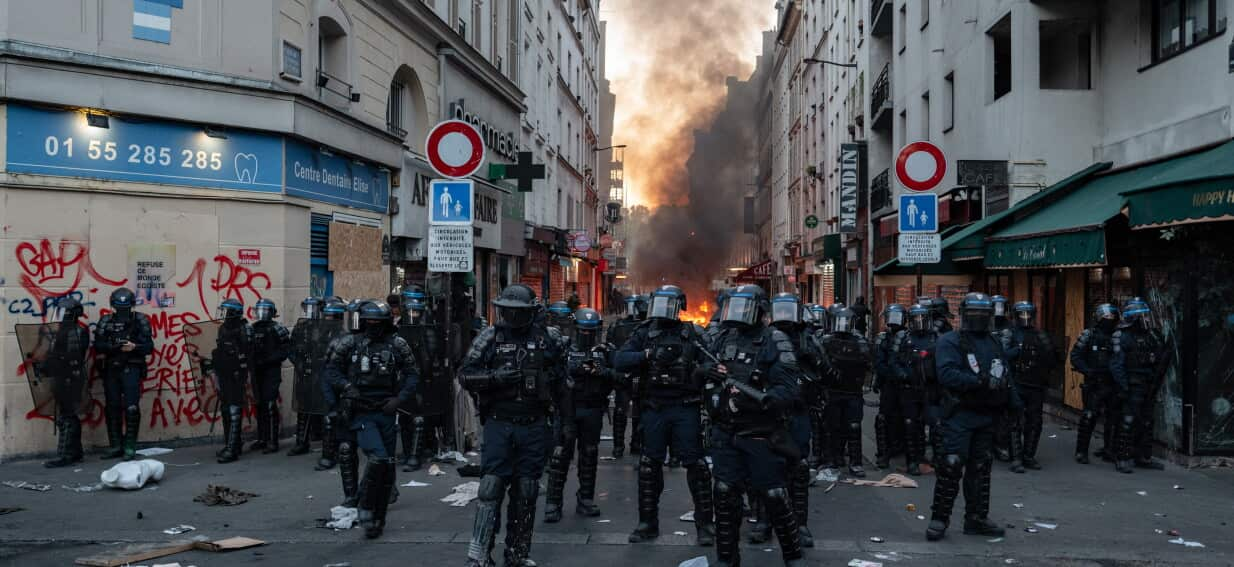
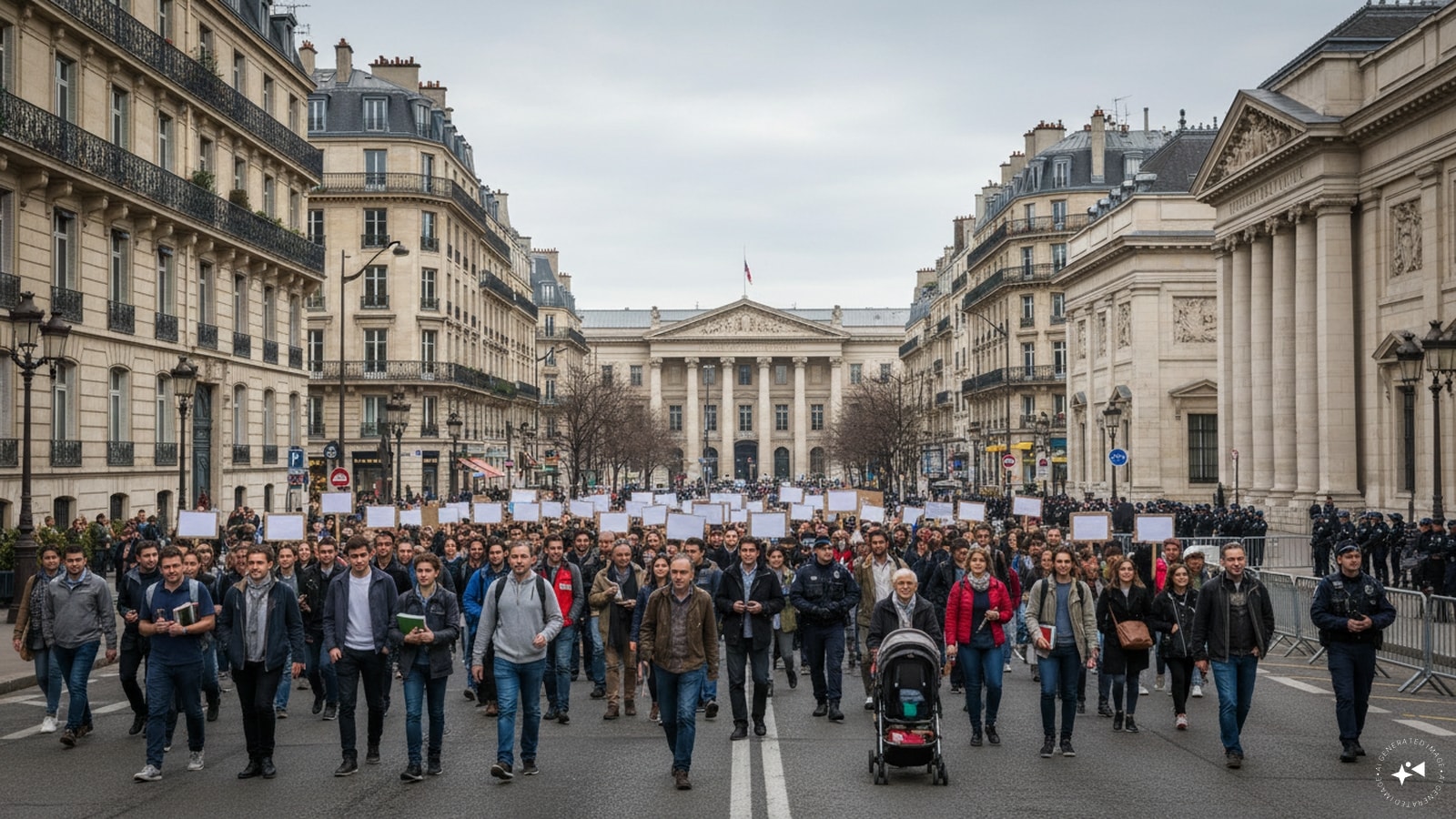
Across Europe, from the Atlantic coast of Portugal to the boulevards of France and beyond, that twenty-cent hesitation is turning into footsteps on pavement. High-visibility vests folded at the bottom of closets are coming back out. Tractor engines are idling before dawn on highway ramps. Banners painted on bedsheets are stretching across town squares where people once gathered only for football matches or summer festivals.
To understand why streets fill up, you have to stop looking at charts for a second and look at a kitchen table at the end of the month.
A Receipt That Tells the Whole Story
Inflation rarely arrives like a thunderclap. It creeps in like cold water rising around your ankles while you are busy doing something else. You don't notice the exact inch where the water passes your shoes until your jeans are soaked and your muscles are stiff.
Let's use a hypothetical scenario to make the math concrete. Picture Claire, a nurse living on the edge of Lyon, and Tomás, a delivery driver working out of Setúbal near Lisbon. Neither of them is fictional in spirit—thousands of people in both cities live lives built on tight margins—but Claire and Tomás are composite sketches created here to show how household budgets buckle under sustained price pressure.
Claire starts her day before sunrise. Her commute takes forty minutes each way. When fuel prices stay elevated, that drive stops being background noise and becomes a tax on her paycheck before she ever checks a patient's chart. At the grocery store on her way home, olive oil, dairy, and produce sit behind price tags that feel like riddles. She puts back the good cheese. She buys store-brand pasta. She calculates whether turning the thermostat down two degrees will keep her son's bedroom warm enough without triggering a winter heating bill that wipes out her savings cushion.
Two hundred miles south and across a border, Tomás faces the same arithmetic with different weather. Rent in coastal and urban pockets of Portugal has climbed faster than entry-level and working wages for years, squeezing younger workers and families who keep restaurants, logistics, and shops running. When housing takes half or more of a take-home pay packet, there is almost no shock absorber left. One sudden spike in utility costs, a car repair, or a jump in grocery prices doesn't just pinch—it tips the whole balance over.
Economists talk about "real wages," "core inflation," and "purchasing power." Those phrases are accurate, and they matter. Yet they flatten the human experience into smooth curves on a screen. Real life isn't a smooth curve. Real life is standing in front of a shelf holding two jars of sauce and doing mental division while your feet hurt.
Why France and Portugal Feel the Friction Differently
Protest movements across Europe share a familiar vocabulary of frustration, yet each country brings its own history, pressure points, and reflexes to the street.
In France, public anger has a long memory and a distinct choreography. French civic life has long treated protest not as a breakdown of politics, but as part of politics itself—a loud, physical reminder to leaders in Paris that policies drafted in ministries land on real people in real towns. When living costs press hard on fuel, groceries, and daily travel, frustration often concentrates around taxes, purchasing power, and the gap between urban centers and smaller towns or rural areas where driving isn't optional. Road blockades, union-backed walkouts, and mass marches carry a weight here because people know how quickly a stalled supply route or transit line gets attention.
Portugal's story has its own sharp edges. For years, visitors and commentators praised Portugal for sunshine, safety, and economic recovery after past crises. Many locals felt a quieter, heavier reality underneath the postcard. Wages have historically trailed many northern and western European peers, even as housing costs in cities like Lisbon and Porto—shaped by tight supply, tourism, investment demand, and shifting rental markets—surged out of reach for many residents. Add higher everyday costs for food, energy, and essentials, and even modest inflation hits hard when there is very little margin to absorb it.
That contrast reveals something crucial: unrest isn't caused by inflation alone. It happens when rising prices collide with a sense of unfairness.
Think of a pressure cooker. Heat alone isn't the whole story; the seal matters just as much. When people feel that sacrifices are shared—that everyone is tightening their belt together—they can endure grueling stretches with grit. When they feel ordinary workers are carrying the weight while profits, rents, or privileged loopholes look untouched, the valve starts rattling.
The Invisible Stakes Behind Every Protest
When cameras pan over a crowd chanting in a square or lining a roundabout, it is easy to reduce the scene to slogans and traffic delays. Most of what is at stake happens quietly behind closed doors.
One hidden cost is delayed life. Young adults stay in childhood bedrooms longer because a modest apartment costs more than an entry-level salary. Couples postpone having children—or have fewer than they hoped—because childcare, groceries, and space feel out of reach. People delay dental work, physical therapy, or routine care because every co-pay or out-of-pocket expense feels like a gamble.
Another stake is civic trust. When people work full-time—sometimes juggling two jobs or extra shifts—and still fall behind, faith in institutions frays. A citizen who feels heard at the ballot box or supported by public systems argues within the rules. A citizen who feels ignored by distant capitals or disconnected economists looks for a louder megaphone.
I have stood in crowds where anger wasn't theater; it was exhaustion with a pulse. You hear it in the voice of a shop owner who hasn't taken a real day off in three years, watching regulars buy less every week while suppliers raise prices again. You see it in tired eyes at 8:00 AM on a cold morning, people standing shoulder to shoulder not because marching is fun, but because staying silent feels like surrendering.
And I'll admit something honestly: watching these waves build across countries can feel confusing and unsettling, even for people who follow European politics closely. One week the headlines focus on energy markets and interest rates; the next, farmers, teachers, drivers, or students are blocking intersections. It is easy to lose the thread between a central bank decision or a supply-chain shift and a person holding a cardboard sign in the rain.
When the thread gets lost, fear and division rush into the gap.
What People Actually Ask When the Streets Fill Up
Whenever cost-of-living protests flare up across Europe, the same questions echo in living rooms and comment threads. Rather than treating them like trivia, it helps to trace how they fit into the story on the ground.
Why do movements start over one specific trigger, like fuel or groceries, and then swell into broader grievances? Because a single bill is often the straw, not the bale of hay. A jump at the pump or a spike in food prices is immediate, personal, and impossible to ignore. Once people step outside over that spark, they start talking to neighbors—and suddenly housing costs, stagnant wages, healthcare wait times, and feeling invisible all enter the conversation together.
Why do governments struggle to calm things down with a quick subsidy or a single speech? Subsidies can blunt pain for a month or two, much like an ice pack numbs a bruised ankle. Ice helps in the moment, yet if you keep running on a sprained joint, the ache comes right back the minute the cold fades. Households don't just want a temporary discount; they want predictability—the sense that next month won't ambush them again.
And do street protests actually change anything? History gives a mixed, sobering answer. Sometimes protests force real policy shifts, tax adjustments, wage talks, or renewed attention to neglected regions. Other times, frustration fractures into rival factions, political polarization deepens, or the energy fades before structural problems like housing supply or productivity are solved. Noise alone doesn't fix a broken equation, yet silence rarely changes it either.
Beyond Slogans: What Real Relief Looks Like
If anger is the symptom, what is the cure? There is no magic switch, and anyone promising an overnight fix is selling smoke.
Real relief requires tackling the big three anchors of daily survival: housing, energy and food stability, and fair take-home pay. Housing is stubborn because building takes years, zoning and permitting are messy, and cities face competing pressures. Still, without more attainable homes and saner rental pressure, wage gains get swallowed whole by landlords and mortgages.
Energy and food costs sit closer to global markets, weather shocks, and supply chains—things no single capital controls completely. Yet governments can shape how shocks are shared, invest in cleaner and more resilient energy systems, and keep essential markets competitive rather than opaque.
Just as important is how leaders speak. People can handle hard truths when leaders treat them like adults rather than statistics. Admitting trade-offs plainly—saying what can be fixed right now, what takes time, and where costs are being shared fairly—builds more credibility than glossy promises that collapse by next quarter.
Consider what happens next when leaders listen early versus when they wait for smoke on the highway. Listening early feels slower in political time, yet it prevents years of resentment. Waiting until the streets boil over forces rushed compromises under pressure, leaving both sides bruised.
The Morning After the Crowd Goes Home
Picture that bakery in Porto again, or a corner café in Lyon, a few days after a big demonstration.
The chants have faded. The police lines are gone. Street sweepers have cleared away flyers and plastic wrappers. Dawn breaks over wet stone, and the smell of fresh bread drifts out onto the sidewalk once more.
Inside, the door bell rings. Someone walks up to the counter, looks at the pastry tray, looks at the price tag, and exhales.
That single breath carries the whole story of Europe's cost-of-living storm. It holds the weight of past months, the worry about tomorrow's bills, and the stubborn hope that hard work ought to mean something more than treading water. Until that breath comes a little easier, the quietest rooms and the loudest streets will stay connected by an invisible wire.