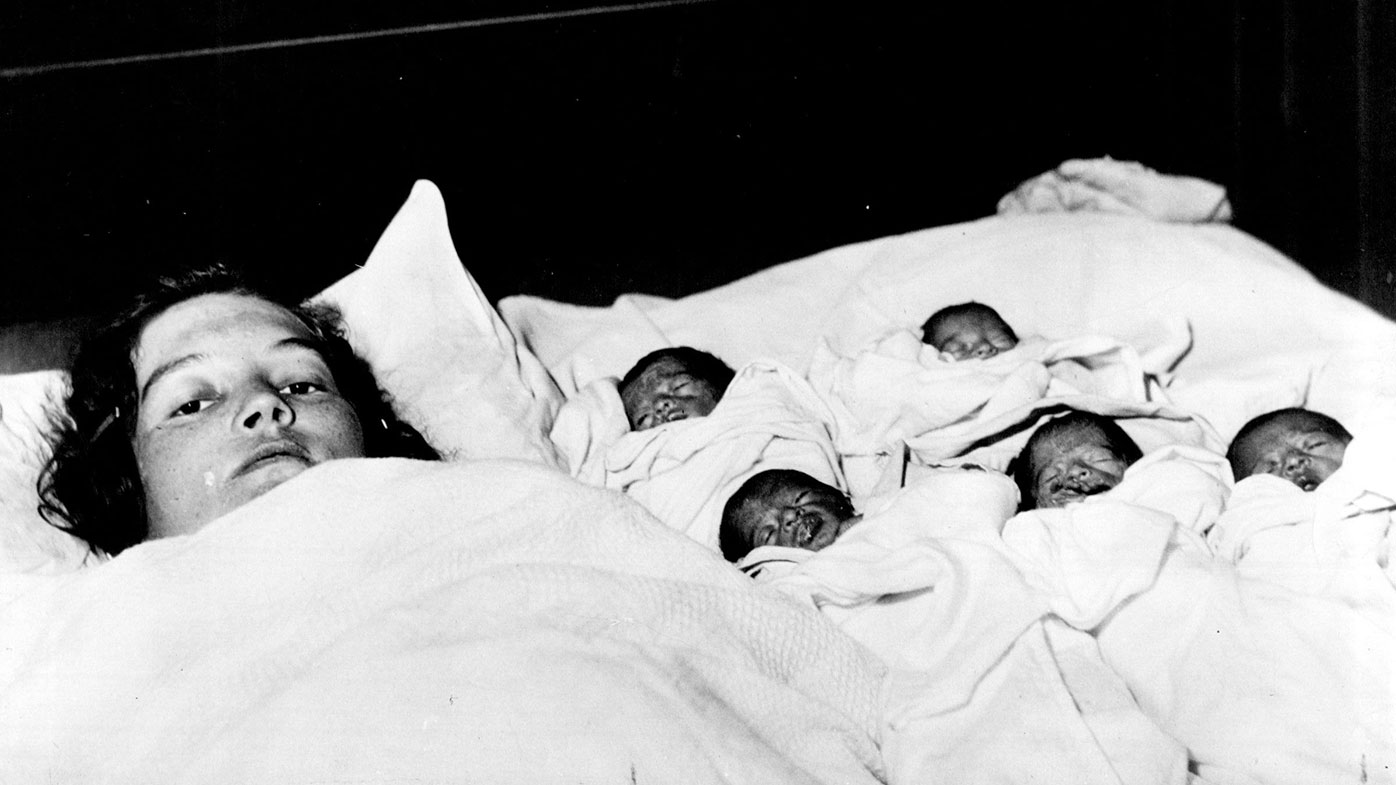
The silence of a neonatal intensive care unit is never actually silent. It is a symphony of synthetic clicks, the rhythmic hiss of mechanical lungs, and the low, agonizing hum of monitors keeping score between life and death. For months, this was the only world one young couple knew. They sat on rigid plastic chairs, suspended in a state of perpetual terror, watching five tiny bodies fight for oxygen inside clear plastic incubators.
Quintuplets. The word sounds like a marvel, a statistical anomaly that belongs in a celebratory news headline. The odds of conceiving them naturally are roughly one in 60 million. But behind the spectacular trivia lies a crushing physical and financial reality.
When the hospital doors finally opened and the doctors delivered the ultimate ultimatum, the parents faced a choice that no mother or father should ever have to conceptualize. It was a deal struck in the shadows of desperation. A contract signed in invisible ink, where the currency wasn't money, but custody.
The Calculus of Survival
To understand how a family arrives at the point of surrendering their children to save them, you have to look at the brutal mathematics of extreme premature birth. Human bodies are built to carry one baby. Sometimes two. When you multiply that number by five, the womb becomes a crowded, volatile space.
Medical bills do not care about miracles.
The average cost of a single day in a neonatal intensive care unit can easily surpass several thousand dollars. Multiply that by five infants, stretch it over months of specialized treatment, surgeries, and round-the-clock nursing, and the financial trajectory ceases to look like debt. It looks like a mountain falling on a glass house.
The parents, standard working-class people with modest incomes and standard insurance, watched the numbers climb into millions. The insurance company pointed to the fine print. The hospital administration pointed to the bottom line. The state pointed to the bureaucracy.
Then came the offer.
It arrived not with a villain’s sneer, but with the sterile empathy of a social service bureaucracy. There were state programs available—subsidies that could cover every single cent of the specialized, lifelong medical care the quintuplets required. The therapies, the feeding tubes, the future neurological evaluations. All of it could be paid for.
But there was a catch.
To qualify for this specific tier of institutional funding, the children could not reside in a home that exceeded a specific income threshold, nor could they be covered under standard private insurance that refused to pay the bulk of the bills. The legal loophole required a total transfer of guardianship. To trigger the financial safety net that would keep the babies wired to life-saving machinery, the parents had to legally sign them over to the state.
The Weight of a Signature
Imagine holding a pen over a document that erases your right to be a parent.
The room is quiet. The social worker looks down, perhaps uncomfortable with the systemic failure they are executing. The father looks at the mother. Her hands are shaking. They are not abusive. They do not use drugs. They have no criminal records. Their only crime is a biological anomaly and a lack of generational wealth.
They signed.
In that single stroke of ink, the state assumed custody of five fragile lives. The infants were transferred into the foster care system, specifically earmarked for specialized medical foster homes equipped to handle high-needs cases. The parents were relegated to visitors. They went from being the protectors of their children to guests in their lives, allowed only scheduled hours to hold the babies they had prayed for.
Consider what happens next to the human psyche under this kind of strain. The mother describes returning to a house filled with five empty cribs. The silence there was different from the hospital. It wasn't mechanical; it was hollow. It was the sound of a theft permitted by law.
The public reaction to stories like this is often swift and deeply divided. Critics online, insulated by the comfort of their own stable lives, ask why the parents didn't simply raise money online, or why they didn't fight harder against the hospital administration. But crowdfunding is a lottery, not a healthcare plan. When your children need oxygen today, you cannot wait for a viral campaign to clear.
The Structural Trap
This is where the narrative shifts from a isolated tragedy to a mirror reflecting a systemic malfunction. The family became casualties of a phenomenon known to sociologists as the welfare cliff, combined with the rigid boundaries of institutional medical funding.
Our healthcare and social safety systems are frequently built on binary tracks. You are either wealthy enough to afford the unimaginable, or you are impoverished enough to qualify for total state intervention. If you fall into the cracks between those two realities—if you are a middle-class worker earning just enough to pay taxes but not enough to fund a private medical ward—the system offers no bridge. It offers a trapdoor.
The state’s defense of these policies is rooted in accountability. Public funds, they argue, must be tied to legal oversight to prevent fraud and ensure that high-needs children receive standardized care. If the state is footing a multimillion-dollar bill, the state demands control.
But this logic treats children like assets on a balance sheet rather than human beings tethered to a family unit. The emotional trauma inflicted on the parents, and eventually on the children as they grow to understand their origin story, is treated as an acceptable externality. An unintended casualty of bureaucratic efficiency.
The Long Road Back
The deal was not meant to be permanent, but bureaucratic machinery is notoriously easy to enter and excruciatingly difficult to escape.
Once a child enters the custody of the state, the clock begins to tick. Parents must meet a rigid set of criteria to prove fitness for reunification, a process designed for families recovering from neglect or addiction, not families who surrendered custody due to medical poverty. The parents had to secure a home that met specific state regulations for five medically fragile children. They had to complete hours of institutional training. They had to prove they could handle the logistics of an outpatient clinic in their own living room.
Every dollar they earned to build that home threatened to push them out of the income brackets required for the ongoing medical subsidies the children still needed. It was a cruel paradox: they had to earn more to provide a home, but earning more risked losing the medical coverage keeping their children alive.
They spent years fighting through the red tape, attending hearings, and sitting in waiting rooms. They watched their babies take their first steps through videos sent by foster parents or during hurried, supervised visits in sterile state offices. They missed the first words. They missed the midnight fevers. They missed the ordinary, exhausting beauty of early childhood.
The Lasting Echo
The quintuplets are older now. Some of them still require specialized braces; others have outgrown the worst of their early respiratory struggles. The family was eventually reunited, but the victory was not clean. It was scarred.
You do not go through a war with the state for the souls of your children and emerge unbroken. The trust is gone. The parents speak of a lingering paranoia, a constant fear that a single misstep, a missed doctor's appointment, or an anonymous phone call could trigger the machinery again.
We like to believe that maternal and paternal instincts can conquer all obstacles. We are raised on stories of parental sacrifice that ends in triumph. But the reality of modern institutional life is that love is often weaponized against the lover. The parents made the ultimate sacrifice: they gave up their children so their children could live.
The ink on the custody relinquishment forms has long dried, but the indentation remains on the hearts of everyone involved. A reminder that sometimes, the cost of survival is everything you are living for.