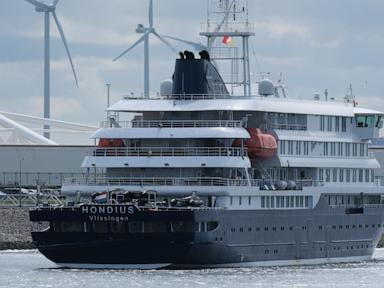
Sovereign states bear an open-ended financial and logistical obligation to secure the safety of their citizens abroad, a mandate that operates independently of commercial efficiency or economic return. This structural reality was demonstrated when the United States government authorized a baseline expenditure of $750,000 to execute a single-citizen medical extraction from Pitcairn Island, a remote British territory in the South Pacific. The individual had previously traveled on the Dutch MV Hondius cruise liner, the epicenter of a lethal hantavirus outbreak that resulted in multiple passenger infections and at least three fatalities. This extraction presents a critical case study in the intersection of sovereign risk mitigation, geopolitical friction, and the compounding costs of extreme geographic isolation.
Analyzing this intervention reveals that the final cost of an emergency repatriation is determined by three variables: geopolitical border friction, extreme geographic isolation, and the depletion of dedicated emergency funds. Expanding on this theme, you can find more in: The Myth of the Trillion Dollar IPO and the True Cost of Privatizing Space.
The Tri-Border Friction Framework
The primary operational bottleneck was not mechanical capability, but rather a cascade of sovereign risk-mitigation decisions by regional authorities. Emergency extractions typically rely on the nearest logistically viable hub. In this case, the closest developed infrastructure was Tahiti, a French dependency located approximately 1,350 miles northwest of Pitcairn Island.
The operational breakdown occurred due to a non-disclosure failure. The citizen transited Tahiti en route to Pitcairn without declaring prior exposure to the MV Hondius outbreak. When the hantavirus risk materialized, French Polynesian authorities denied entry to the symptomatic or exposed individual, citing biosecurity protocols and the initial failure to disclose. Observers at CNBC have shared their thoughts on this trend.
This border denial fundamentally altered the risk profile and cost function of the mission:
- Logistical Extension: The refusal of entry forced the re-routing of extraction assets toward Easter Island (Rapa Nui), a territory of Chile. This shift required a 1,400-mile maritime transit eastward, effectively doubling the required open-ocean voyage and adding weeks to the operational timeline.
- Asset Substitution: Because commercial aviation and standard military transport were unavailable due to Pitcairn’s complete lack of an airfield, the United States was forced to bypass standard state-owned assets. The State Department chartered a private, civilian vessel—the Titaina Explorer, a high-end trimaran yacht owned by a French national—to bridge the maritime gap between Pitcairn and Easter Island.
- Multi-Jurisdictional Approvals: Executing an extraction across a British territory (Pitcairn), a French dependency (Tahiti), a Chilean territory (Easter Island), and a domestic destination required complex diplomatic coordination, slowing response times and escalating administrative overhead.
The Cost Function of Extreme Isolation
The $750,000 charter fee represents a direct premium paid to overcome extreme geographical isolation. Pitcairn Island’s demographic and physical architecture features unique constraints that break standard emergency response models. The island supports a permanent population of roughly 50 inhabitants, maintains zero aviation infrastructure, and relies on infrequent, non-scheduled maritime shipping for basic supply chains.
When an asset-poor environment is paired with a highly infectious biological threat, the cost function expands exponentially. The mathematical relationship governing the extraction cost can be modeled as:
$$C = F_{charter} + D_{transit}(R_{fuel} + R_{labor}) + P_{bio}$$
Where $C$ represents total expenditure, $F_{charter}$ is the fixed cost of asset acquisition, $D_{transit}$ is the distance to an authorized sovereign port, $R$ represents operational variable rates, and $P_{bio}$ represents the specialized premium for bio-containment or epidemiological risk management.
By eliminating the nearest port (Tahiti) due to diplomatic friction, $D_{transit}$ increased by over 100%. Concurrently, the private owner of the Titaina Explorer held a temporary monopoly over immediate, regional transport capacity, allowing market dynamics to dictate the high fixed charter price ($F_{charter}$). The vessel departed Pitcairn on June 5, facing a grueling 10-day blue-water voyage to Easter Island depending on weather and engine performance, illustrating the extreme operational drag of maritime-only extraction.
Capital Depletion and Capital Reallocation Models
The $750,000 disbursement was drawn from the State Department’s Emergency Medical and Diplomatic Evacuation Fund, colloquially designated as the "K Fund". This fund operates as a specialized capital reserve designed to underwrite un-budgeted, time-critical extractions of diplomatic personnel and private citizens facing life-threatening crises abroad.
The Pitcairn extraction occurred during a period of severe structural strain on this fund. Parallel geopolitical crises—including rapid evacuations from the Middle East driven by active conflicts, alongside preventative expenditures for containment protocols in Ebola-endemic regions—had already drawn down the K Fund to its lowest liquidity level in seven years.
To preserve operational continuity, the State Department evaluated internal capital reallocation strategies totaling up to $50 million. This proposed emergency stopgap requires transferring funds from core long-term capital accounts:
| Sourced Account | Proposed Transfer Amount | Operational Impact / Trade-off |
|---|---|---|
| Embassy Security, Construction, & Maintenance | $35,000,000 | Defers physical security upgrades and infrastructure maintenance across high-risk diplomatic facilities. |
| Broad Diplomatic Programming | $15,000,000 | Reduces funding for bilateral initiatives, soft-power deployments, and strategic international engagement. |
The alternative mechanism to stabilize the K Fund is a direct legislative request to Congress for emergency supplemental appropriations. However, legislative remedies introduce political friction and prolonged time horizons, forcing the executive branch to prioritize internal balance-sheet reallocations to maintain immediate crisis-response readiness.
Systemic Vulnerabilities in Global Tourism
The economic reality of this extraction exposes a profound misalignment between the commercial models of luxury adventure tourism and the public risk burdens borne by sovereign states. Private cruise lines generate revenue by routing passengers to the most isolated geographies on earth, yet these operators rarely possess the specialized, self-contained infrastructure required to manage severe epidemiological outbreaks.
Hantavirus, specifically strains like the Andes virus which can exhibit person-to-person transmission and high mortality rates, demands rigid isolation protocols. When the MV Hondius suffered an outbreak, the commercial operator continued its itinerary toward the South Atlantic, discharging passengers who then dispersed through international transit hubs before fully manifesting their epidemiological risk profile. This effectively externalized the long-tail liability of passenger safety onto public treasuries.
The individual citizen in this case possessed no political or celebrity leverage; the expenditure was triggered entirely by standard statutory obligations. This confirms that the financial risk of remote travel is asymmetric: private entities capture the upfront revenue, while sovereign states underwrite the catastrophic downside risk of extraction and bio-containment.
Strategic Allocation Strategy
To mitigate future balance-sheet shocks to the K Fund and reduce the geopolitical friction associated with remote extractions, the State Department must transition from a reactive, ad-hoc charter model to a structured risk-transfer framework.
- Sovereign Indemnification Mandates: Implement mandatory, state-validated medical evacuation insurance for any domestic traveler booking commercial itineraries to high-isolation zones (defined as regions lacking an active ICAO-certified airfield within 500 nautical miles). The policy must feature a minimum liability cap of $1,000,000 per passenger, explicitly covering private maritime charter and bio-containment transport.
- Flag-State Regulatory Levies: Establish a federal risk premium levied on commercial cruise operators utilizing U.S. ports if their itineraries include ultra-remote destinations. These fees should directly capitalize the K Fund, shifting the fiscal burden of specialized extractions from the general taxpayer to the commercial entities generating the risk.
- Pre-Negotiated Regional Asset Agreements: Establish standing, pre-priced bilateral maritime extraction frameworks with regional partners (such as France and Chile in the Pacific) to prevent ad-hoc border rejections and eliminate monopolistic pricing by private asset owners during active crises.
Americans evacuate hantavirus-stricken cruise ship provides detailed coverage of the broader public health response and the clinical isolation protocols deployed for passengers repatriated from the MV Hondius outbreak.