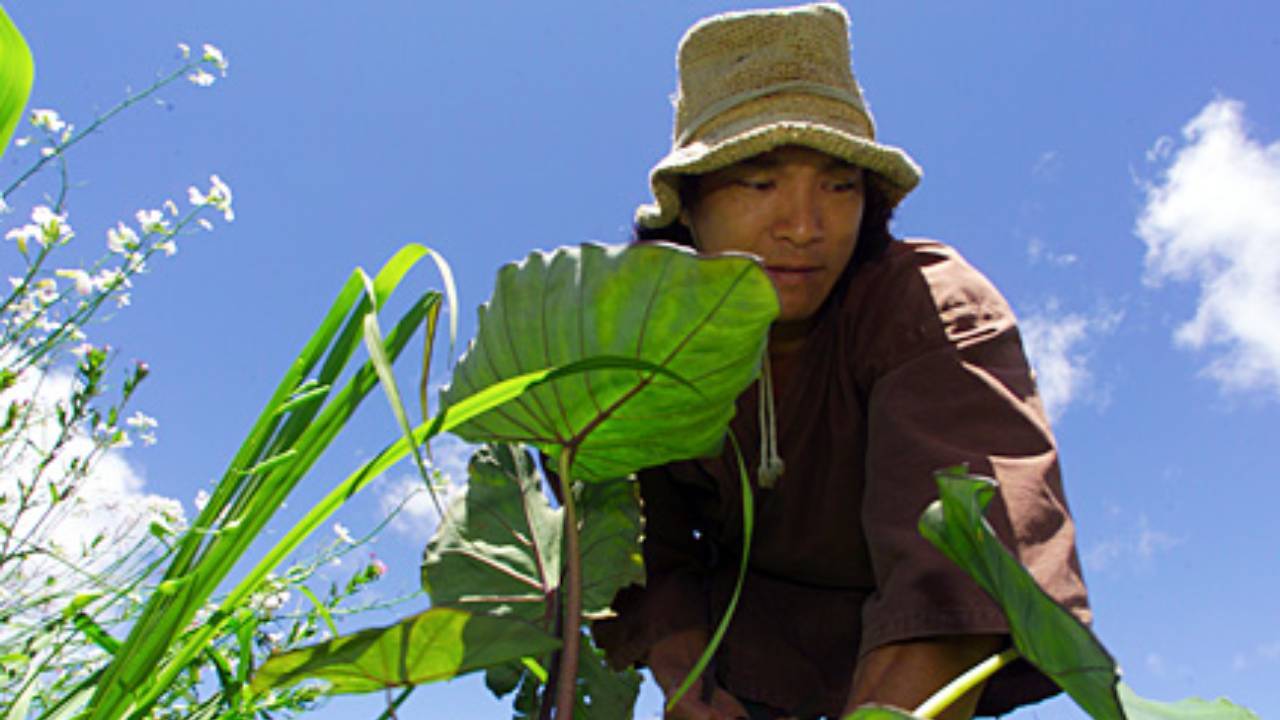
Actor Jason Scott Lee traded the high-stakes treadmill of Hollywood for a 25-acre tract of damaged land in Volcano, Hawaii, choosing a lifestyle defined by manual labor, off-grid living, and grueling ecological stewardship. While celebrity conservation often manifests as passive philanthropy or tax-sheltered land acquisitions, Lee's approach at his property, Pu Mu, requires physical endurance, total isolation from modern conveniences, and a radical departure from conventional comfort.
To understand why a recognizable film star would abandon indoor plumbing, reliable electricity, and commercial food systems, one must examine the broader ecological crisis unfolding across the Hawaiian archipelago. Hawaii is frequently labeled the extinction capital of the world, stripped of roughly half its native forest cover over the past two centuries due to invasive species, cattle ranching, and historical agricultural clearing. For a different view, read: this related article.
Lee’s project is not a weekend hobby. It is an unyielding physical commitment to ecological repair, using natural farming frameworks popularized by agrarian philosopher Masanobu Fukuoka.
The Mechanics of Low-Impact Land Repair
Restoring a compromised tropical ecosystem requires more than simply planting random trees. On his Big Island acreage, Lee focuses heavily on bringing back the native canopy by gathering koa seeds and cultivating native timber. Koa reforestation serves a dual purpose. It provides a structural ceiling that shades out aggressive invasive weeds while dropping nitrogen back into the depleted volcanic soil. Related reporting on the subject has been shared by ELLE.
Unlike industrial agricultural operations that rely on heavy machinery, chemical tilling, and synthetic fertilizers, Lee utilizes Fukuoka's philosophy of minimal human intervention. Taro is grown under the emerging forest canopy without disturbing the delicate soil web. This method respects the underground fungal networks and microbial communities that modern tilling habitually destroys.
However, this style of land stewardship demands an immense toll on the human body. Lee’s daily routine involves hand-washing garments, hauling water via small solar-powered pumps, and cooking over a wood-burning stove. The property runs primarily on a single 12-volt battery system, completely excluding televisions, computers, and conventional home appliances.
The Illusion of Easy Conservation
There is a dangerous cultural tendency to romanticize off-grid living as a peaceful retreat into nature. The reality is far less glamorous. Manual land restoration involves chronic physical fatigue, isolation, and constant vigilance against invasive pests and unchecked overgrowth.
When property owners attempt to rewild damaged parcels without understanding local hydrology or endemic species dynamics, they often introduce plants that do more harm than good. True ecological recovery requires recognizing that humans are not outside managers looking down at a system, but active participants bound by the consequences of their labor. Lee offsets the financial cost of maintaining his off-grid homestead by selectively choosing film projects, using commercial earnings to subsidize his ecological restoration work rather than accumulating urban luxury assets.
The broader question facing land stewards across the Pacific is scale. While individual homesteaders can successfully rehabilitate small plots, systemic watershed collapse requires massive institutional coordination, eradication of feral ungulates, and aggressive multi-tiered planting programs. Yet, micro-scale interventions like the one at Pu Mu establish a functional blueprint. They prove that degraded land can rebound if humans are willing to trade convenience for long-term ecological investment.
The work never truly ends. There is always another patch of invasive grass to clear, another fallen branch to manage, and another dry spell to weather without municipal infrastructure to buffer the blow. The transformation of a damaged landscape into a functioning native forest happens decades at a time, measured not in quarterly profits, but in the slow, generational thickening of the organic soil layer
This documentary short provides a deeper look into the vital connection between Hawaii's upland forests and the fragile fresh water supplies that sustain the islands.