The heavy iron gate of Alejandro’s grocery store in San Salvador doesn’t just keep thieves out. It keeps the sunlight out, too. For twelve years, Alejandro operated his small business through a thick mesh wire, sliding cartons of milk and bags of rice through a tiny slot. Every month, a teenager with a smartphone and a handgun would stroll past that wire to collect the renta—the extortion fee demanded by the local gang. If Alejandro paid, he lived. If he didn't, his family joined the statistics.
Today, the teenager is gone. The gang members who once ruled the block are locked inside a mega-prison, their tattoos shaved, their movements confined to concrete cells. Alejandro can open his metal gate wide. Children play soccer in the street after dark. On paper, it is a miracle.
But miracles come with a receipt.
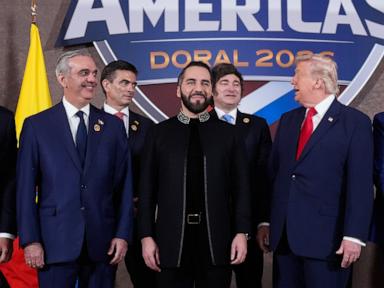
Across Latin America, a profound shift is rattling the foundations of democracy. From the coastal towns of Ecuador to the sprawling suburbs of Buenos Aires, citizens are looking at El Salvador’s radical crackdown on crime and asking a terrifyingly simple question: Why can’t we have that here? The fear of violence is so suffocating that a growing majority is willing to trade away civil liberties, judicial oversight, and constitutional rights just to feel safe when they walk to the bus stop. A new political archetype is rising, defined by heavy-handed security tactics, a rejection of traditional political parties, and an embrace of authoritarian methods.
The Anatomy of Panic
Fear alters human chemistry. It shrinks the world down to survival. When a society lives under the constant threat of violence, abstract concepts like due process and human rights stop feeling like protections. They start feeling like obstacles.
Consider the reality on the ground in Ecuador. Only a few years ago, the country was a relatively peaceful sanctuary wedged between major drug-producing nations. Now, ports like Guayaquil are battlegrounds for international drug cartels. Car bombs, prison massacres, and televised assassinations have shattered the national psyche. When citizens watch a presidential candidate get gunned down in broad daylight, the traditional political playbook of judicial reform and community policing feels laughably inadequate.
It is in these moments of acute trauma that the Bukele model becomes an intoxicating siren song. Nayib Bukele, the millennial president of El Salvador, launched a "war on gangs" that resulted in the incarceration of over one percent of the country’s population. The country's homicide rate plummeted. For a region weary of blood, those numbers are the only currency that matters.
Political campaigns across the continent have caught the scent of this desperation. In Peru, politicians openly praise the "Salvadoran method." In Honduras, the government implemented its own state of exception, suspending certain constitutional rights to combat extortion. In Argentina, the rhetoric of iron-fist justice resonates deeply with a population exhausted by economic collapse and rising urban crime. The traditional political spectrum is fracturing; the new dividing line isn't left versus right, but security versus chaos.
The Invisible Ledger
It is easy to cheer for the destruction of criminal syndicates when you haven't felt the collateral damage. But the machinery of a total crackdown is indifferent to nuance.
When a state suspends constitutional guarantees, the burden of proof shifts from the accuser to the accused. Anonymous tips become evidence. Tattoos become confessions. Under El Salvador's state of emergency, tens of thousands of people have been arrested without a warrant. Human rights organizations have documented hundreds of cases of arbitrary detentions, where young men from poor neighborhoods were swept up simply for being in the wrong place at the wrong time.
Imagine being the mother of an innocent twenty-year-old who went out for bread and never came back. You cannot visit him. You cannot hire a lawyer. You do not even know if he is alive inside a facility designed to hold forty thousand people. This is the hidden tax of the new security model. The peace achieved is real, but it is built on a foundation of absolute state power that, once granted, is almost impossible to claw back.
The real danger lies in the normalization of the exception. A temporary emergency measure has a habit of becoming the permanent law of the land. When the public applauds the suspension of rights for criminals, they hand the state the handcuffs. History suggests that those handcuffs are eventually used on journalists, political dissidents, and anyone else who questions the regime.
The Illusion of the Quick Fix
The appeal of the strongman is rooted in the desire for a shortcut. Building a functional, uncorrupted judicial system takes decades of grueling institutional reform. It requires training honest detectives, purging dirty judges, and investing in impoverished communities so that young people have options other than a life of crime. That work is slow. It doesn't look good on social media.
A mega-prison looks great on social media.
But Latin America’s history is a recurring loop of military juntas and authoritarian experiments that promised order and delivered disaster. The current wave of right-wing populism riding the wave of crime panic risks ignoring the structural rot that fuels the violence in the first place. Iron-fist policies kill the mosquitoes, but they leave the swamp intact. As long as regional economies fail to provide formal employment, and as long as the global demand for narcotics remains insatiable, new criminal networks will mutate to fill the vacuum.
The region is trapped in a tragic paradox. To save society from the lawlessness of the cartels, citizens are choosing the lawlessness of the state.
The Echo in the Streets
Back in San Salvador, the sun begins to set, casting long shadows across Alejandro’s storefront. He is locking up for the night, a task that no longer fills him with dread. He admits he does not care about international condemnation or the warnings of human rights lawyers in Washington or Geneva. They do not have to live here, he says.
His relief is entirely justified. The tragedy is that a society should have to choose between the terror of the gangs and the terror of an unchecked state. As the Bukele model exports itself across the borders, Latin America is entering a dark, uncharted territory where the institutions of democracy are being traded away, piece by piece, for the promise of a quiet night.
The gates are open, but the air feels heavy.