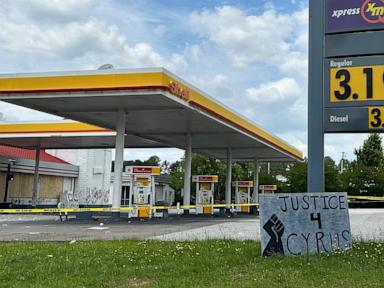
The air inside a neighborhood convenience store carries a specific, universal scent. It is a mix of cardboard boxes, cheap coffee burning on a hot plate, the chemical tang of refrigerated soda cases, and the faint, metallic smell of coins passing from hand to hand. For years, this was the sensory world of Rick Chow. He stood behind the plexiglass counter of the Xpress Mart on Spring Valley Road in Columbia, South Carolina. He watched the neighborhood through a grid of security monitors. He tracked eyes. He measured movements. When you spend decades guarding a cash register, the world outside your windows can easily stop looking like a community. It begins to look like a series of potential threats.
On a warm Sunday evening in late May, fourteen-year-old Cyrus Carmack-Belton walked into that store. He was young, Black, and wearing a hooded sweatshirt. To his family, he was a boy who loved music, a kid with a quick smile who was just navigating the awkward, sprawling years of early adolescence. To Rick Chow, watching the digital feed from his cameras, Cyrus was a calculation. Don't forget to check out our previous coverage on this related article.
What followed over the next few minutes inside and outside that store is no longer just a local tragedy. It is the focus of a courtroom drama that forces us to look directly into the darkest corners of American fear, property obsession, and the devastating speed of lethal force. The trial of Rick Chow for the murder of Cyrus Carmack-Belton has begun. It is a case stripped of abstract legal theories. It lives in the brutal, irreversible reality of a single heartbeat.
The Fiction of the Stolen Bottle
Every tragedy has a fuse. On May 28, 2023, the fuse was an assumption. To read more about the background of this, NBC News provides an informative summary.
Chow suspected Cyrus of shoplifting four bottles of water. Let that number sit in the air for a moment. Four bottles of plastic-wrapped water, retailing for maybe a few dollars total. Chow confronted the teenager. An argument flared, sharp and tense, inside the cramped aisles. But Cyrus did not run out with stolen goods. He put the water bottles back. He placed them right back on the shelf. This is not a matter of debate; investigators confirmed it by reviewing the store’s own surveillance footage. The suspicion was entirely false.
But suspicion is a fire that generates its own oxygen. Once Chow decided a crime was occurring, the reality of the situation no longer seemed to matter. Cyrus left the store and began to walk away down Spring Valley Road.
If the story had paused there, it would have been just another agonizingly familiar encounter—a Black teenager viewed with unwarranted distrust, an uncomfortable exit, a sigh of relief outside. Instead, the situation escalated. Chow, along with his son, did not stay behind the counter. They did not call the police and wait. They chose to pursue. They ran out into the fading evening light, chasing a boy who had taken nothing.
The Chase and the Concrete
Imagine the sheer terror of that moment from the perspective of a fourteen-year-old. You went into a corner store for a drink. You had a tense interaction. You left. Suddenly, two adult men are sprinting after you down the asphalt. The pavement is hot. Your heart is hammering against your ribs. You run because everything in your biology tells you that you are in imminent danger.
Chow’s son fell during the pursuit. As he got up, he shouted a phrase that would alter the trajectory of multiple lives forever. He claimed that Cyrus had a gun.
There was no gun in Cyrus’s hands. He was running away. Richland County Sheriff Leon Lott would later state clearly that Cyrus was shot in the back. The bullet struck him from behind, tearing through his torso and collapsing his life right there on the pavement of an apartment complex parking lot. A firearm was eventually found near Cyrus’s body, but the physical evidence was unyielding: the boy was retreating. He was fleeing from armed men.
Here lies the legal and moral pivot of the entire trial. Under South Carolina law, self-defense requires a person to be without fault in bringing on the difficulty. It requires an immediate, unavoidable threat of death or serious bodily harm. You cannot actively create a dangerous situation by chasing someone down the street, shoot them in the back as they run away, and then claim you had no choice.
Property is replaceable. A life is not. Yet, in the heat of that chase, the boundary between defending a business and executing a teenager dissolved completely.
The Weight of the Badge We Give Ourselves
This trial exposes a quiet, creeping sickness in our culture: the amateur lawmaker. We have created a society where some individuals believe that owning a storefront or a piece of land grants them a badge of absolute authority. They become investigator, judge, jury, and executioner within the span of sixty seconds.
Consider the profound asymmetry of power in that parking lot. On one side, an adult businessman armed with a pistol and fueled by an adrenaline-soaked conviction that his property rights extended into the public street. On the other side, a child whose body was still growing, running for his life.
When the prosecution opened its case in the Richland County courthouse, they didn't just present ballistics and autopsy reports. They presented a mirror to the community. They asked the jury to look at the sequence of events and ask themselves when the defense of property becomes a hunting expedition.
The defense will inevitably point to the volatility of the neighborhood, the history of robberies at convenience stores, and the split-second decisions required in high-stress environments. They will try to paint Chow as a man under siege, a small business owner simply trying to survive in a dangerous world. They want the jury to feel Chow's fear.
But fear is not a blank check.
If fear allows you to chase a child down the street and shoot him from behind based on a false premise, then no one is safe. The law exists precisely to restrain our darkest, most impulsive fears from turning into bloodshed. When we allow fear to dictate the law, the sidewalk becomes a war zone.
The Empty Chair in the Classroom
While lawyers argue over statutes and definitions of malice, the human cost remains fixed and heavy. Cyrus Carmack-Belton should be sitting in a high school classroom right now. He should be worrying about exams, arguing with his friends over music, and figuring out who he wants to be in this world. His family is left with an emptiness that cannot be filled by a guilty verdict, nor softened by a defense attorney’s rhetoric.
The Xpress Mart on Spring Valley Road became a makeshift memorial in the days following the shooting. People left flowers, stuffed animals, and hand-written signs demanding justice. They weren't just mourning a boy; they were protesting a system of thought that views certain teenagers as inherently guilty until proven innocent.
The jurors sitting in that courtroom are tasked with a heavy burden. They must dissect those few chaotic minutes on May 28 and decide where accountability lands. They will look at the surveillance video. They will see Cyrus put the water bottles back. They will see Chow grab his gun.
The trial will eventually reach a verdict. The news cycles will move on to the next flashpoint, the next headline, the next courtroom struggle. But the true lesson of this tragedy must not be lost in the legal noise. It is a reminder that suspicion is a dangerous weapon, and once you pull the trigger on hatred, you can never call the bullet back.
The courtroom remains quiet as the next witness takes the stand, but the echo of that single shot on a Sunday evening still vibrates through the streets of Columbia, waiting for an answer.


