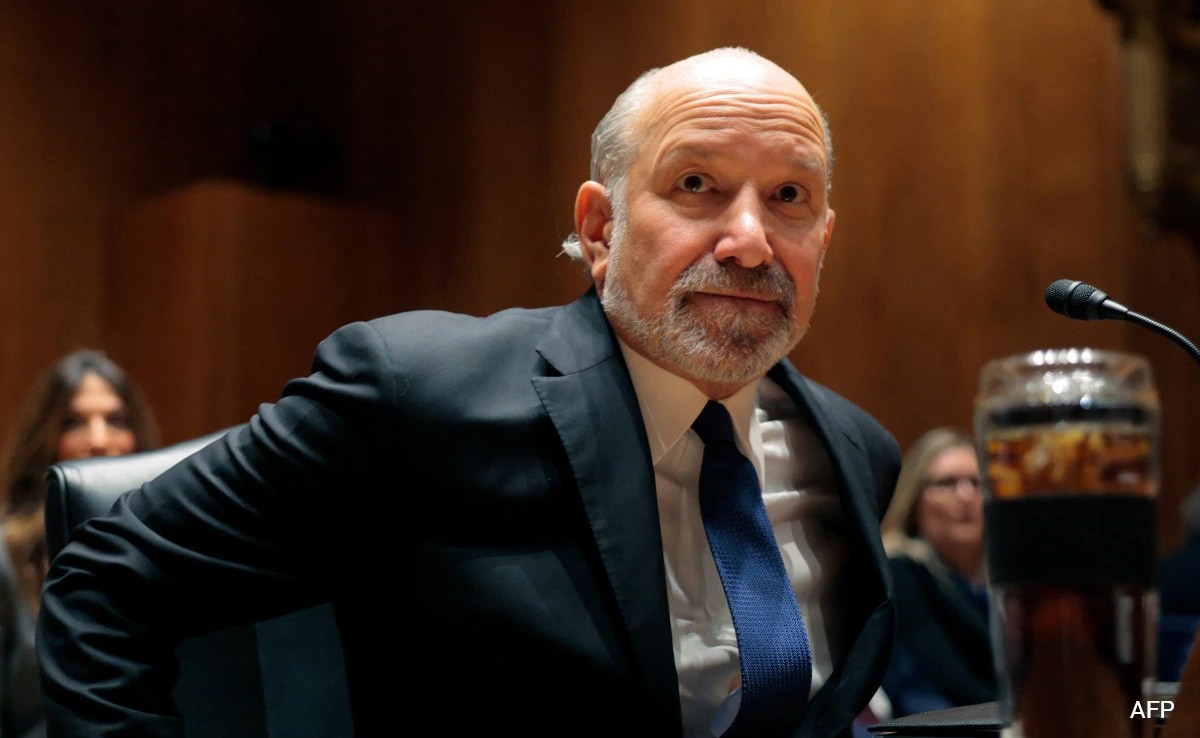
The mahogany doors of a Washington D.C. hearing room don’t just muffle sound; they swallow it. Inside, the air feels heavy, pressurized by the weight of a thousand cameras and the silent expectations of a public that has grown weary of the intersection between power and shadow.
Howard Lutnick, the billionaire head of Cantor Fitzgerald and a central pillar of the Trump transition team, sat before the Senate. He wasn't there to discuss market liquidity or the nuances of treasury bonds. He was there to answer for a lunch. Specifically, a lunch on an island that has become a global shorthand for the darkest corners of the human psyche.
Little St. James.
To the average person, a lunch invitation is a casual social contract. To those in the stratosphere of global finance, it is a currency. In the early 2000s, Jeffrey Epstein was a man who dealt in the most dangerous kind of currency: access. He was a ghost in the machine of the elite, a man who seemed to be everywhere and nowhere at once.
Lutnick’s testimony wasn't just a legal requirement; it was a window into how the powerful navigate a world where the lines between networking and complicity are often blurred by the sun-drenched haze of a private Caribbean retreat.
The Mechanics of the Invitation
Think about the way a spider builds its web. It doesn’t start with the trap. It starts with the structural silk, the strong, invisible lines that connect one point of safety to another. Epstein’s social circle was built on the same principle. He didn't lead with the horror. He led with the prestige.
When Lutnick described the 2001 visit, he painted a picture of a businessman doing what businessmen do: taking a meeting. He claimed he was there for a few hours, ate a meal, and left. No overnight stay. No participation in the activities that would later turn the island’s name into a curse.
But the question hanging in the room wasn't just about what happened during those three hours. It was about the gravity of the room itself. Why was he there? What does it say about the vetting process of the world’s most powerful people when a man like Epstein can secure a seat at the table with the future architects of the American government?
Money moves in silence, but reputation screams. For a man like Lutnick, who navigated the unfathomable tragedy of losing 658 employees during the September 11 attacks, the optics of this association are a jagged pill to swallow. He rebuilt a firm from the ashes of Ground Zero, a feat of leadership that earned him a place in the pantheon of Wall Street legends. Yet, decades later, he finds himself explaining a salad on a billionaire's porch.
The Invisible Stakes of Association
There is a psychological phenomenon known as the "halo effect." When we see someone who is successful, wealthy, and surrounded by other successful people, we subconsciously grant them a pass. We assume their foundations are solid. We assume that if the person to our left and the person to our right are smiling, we must be in good company.
Epstein was a master of the halo effect. He used his connections to Bill Clinton, Bill Gates, and Donald Trump as a shield. If you were invited to the island, you weren't just going to a rock in the middle of the ocean; you were being told you had arrived. You were being told that you were part of the few who mattered.
The tragedy of the Epstein saga isn't just the crimes themselves—though they are monstrous beyond words. The tragedy is the systemic failure of the "great and the good" to look beneath the surface. It is the collective shrug of a class of people who are so insulated by their own success that they lose the ability to smell rot until it is far too late.
Lutnick’s defense is a common one in these circles: "I didn't know." And in a strictly factual sense, he may be right. The world of 2001 was a different place. The internet was a toddler. The whispers about Epstein’s predilections hadn't yet coalesced into the roar of a criminal indictment.
But the "didn't know" defense is a fragile shield. It suggests a level of incuriousity that is at odds with the sharp-eyed diligence required to run a global financial empire. It suggests that when the setting is beautiful enough and the wine is expensive enough, we stop asking where the money—and the girls—came from.
The Ghost in the Transition Room
Now, Lutnick is one of the men holding the keys to the next administration. He is vetting the people who will run the Department of Justice, the Treasury, and the Department of Defense. This is why the testimony matters. It isn't just about a twenty-year-old lunch. It’s about judgment.
If the person responsible for picking the leaders of a nation once failed to see the red flags of a serial predator, what does that mean for the future?
Power is a closed loop. The people at the top tend to see the world as a series of deals and handshakes. They see Epstein as a "fixer" or a "socialite" rather than a predator, because admitting the latter would mean admitting that their own judgment was flawed. It would mean acknowledging that the social ecosystem they inhabit is built on a foundation of exploitation.
Consider the hypothetical scenario of a young staffer entering the White House today. They look up to men like Lutnick. They see the success, the resilience, the billions. They see that even an association with the most notorious criminal of the century is something that can be managed, spun, and eventually filed away under "dry testimony."
What lesson do they learn?
They learn that in the halls of power, the greatest sin isn't being wrong; it's being caught in a way that you can't explain away. They learn that the "table" is the only thing that matters, and once you have a seat, you protect it at all costs.
The Weight of the Record
The hearing wasn't just a cross-examination of a man; it was an audit of an era. The early 2000s were a time of unchecked excess, where the "masters of the universe" believed they were untouchable. Epstein was the dark reflection of that belief. He was the personification of the idea that if you are rich enough, the rules of gravity—and morality—simply do not apply.
Lutnick’s presence on the witness stand is a reminder that the past is never truly dead. It isn't even past. It lingers in the flight logs. It hides in the margins of old calendars. It waits for a moment of political vulnerability to resurface, forcing a man who prefers to talk about the future of the American economy to instead recount the menu of a forgotten afternoon.
The human element here is the friction between public duty and private history. Lutnick is a man who has lived through the absolute worst of the American experience. He has seen the fragility of life and the suddenness of loss. That he would find himself entangled, however briefly, in the orbit of someone who specialized in the destruction of lives is a bitter irony.
We want our leaders to be flawless, but more than that, we want them to be discerning. We want to know that the people making the big decisions have a moral compass that points true, even when the wind is blowing from the direction of a private jet.
The testimony ends. The cameras are turned off. Lutnick walks out of the room and back into the high-stakes world of presidential transitions. The facts of the lunch are now on the record, typed into a transcript that will sit in a government archive until the end of time.
But the questions remain. They hum in the background of every appointment he makes and every policy he suggests. They are the invisible passengers in the room. Because once you’ve seen the island, you can never truly look away from the water.
The sun sets over the Potomac, casting long, distorted shadows across the marble monuments of the city. In the distance, the lights of the office buildings begin to flicker on, one by one. Somewhere inside, the next generation of power-brokers is already sitting down for lunch, and the only question that matters is who invited them.