The air in a newsroom during a breaking military story doesn’t smell like ink anymore; it smells like ozone, lukewarm coffee, and the collective sweat of people terrified of getting a single name wrong. You sit there, staring at a flickering cursor, knowing that the document on your desk—the one marked with headers that make your stomach do a slow, nauseating roll—could either save a reputation or end a life.
Donald Trump recently looked at that same tension and saw a different opportunity. He didn't see the delicate dance between national security and the public’s right to know. He saw a jail cell. By threatening to imprison a journalist over the "leak" of a botched Iranian rescue raid, the former president didn't just target a person. He targeted the very infrastructure of truth. Expanding on this theme, you can find more in: Mali Internal Purge Is Not Justice It Is Survival.
The Ghost in the Machine
To understand why this matters, you have to look past the mahogany desks of the Oval Office and into the dust of a desert landing strip. Imagine a young intelligence officer. Let’s call him Elias. Elias isn't a politician. He’s a data guy. He watches drone feeds until his eyes bleed. He sees the mission go sideways—the mechanical failure, the panicked chatter over the comms, the sudden, violent end to a rescue attempt that was supposed to be a triumph.
When Elias sees his superiors go on television to describe the mission as a "qualified success," something breaks inside him. He knows the raid failed because of a specific, preventable oversight in the chain of command. If he stays silent, it happens again. If he speaks, he loses everything. Experts at Al Jazeera have shared their thoughts on this trend.
He chooses to speak. He finds a journalist.
The journalist receives the tip. This is where the "dry facts" of the Trump threat become a living, breathing nightmare. For the reporter, those documents aren't just a scoop. They are a heavy, radioactive burden. They spend weeks vetting the data, corroborating the technical failures of the Iranian raid, and ensuring that no active undercover assets are burned in the process. It is a grueling, thankless act of filtration.
Then comes the threat. The leader of the free world suggests that the only way to stop this "bleeding" of information is to put the person holding the pen behind bars.
The Machinery of Silence
The legal argument for jailing reporters usually leans on the Espionage Act, a piece of World War I-era legislation that is about as subtle as a sledgehammer. It was designed to catch spies. It was never intended to be used as a leash for the domestic press.
When a government threatens to jail a journalist to find a source, they are essentially trying to turn the press into an unpaid arm of the FBI. It’s a shortcut. Instead of doing the hard work of internal policing and securing their own servers, they decide to squeeze the messenger until the source’s name pops out like a grape from its skin.
Think about the psychological toll. If you are that journalist, every phone call feels bugged. Every car following you for two blocks is a tail. You aren't thinking about Pulitzer Prizes; you’re thinking about whether your spouse knows where the power of attorney documents are kept.
Trump’s rhetoric regarding the Iran raid leak isn't a one-off outburst. It is a strategic strike against the "confidentiality" that allows the government to be held accountable. Without the guarantee of anonymity, sources like Elias vanish. They go back to their desks, they see the next mistake, and they keep their mouths shut.
Silence.
That is the goal. Not security. Silence.
The Irony of the Leak
The irony here is thicker than a Pentagon briefing book. The raid in question—a sensitive operation aimed at retrieving assets or counteracting Iranian influence—was already a matter of public scrutiny. The "leak" didn't cause the failure; the failure caused the leak.
In the world of high-stakes military operations, there is a concept called "red-teaming." You bring in outsiders to poke holes in your plan to make it stronger. In a healthy democracy, the free press acts as a permanent, unsolicited red team. They find the holes. They expose the rot. It is a messy, antagonistic, and often frustrating relationship, but it is the only thing that keeps the gears from grinding to a halt.
When you threaten to jail the person reporting on a failed raid, you aren't protecting the troops. You are protecting the people who sent them in without a backup plan. You are ensuring that the next raid will have the same flaws, because no one will dare point them out.
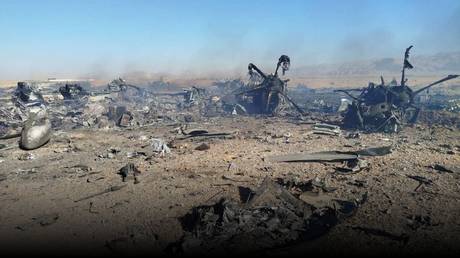
We often talk about the First Amendment as a lofty, abstract ideal. We see it carved in stone on buildings. But in practice, the First Amendment is a shield held by a tired person in a windowless office, trying to decide if the public needs to know why a multi-million dollar mission ended in a fireball in the Iranian desert.
The Digital Fingerprint
Modern whistleblowing isn't like the days of Deep Throat meeting in a parking garage. It’s a battle of encryption, metadata, and digital shadows. The government has more tools than ever to track a leak. They have the signals intelligence. They have the keystroke logs.
If they still can't find the source and have to resort to threatening a journalist with a jail cell, it isn't a sign of strength. It is a confession of incompetence.
It is also a terrifying precedent. If a president can jail a reporter over an Iran raid story, what stops them from doing it over a story about a corrupt land deal? What stops them from doing it over a story about a botched health initiative? The line isn't just thin; it’s invisible.
We live in an era where information is weaponized, and the truth is often treated as a secondary concern to "narrative." But facts are stubborn things. They don't care about poll numbers. They don't care about campaign rallies. They exist in the wreckage of the planes, in the logs of the computers, and in the memories of the people who were there.
The Weight of the Choice
Back to Elias. He’s watching the news. He sees the President of the United States on screen, suggesting that the reporter he talked to should be "locked up" until they talk.
Elias feels a cold sweat break across his neck. He realizes that his attempt to do the right thing—to ensure that the mistakes of the Iran raid aren't repeated—has put an innocent person in the crosshairs of the Department of Justice. He wonders if he should come forward. He wonders if he should have just stayed quiet and let the next mission fail.
This is the "chilling effect" in its most literal form. It’s not a legal term; it’s a physical sensation. It’s the freezing of the blood. It’s the moment a person decides that the truth is simply too expensive to tell.
The cost of a free press isn't measured in subscription fees. It’s measured in the risk taken by people who refuse to let the powerful operate in total darkness. Trump’s threat isn't just about one journalist or one raid. It’s about whether or not we want to live in a country where the only stories told are the ones the government has cleared for publication.
If you remove the reporter from the equation, you don't get a more secure nation. You get a more ignorant one. You get a nation where failures are buried, where accountability is a fairy tale, and where the only thing more dangerous than a failed rescue raid is the fact that you’ll never, ever hear about it.
The cursor continues to blink. The coffee grows cold. The journalist looks at the screen, then at the door, and then back at the documents. They start to type. They know the risk. They know the threats. But they also know that once the light is extinguished, it is almost impossible to find the switch in the dark.