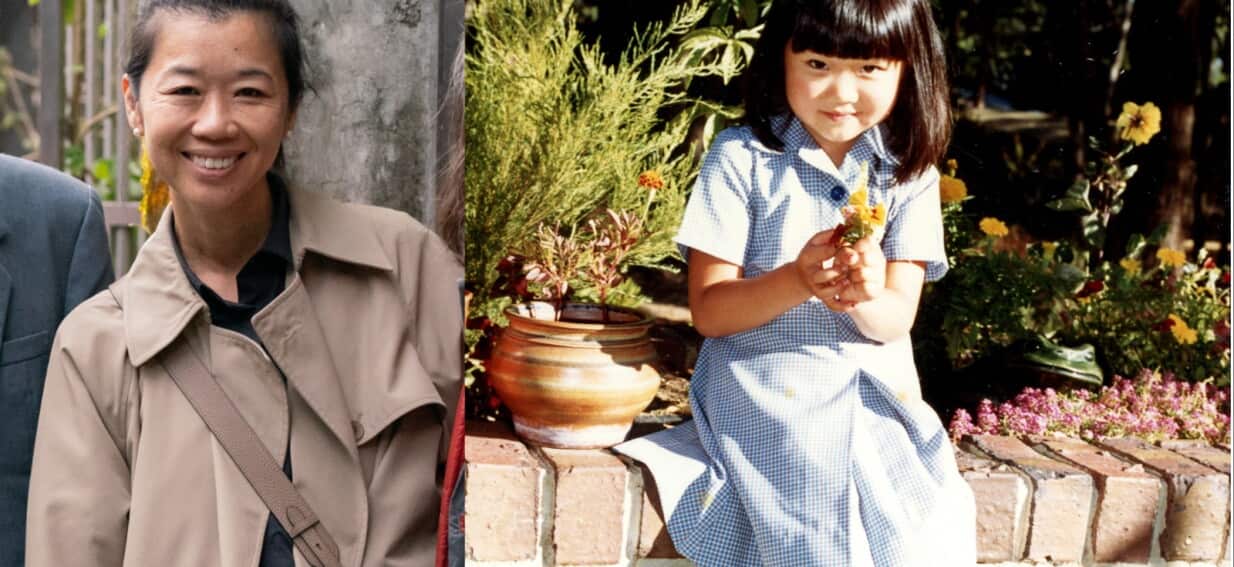
Paper trails do not bleed. They do not shake when a hand reaches for a pen, nor do they carry the echo of a slammed door or the sharp, desperate cry of a mother whose arms have been emptied by deceit. To the filing cabinets of bureaucratic archives, Vanessa was simply an adoption file closed decades ago with a neat, bureaucratic stamp. A clean transaction. A legal transfer of custody. A bureaucratic success story written in black ink on yellowing bond paper.
Reality is messier. Reality leaves scars that do not show up on a birth certificate.
For most of her life, Vanessa carried the quiet, heavy burden of a narrative written for her by strangers. You are the lucky one, they said. You were rescued. You were pulled from the rough currents of a struggling world and placed onto solid ground. And for years, she tried to fit her life into that prefabricated gratitude. She smiled for the photographs. She kept the rules. She folded herself into the family that bought the ticket, unaware that the ticket itself had been stolen.
Then the truth unspooled.
It did not arrive with a dramatic knock on the door or a cinematic phone call in the dead of night. It came through the agonizingly slow drip of documentation, mismatched dates, and persistent researchers who refused to let the dead files stay buried. Vanessa learned that she had not been rescued. She had been bought. Her infancy had been commodified by an international criminal network that treated human beings like contraband, routing babies through illicit supply chains while forging the paper armor of legitimacy.
Consider what happens to the human mind when the foundational myth of your existence turns out to be a lie.
The ground drops out. Every memory of childhood is retroactively interrogated. Was that holiday warmth real? Was that protection genuine? Or was everyone—whether they knew it or not—acting out roles in a play written by brokers of human cargo? The trauma of illicit adoption is unique. It masquerades as salvation. It drapes itself in the benevolent language of charity and rescue, making it nearly impossible for the victim to articulate their grief without feeling ungrateful. After all, who complains about being saved? Only someone who realizes they were never drowning in the first place.
The global apparatus of illicit adoption thrives in the shadows of desperation. When poverty intersects with weak institutional oversight, predators circle. They do not always look like villains in cinema. Often, they wear the polished suits of intermediaries, social workers, or clinic administrators. They speak the language of compassion while quietly trading in infants. They exploit the legal loopholes of cross-border adoptions, turning a blind eye to missing signatures and fabricated surrender documents because the market demands supply.
When Vanessa discovered the truth, she joined a vast, invisible fellowship of the misplaced. Thousands of adults across the globe are waking up to the same nightmare. They are discovering that their biological origins were erased not by tragic circumstance, but by greedy calculation. Criminal networks in past decades operated with impunity, exploiting the demand for infants from desperate adoptive parents in wealthy nations. The parents believed they were participating in an act of love. The children grew up believing they were saved. Neither group knew they were marks in a long con.
The emotional fallout is an intricate labyrinth. Anger is easy to find, but hard to direct. You cannot punch a forged signature. You cannot scream at a bureaucratic loophole. The architect of the crime might be dead, retired, or safely hidden behind a wall of statute-of-limitations technicalities. What remains is the daily, exhausting labor of reconstruction.
How do you mourn a theft that gave you a life?
That is the paradox that kept Vanessa awake in the dark hours. The life she built—her friends, her career, her home—was downstream of a crime. If the criminal network had not intercepted her crib, she would have grown up with her birth family. She would have spoken a different language, walked different streets, carried a different name. Every choice she ever made was built on a foundation of shifting sand.
We talk about human trafficking as something loud. We picture containers at ports, midnight border crossings, flashing lights, and police raids. We rarely talk about the quiet trafficking. The kind that happens in hospital corridors, wrapped in blankets and sealed with a notary public's stamp. The kind that smells like hospital antiseptic and fresh printer toner. That is the cruelty of systemic adoption fraud. It wears a suit and smiles for the camera.
For Vanessa, the journey toward peace did not lie in finding closure, because closure implies an end. Instead, it lay in integration. She had to learn to hold two opposing truths in her hands at the same exact time. She was deeply loved by the parents who raised her, and she was violently commodified by the system that delivered her to them. One does not cancel out the other. The love was real. The theft was also real.
The files in the archives are still yellowing. The bureaucrats have mostly moved on. But the children of the stolen generation are speaking now, their voices rising above the official records to demand a reckoning with history. They are rewriting their own stories, refusing to let the last word belong to the brokers who traded their childhoods for cash.
The ink on the adoption papers was permanent. But so is the truth.