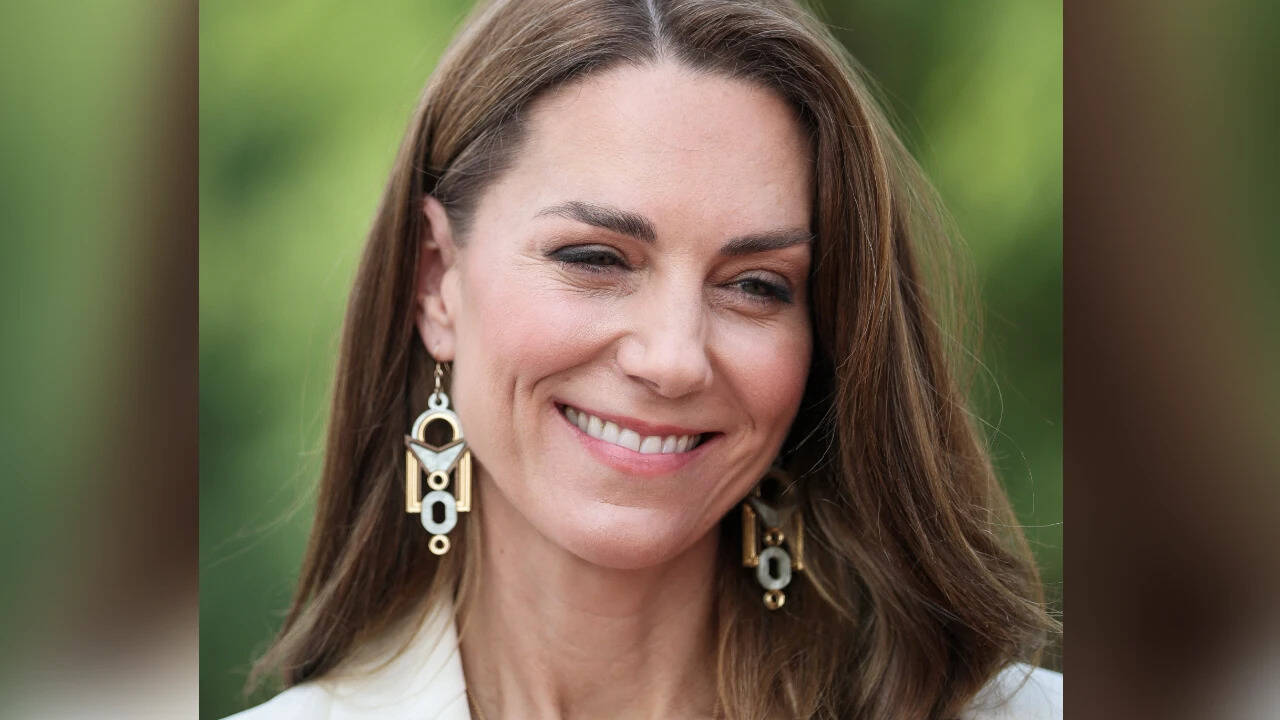
When Princess Catherine walked into Colchester Hospital in Essex in July 2025, she didn't bring a polished PR script. She brought the truth about what happens after the hospital stays end, the chemo ports come out, and everyone expects you to snap right back to normal.
"It changes your body," she told patients, staff, and volunteers sitting in the hospital's RHS Wellbeing Garden. Meanwhile, you can explore similar stories here: Why Your Favorite Archaeological Discoveries Actually Ruined How We Understand History.
That single phrase hit harder than any formal Kensington Palace statement ever could. Most celebrity health coverage treats cancer like a neat three-act movie. Diagnosis, brutal treatment, triumphant return to the red carpet. Catherine blew up that entire narrative in a few quiet minutes of conversation, pointing out that recovery is messy, permanent, and deeply misunderstood by anyone who hasn't lived through it.
Why Her Comments at Colchester Hospital Mattered So Much
You've probably seen the headlines. Every royal appearance gets dissected down to the coat buttons, especially since Catherine announced her cancer diagnosis in March 2024 following major abdominal surgery in January of that year. By September 2024, she shared a deeply personal video announcing she had finished preventative chemotherapy. By January 2025, she confirmed she was in remission after visiting the Royal Marsden Hospital in London, where she received her treatment. To see the complete picture, check out the excellent article by TIME.
People saw the remission headline and assumed the story was over.
It wasn't. During her July 2025 visit to Colchester Hospital—where she helped plant newly donated "Catherine's Rose" plants bred by the Royal Horticultural Society—she spoke candidly about the post-treatment void. She explained that during treatment, patients put on a brave face and show stoicism. Once treatment finishes, the assumption is that you can crack on and get back to normal.
"But actually, the phase afterwards is really, really difficult," she said.
She pointed out something every oncology nurse knows by heart, yet the general public almost always misses. When you're in active treatment, you're surrounded by a clinical safety net. You have appointments, schedules, nurses checking your blood counts, and doctors tracking every symptom. Then the bell rings, the scans look clear, and suddenly you're no longer under the clinical team's daily care. Yet you aren't able to function normally at home as you once did.
The Reality of Post-Treatment Life Nobody Warns You About
If you've ever supported a family member through chemotherapy or gone through it yourself, Catherine's words probably made you nod in frustration. The gap between "medically finished" and "physically recovered" is massive.
Cancer treatments don't just target rogue cells. Systemic therapies, surgery, and radiation rewire your baseline physiology. Doctors at major institutions like Cancer Research UK and Macmillan Cancer Support have spent years trying to educate employers and families about the "late effects" of treatment, yet the cultural myth of the instant bounce-back persists.
Here's what actually happens to a body after major abdominal surgery and months of preventative chemotherapy:
- Neurological and sensory shifts. Peripheral neuropathy leaves fingers and toes tingling or numb for months, sometimes years. Even buttoning a shirt or walking on uneven cobblestones feels different.
- Crushing, unpredictable fatigue. This isn't "I stayed up too late" tired. It's a cellular exhaustion where resting doesn't recharge the battery, and a twenty-minute walk can wipe you out for two days.
- Digestive and metabolic changes. Abdominal surgeries and chemotherapy drugs alter gut motility, appetite, and how your body processes nutrients, often changing your weight and energy levels permanently.
- Cognitive fog. Often called "chemo brain," this slows down word recall and short-term memory, making high-pressure public speaking or rapid decision-making exhausting.
Catherine called this phase a "rollercoaster," noting that it's not smooth like you expect it to be. Having someone with her global platform validate that struggle changes how doctors, patients, and families talk about survivorship. It strips away the guilt survivors feel when they can't immediately resume their old pace of life.
Finding a New Normal Instead of Chasing the Old One
One of the sharpest insights Catherine shared during that hospital visit was her rejection of the phrase "getting back to normal." She explicitly said you have to find your "new normal," and that process takes time.
Honestly, that's the single hardest mental shift for any recovering patient.
When you're sick, your brain clings to the version of yourself that existed before the diagnosis. You measure every day against what you used to do. You used to run five miles. You used to work ten-hour days without blinking. You used to manage three kids' schedules without needing a two-hour afternoon nap.
Trying to force a post-cancer body back into its pre-cancer mold is a recipe for burnout and depression. The body has been through trauma. Scar tissue forms, hormone levels fluctuate, and immune systems take months to rebuild their defenses.
Catherine acknowledged that the recovery period affects the whole family, too. When a parent goes through cancer, children watch them lose stamina, miss events, or step back from daily routines. Explaining why mom or dad still isn't "all better" even after the doctors say the treatment worked requires immense patience. By speaking openly about needing time to readjust, Catherine gave millions of parents permission to slow down without feeling like they're failing their families.
Why Nature and Gardens Became Central to Her Recovery
It wasn't an accident that Catherine chose a hospital wellbeing garden to open up about how cancer changes your body. Throughout 2024 and 2025, she consistently linked her physical and mental healing to spending time outdoors.
In her September 2024 video filmed in Norfolk with Prince William and their three children—Prince George, Princess Charlotte, and Prince Louis—the visuals were deliberately stripped of royal formality. No palace chandeliers. No stiff poses. Just woods, open fields, and coastal air. Later, in May 2025, she released a video series celebrating spring as a season of renewal, calling nature her "sanctuary" over the previous year.
This isn't just poetic royal branding. Clinical evidence backs up the role of green spaces in oncology recovery. Studies published in journals like Psycho-Oncology and research supported by the Royal Horticultural Society show that therapeutic gardens lower cortisol levels, reduce perceived pain, and ease the severe anxiety that spikes when patients transition off active hospital monitoring.
At Colchester Hospital, the RHS Wellbeing Garden was specifically designed to give patients, NHS staff, and visitors a quiet space away from fluorescent lights and beeping monitors. When Catherine helped plant "Catherine's Rose"—a coral-pink floribunda rose whose sales directly fund The Royal Marsden Cancer Charity—she was connecting physical environment to long-term healing.
You don't need access to a royal estate in Norfolk to use this principle. Even twenty minutes sitting near trees, tending balcony pots, or walking in a local park lowers heart rate and helps regulate a nervous system stuck in fight-or-flight mode after months of medical trauma.
How Royal Health Transparency Shifted in 2024 and 2025
To understand why Catherine's candor feels so radical, you have to look at British royal history. For decades, the monarchy operated on a strict "never complain, never explain" rule, especially regarding health. King George VI's lung cancer was kept secret from the public—and even from the King himself—right up until his death in 1952. Queen Elizabeth II's mobility issues in her final years were routinely downplayed as routine discomfort.
The 2024–2025 era shattered that playbook.
First, King Charles III announced his own cancer diagnosis in February 2024 after undergoing a procedure for an enlarged prostate. Then came Catherine's announcement in March 2024. Instead of hiding behind vague palace bulletins about "exhaustion" or "recuperation," both senior royals used modern video statements and unscripted hospital conversations to address their illnesses head-on.
The measurable public health impact was immediate. Following Catherine's March 2024 video announcement, Cancer Research UK reported a massive surge in website traffic—over 100,000 visits to their cancer information pages within 24 hours. Macmillan Cancer Support recorded its highest weekend traffic since the peak of the COVID-19 pandemic.
When Catherine spoke in July 2025 about the physical aftermath of treatment, she triggered a second, quieter wave of awareness. The first wave got people to book screenings and recognize early symptoms. The second wave forced a national conversation about survivorship care, workplace accommodations for recovering employees, and mental health support once active treatment stops.
What You Should Actually Do If You or Someone You Love Is in Post-Treatment Recovery
Watching a public figure articulate the exact physical disorientation you're experiencing can be validating, but validation alone doesn't get you through a rough Tuesday afternoon. If you're navigating life after cancer treatment—or supporting someone who is—stop treating the end of chemotherapy or surgery as the finish line.
Start treating it as the beginning of rehabilitation.
- Ask your oncologist for a formal survivorship care plan. Before you leave active monitoring, get a written summary of every drug, radiation dose, and surgical procedure you received, alongside a specific list of late-onset side effects to watch for over the next five years.
- Request an oncology physical therapy referral. Standard physical therapy often pushes patients too hard, too fast. Certified oncology rehab specialists understand lymphedema risk, surgical scar tissue restrictions, and chemo-induced neuropathy, tailoring movement so you rebuild stamina without crashing.
- Track energy in "spoons" or blocks, not hours. Keep a simple two-week log of what drains you versus what restores you. You'll quickly spot patterns—like how a noisy grocery store or an hour of intense screen time costs as much energy as a brisk walk.
- Reset expectations with employers and family explicitly. Don't say "I'm fine now" just to make other people comfortable. Tell your manager and your household clearly that remission means the disease is controlled, not that your physical battery has returned to 100 percent capacity.
- Connect with peer support before isolation sets in. Organizations like Macmillan Cancer Support, Maggie's Centres across the UK, and the American Cancer Society offer free post-treatment workshops specifically focused on the emotional drop-off that hits after hospital visits end.
Catherine's willingness to admit that cancer changes your body permanently strips away the toxic positivity that surrounds illness. Healing isn't a neat return to who you used to be, and admitting that truth out loud is the first real step toward living well in the body you have now.