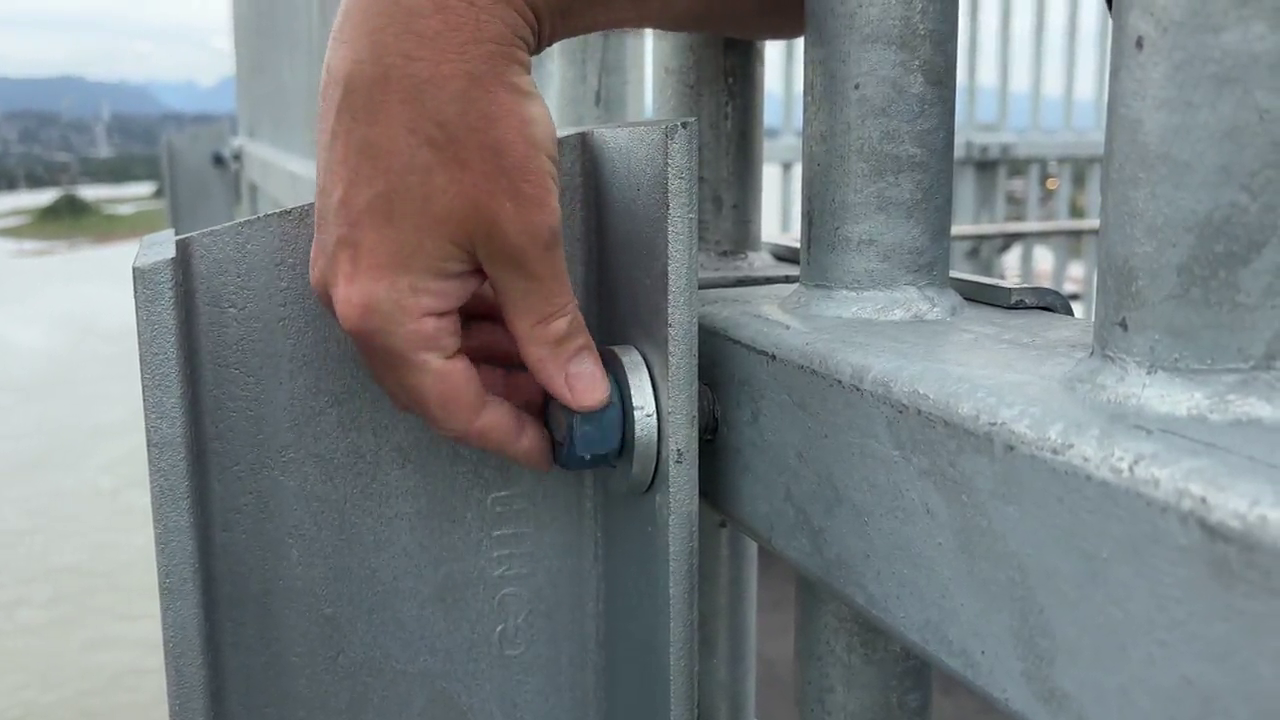
When loose bolts were recently discovered on the newly constructed stal̕əw̓asəm Bridge, the immediate response from the project management team followed a well-worn script. The public was assured that the structure remains completely stable, that redundancy is baked into the engineering, and that minor anomalies during or immediately after construction are standard operating procedure. This reassurance is technically accurate in the narrowest sense, but it completely obscures a deeper, more unsettling reality. A bridge does not drop into a river because a few nuts are loose, but the presence of unmitigated fastening failures on a major infrastructure asset points to a systemic breakdown in quality control and oversight.
Infrastructure failures rarely stem from a single catastrophic calculation error. Instead, they are born in the quiet spaces where project schedules collide with quality assurance protocols. When an official states that a bridge with un-torqued or loose structural fasteners is safe, they are operating on the concept of structural redundancy. They mean the remaining properly installed bolts are temporarily carrying the load meant to be shared across the entire connection.
Relying on redundancy as a cushion for poor workmanship turns an emergency safety net into a standard construction tolerance. This shift compromises the long-term lifecycle of the asset and places an unfair burden of risk on the public.
The Invisible Mechanics of Structural Steel Connections
To understand why a loose bolt on a bridge like the stal̕əw̓asəm Bridge is a critical warning sign, one must look past the simple concept of holding two pieces of metal together. Modern steel bridges do not rely on the physical body of the bolt to stop plates from sliding past one another. They rely on friction.
Structural steel connections are engineered as slip-critical joints. Engineers design these connections so that high-strength structural bolts are tightened to a precise, immense tension. This tightening clamps the steel plates together with such force that the resulting friction between the surfaces prevents any movement, even under the maximum legal weight of semi-trucks and the punishing dynamic loads of stop-and-go traffic.
When a bolt is loose, that clamping force drops to zero. The friction disappears. The load shifts instantly to the surrounding bolts, forcing them to work harder than the engineering models intended.
If enough bolts lose their tension, the joint slips. The bridge shifts from a slip-critical connection to a bearing connection, where the forces press directly against the sides of the bolt shanks. This creates stress concentrations that the steel plates were never designed to handle regularly. Over years of heavy traffic, wind vibrations, and thermal expansion, these localized stresses breed fatigue cracks.
The Liability Buffer Zone and the Language of Safety
Project managers and public relations teams are paid to manage perception as much as they manage steel and concrete. When a flaw becomes public, their primary objective is to de-escalate anxiety to protect the joint-venture contractors from financial penalties or litigation.
The assertion that a project is safe despite visible defects relies on a selective interpretation of engineering data. A bridge can be safe for traffic today while being fundamentally compromised for the year 2040. The public hears that they are not in immediate danger, which is true. What the public misses is the quiet theft of the bridge's operational lifespan.
Every time a contractor has to return to a completed structure to retroactively torque bolts, the integrity of the initial inspection regime is shattered. It raises an uncomfortable question for anyone who understands procurement. If the inspectors missed the loose bolts that were obvious enough to be discovered and reported, what did they miss inside the concrete pours or within the sub-surface welds?
Quality control is an all-or-nothing discipline. A breakdown in one visible area suggests a pervasive culture of rushing or distraction across the entire job site.
The Hidden Cost of Rushed Infrastructure Delivery
Major infrastructure builds are governed by aggressive timelines and punishing late-delivery penalties. Contractors often face fines reaching tens of thousands of dollars per day if a bridge opening is delayed. This commercial pressure creates a toxic incentive structure on the ground.
The labor-intensive process of properly tensioning structural fasteners is often where crews try to claw back lost time. Whether utilizing the turn-of-nut method, calibrated wrenches, or tension-control twist-off bolts, the process requires meticulous tracking, dual-operator verification, and rigorous third-party inspection logging.
When deadlines loom, the meticulous nature of this work presents a bottleneck. Crews move too fast. Calibrations are skipped. Inspections become rubber-stamping exercises performed from the ground with binoculars rather than up close on a platform with a torque wrench.
Bridge Connection Status and Long-Term Failure Modes

Connection State     Mechanical Mechanism       Structural Risk
-----------------------------------------------------------------------
Fully Tensioned      Clamping force / Friction  None (As designed)
Partially Loose      Load redistribution        Accelerated fatigue
Total Slip           Bearing stress on bolts    Micro-cracking / Failure
The long-term financial consequences of these rushed projects do not fall on the private consortiums that build them. They fall on the taxpayer. By the time the micro-cracking and premature fatigue caused by unshared loads manifest into structural issues, the warranties have expired, the construction joint-venture has dissolved, and the original project managers have moved on to other developments. The public is left funding emergency maintenance shutdowns and premature rehabilitation projects that should not have been necessary for half a century.
Confronting the Reality of Dynamic Fatigue
A bridge is a living object. It bends under weight, expands in the summer heat, contracts in the winter cold, and vibrates constantly under the rhythm of passing axles. This dynamic environment is unforgiving to installation errors.
A bolt that is slightly under-tensioned will not stay slightly under-tensioned for long. The harmonic vibrations of a bridge act as a highly effective loosening mechanism. What begins as a minor quality deviation during the construction phase transforms over months of heavy traffic into a completely un-threaded fastener.
This progressive loosening alters the load paths of the bridge continuously. The engineering software used to design the stal̕əw̓asəm Bridge assumes a homogenous distribution of strength. It assumes that every component performs its specific duty perfectly. The software cannot accurately predict the chaotic redistribution of forces when random clusters of fasteners stop participating in the structural system.
Dismissing loose bolts as simple teething issues on a new bridge is an exercise in willful ignorance. It ignores the fundamental principles of structural mechanics and the realities of fast-tracked corporate construction culture. The stal̕əw̓asəm Bridge may not be on the verge of an imminent collapse, but the discovery of these loose fasteners serves as a clear warning that the invisible checks and balances designed to protect public infrastructure are fraying long before the steel does. Fixating on the reassurance of a project manager ignores the structural debt being quietly transferred to the future. Ownership groups must demand a comprehensive, independent audit of every single connection on the structure, performed by third-party engineers who have no financial stake in keeping the project on schedule.