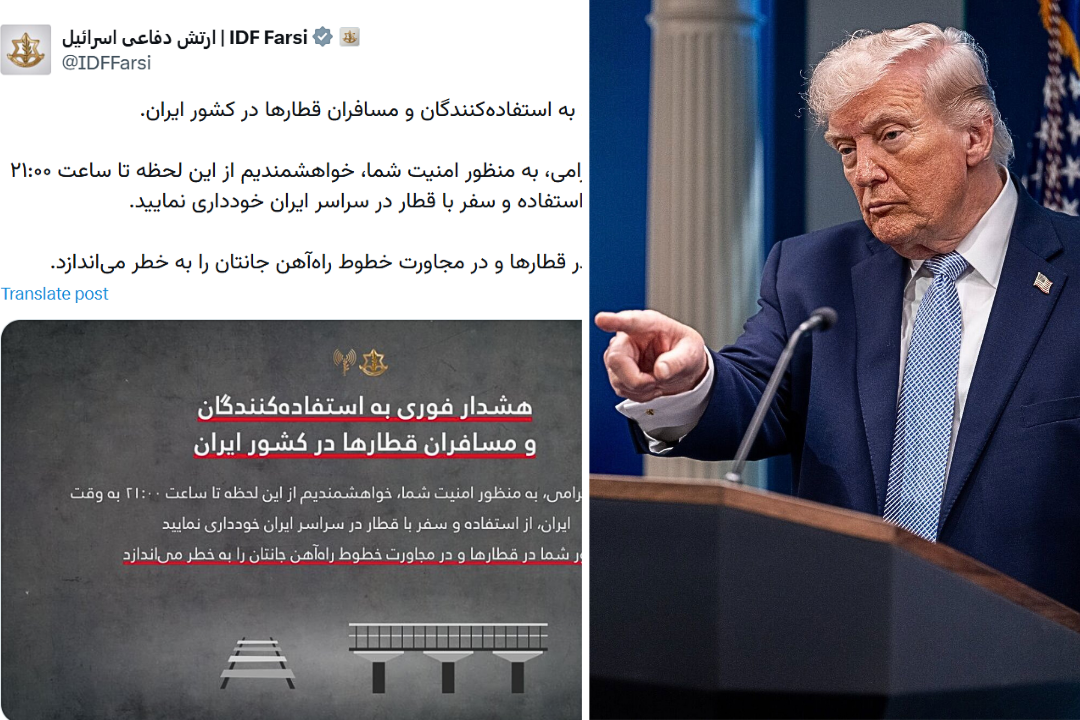
Western media is currently hyperventilating over a "sinister" SMS. Reports are circulating that Israel’s direct-to-consumer messaging to Iranian citizens—warning them that collaborating with the IRGC "endangers your life"—is a sign of unprecedented escalation or a "chilling" threat to civilian safety.
This is a lazy, surface-level reading of modern gray-zone operations.
The narrative suggests that these messages are designed to terrorize. They aren't. They are designed to de-risk. In a region where the traditional rules of engagement involve high-explosive payloads and kinetic strikes, a text message is the most humanitarian weapon in the arsenal. If you think a push notification is "sinister," you haven’t been paying attention to what happens when the signals stop and the F-35s take over.
The Myth of the Innocent Bystander in Information Warfare
The primary misconception is that these messages target "innocent" civilians to cause panic. This ignores the reality of how the Islamic Revolutionary Guard Corps (IRGC) operates. They don't wear uniforms in the traditional sense when they are conducting domestic logistics or proxy management. They melt into the fabric of the city.
By sending localized, targeted warnings, Israeli intelligence is effectively "marking the exits."
When an intelligence agency tells a population that a specific area or activity is compromised, they are removing the excuse of ignorance. From a tactical standpoint, this is a friction-reduction strategy. If the goal were pure terror, you wouldn't send a warning; you would simply strike. The warning serves a singular, pragmatic purpose: to separate the human shields from the targets before the kinetic phase begins.
I’ve seen military analysts cry foul over the "psychological toll" of these messages. This is an ivory-tower luxury. The alternative to a "sinister" text message is a silent precision-guided munition. Choose one.
Precision Engineering of Fear
Let’s dismantle the idea that this is a "broad" threat.
Israel’s Unit 8200 and the Shin Bet don’t blast these messages to every phone in Tehran. That would be a waste of bandwidth and would dilute the psychological impact. These are surgical. They are sent to people whose digital footprints—location data, call logs, social associations—suggest proximity to IRGC assets.
The "sinister" nature of the message isn't the text itself; it’s the implication that they know where you are. This is Strategic Transparency. By revealing a fraction of their surveillance capability, Israel creates a "Panopticon Effect." The target begins to self-police. They stop taking the meetings. They stop moving the crates. They stay home.
In the world of intelligence, we call this "disrupting the kill chain" without firing a single bullet. It is the peak of cost-effective warfare. A few cents per SMS can neutralize a logistics cell that would otherwise cost millions of dollars and several lives to dismantle physically.
Why the Human Rights Argument Fails
The critics claim these threats violate the sanctity of civilian life by creating a climate of fear. This is a fundamental misunderstanding of the Laws of Armed Conflict (LOAC).
Under International Humanitarian Law, specifically the principle of Distinction, parties to a conflict must distinguish between combatants and civilians. Providing "effective advance warning" of attacks which may affect the civilian population is actually a requirement under Article 57 of Protocol I of the Geneva Conventions.
Ironically, the very act the media calls "sinister" is the most rigorous application of international law possible in a dense urban environment.
The Logic of Deterrence
- The Ghost in the Machine: When a citizen receives a message saying their actions are being watched, the IRGC loses its most valuable asset: anonymity.
- The Trust Gap: These messages sow deep paranoia within the Iranian security apparatus. They have to wonder: How did the Israelis get this number? Who is the mole?
- The Friction Cost: Every minute an IRGC officer spends debugging his unit’s operational security is a minute he isn't planning an export of drone technology to a proxy.
The Sophistry of "Escalation"
Every time a new digital tactic emerges, the "Escalation" chorus begins to sing. They argue that reaching into an Iranian citizen's pocket via their smartphone is a bridge too far.
This is nostalgic nonsense.
The Iranian regime has been using SMS and digital monitoring to crack down on its own protestors for years. During the "Woman, Life, Freedom" protests, the IRGC used cellular data to track, arrest, and execute dissidents. To suggest that a foreign power using those same channels to warn people away from military targets is "uniquely sinister" is a rank double standard.
We are seeing the democratization of the front line. In the 20th century, you dropped leaflets from a B-52. In the 21st, you send a WhatsApp. The medium has changed; the moral obligation to warn has not.
The Risks No One Talks About
There is a downside to this contrarian view, and it’s one of Over-Saturation.
When you weaponize the smartphone, you turn it into a source of constant anxiety. If every Iranian receives a warning every week, the warnings become background noise—the digital equivalent of a car alarm in a big city. People stop looking.
Moreover, it creates a "Crying Wolf" scenario. If Israel sends a warning and then doesn't strike, the credibility of the threat drops. This forces the military's hand. To maintain the effectiveness of the psychological operation, they eventually must strike to prove the text wasn't a bluff.
This is the hidden trap of digital warnings: they can accidentally lock a military into a kinetic response to maintain the "integrity" of their threats.
Stop Asking if it’s Cruel and Start Asking if it’s Effective
The "People Also Ask" sections of the internet are filled with queries like "Is it legal for Israel to text Iranians?" or "Can the Iranian government block these messages?"
You’re asking the wrong questions.
The question isn't whether it’s legal (it is) or if it can be blocked (the IRGC tries, but the internet is a sieve). The real question is: Does this save more lives than it disrupts?
The data from urban conflict zones suggests that when civilians are given specific, actionable intelligence about their own safety, casualty rates drop significantly. The "sinister threat" is actually a lifeline. It’s an invitation to opt-out of a war that the IRGC is forcing upon its population.
The New Rules of Engagement
The era of "clean" war is a myth, but the era of "informed" war is here.
We have to stop treating digital psychological operations as a violation of some imaginary gentleman’s agreement. The smartphone is a weapon system. It is also a shield. When an intelligence agency uses it to tell a civilian to stay away from a missile warehouse, that agency is doing more for human rights than any "strongly worded" statement from a global NGO.
If you are an Iranian citizen and your phone pings with a warning from the Mossad, the "sinister" part isn't the message. The sinister part is the fact that your government has parked a target on your front door and didn't bother to tell you.
Israel didn't invent the danger; they just gave it a ringtone.
Get out of the way or don't. But don't complain that you weren't warned.