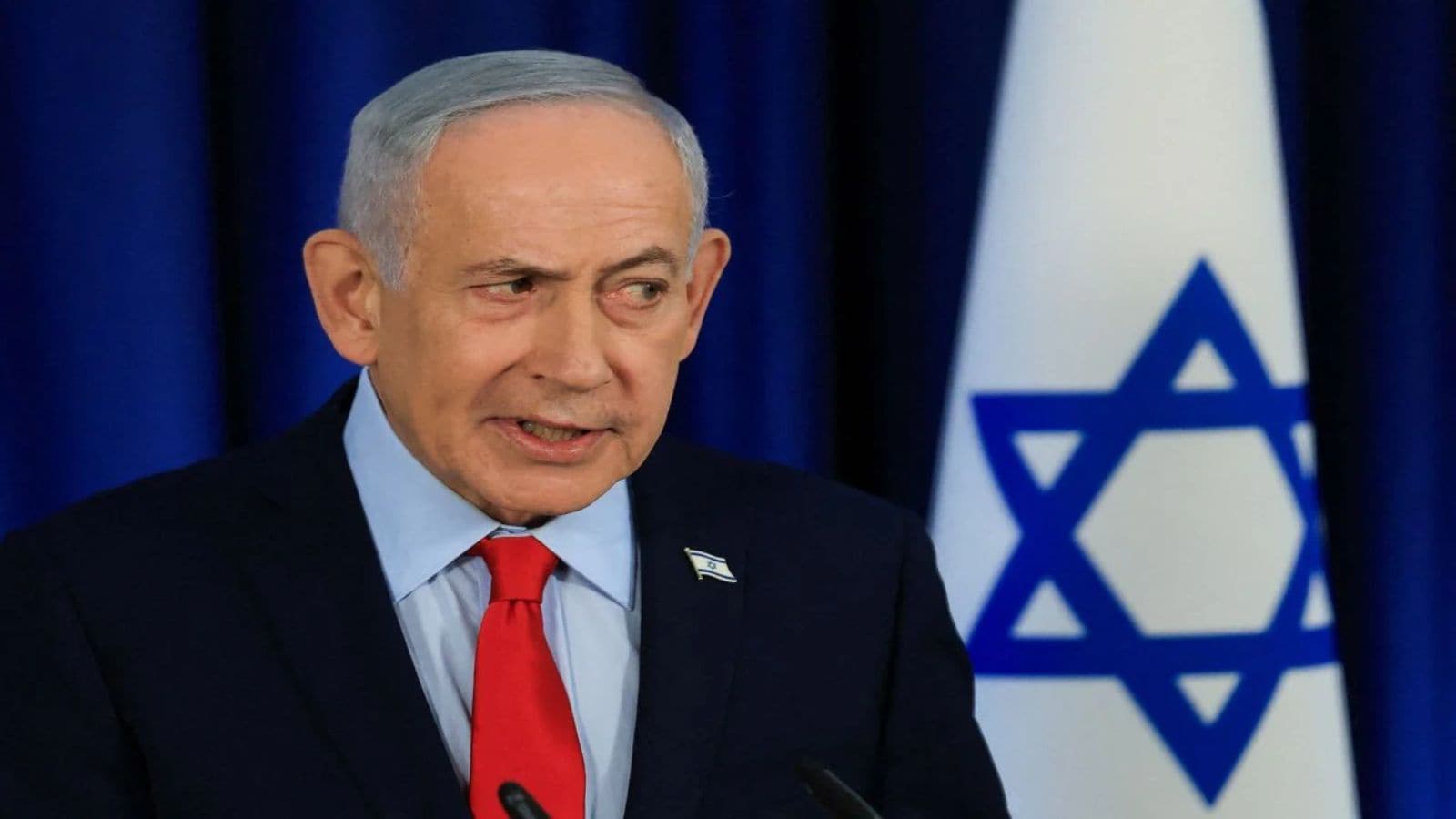
Mainstream political coverage almost always reduces Israeli coalition politics to a binary morality play. When headlines declare that Prime Minister Benjamin Netanyahu is stepping up election fraud claims while ruling out cooperation with Arab parties, most international commentary treats these two statements as a single, simple story of democratic backsliding and ideological rigidity.
That reading misses the structural mechanics of the Israeli parliamentary system. In a proportional representation framework where a 61-seat majority in the 120-seat Knesset determines survival, rhetoric surrounding electoral integrity and coalition red lines serves specific strategic, mathematical, and historical functions that surface-level reporting routinely overlooks.
The Structural Logic Behind Electoral Integrity Rhetoric
To understand why election fraud narratives recur in Israeli campaigns, observers must examine the incentives built into Israel's Central Elections Committee and party-list voting system. Unlike single-member district systems where gerrymandering dominates political disputes, Israeli elections hinge on turnout differentials across tightly segmented demographic blocs—secular, ultra-Orthodox (Haredi), national-religious, and Arab citizens.
Political scientists who study comparative electoral systems, such as Reuven Hazan of the Hebrew University of Jerusalem, have long noted that high fragmentation forces party leaders to maximize base turnout rather than chase median voters. When Likud campaigners warn of alleged irregularities or deploy observers with cameras in predominantly Arab precincts—a tactic that drew sharp legal scrutiny and condemnation from the Central Elections Committee during the 2019 election cycle—the immediate political effect is dual-pronged.
First, according to analyses by the Israel Democracy Institute (IDI), framing the electoral process as vulnerable to manipulation mobilizes right-wing voters who might otherwise stay home during frequent repeat elections. Second, heightened scrutiny and disputes over ballot monitoring in Arab towns can suppress turnout among Arab citizens, whose participation rate directly determines how many seats Arab-majority parties win—and, by extension, how many seats remain available for the right-wing bloc.
Critics, including former Central Elections Committee chairs like Supreme Court Justice Hanan Melcer, have repeatedly emphasized that systemic voter fraud in Israel is virtually nonexistent, noting that ballots are counted manually by multiparty committees at every polling station. Yet treating the rhetoric solely as a factual dispute misses its operational purpose: in a system decided by razor-thin margins of one or two Knesset seats, shaping turnout psychology is often more decisive than shifting voter preferences.
The Coalition Mathematics of Arab Party Cooperation
The second pillar of the standard media narrative—that Netanyahu's refusal to partner with Arab parties represents an unchanging ideological taboo—collapses under scrutiny of recent parliamentary history.
In Israeli politics, campaign pledges regarding coalition partners are rarely permanent ideological commitments; they are opening bids in post-election bargaining. Between 2020 and 2021, Netanyahu famously courted Mansour Abbas, leader of the United Arab List (Ra'am), an Islamist party that split from the Joint List. During that period, Likud officials held direct talks with Abbas, and Netanyahu visited Arab municipalities to promote government investment plans and crime-fighting initiatives, signaling openness to external parliamentary support from Ra'am.
That tactical pivot demonstrated a fundamental rule of Knesset arithmetic: any party leader seeking to reach 61 seats must either assemble a narrow bloc of ideological allies or secure external abstentions from non-Zionist parties. When Ra'am ultimately joined the short-lived "change government" led by Naftali Bennett and Yair Lapid in June 2021—becoming the first independent Arab party to sit inside an Israeli governing coalition—it altered the political calculus for Likud.
Following the collapse of the Bennett-Lapid coalition in 2022, Netanyahu and his allies reverted to categorically ruling out any reliance on Arab parties. This shift was driven by two concrete political realities:
- Preventing Right-Wing Defections: During the 2021–2022 period, rival right-wing parties such as the Religious Zionist Party attacked Likud's earlier outreach to Ra'am as a betrayal of nationalist principles. By firmly ruling out cooperation with Arab parties, Netanyahu insulated his right flank and consolidated nationalist voters under a unified bloc.
- The Leverage of the Electoral Threshold: Israel's electoral threshold stands at 3.25% of the valid vote, roughly equivalent to four Knesset seats. When Arab parties run separately rather than as a unified Joint List, any faction falling just below 3.25% sees its votes discarded, inflating the seat share of the remaining parties. When Likud rules out cooperation with Arab parties, it simultaneously signals to its own voters that the opposition cannot form a viable 61-seat government without relying on parties that most Jewish Israeli voters view as outside the Zionist consensus.
Why "Lazy Consensus" Fails to Explain Voter Behavior
Much of the commentary surrounding these developments assumes that voters react to institutional warnings or coalition exclusions in a vacuum. Data from the Israeli Voice Index, published regularly by the Israel Democracy Institute, paints a far more complex picture.
Trust in state institutions—including the courts, the police, and the electoral apparatus—has polarized sharply along political lines over the past decade. For supporters of the right-wing bloc, skepticism toward institutional gatekeepers is often tied to broader grievances regarding judicial activism by the Supreme Court and perceived bias within the state bureaucracy. Consequently, claims questioning electoral oversight resonate not merely as isolated accusations, but as extensions of an ongoing institutional conflict between elected officials and unelected legal authorities.
Similarly, attitudes among Arab citizens of Israel toward Knesset participation are shaped by competing pressures rather than simple partisan alignment. Surveys conducted by the Konrad Adenauer Program for Jewish-Arab Cooperation at Tel Aviv University consistently show that a majority of Arab citizens prioritize tangible socioeconomic issues—such as municipal budgets, housing permits, and violent crime—over high-level diplomatic disputes.
However, when political leaders frame Arab parliamentary participation as inherently illegitimate, it strengthens the arguments of boycott advocates within Arab society who contend that Knesset representation yields diminishing returns. The resulting drop in Arab voter turnout mathematically benefits the very parties that campaigned against Arab coalition inclusion.
The Risks and Trade-Offs of the Strategy
While campaigning on electoral skepticism and strict coalition boundaries can yield short-term electoral advantages in a fragmented parliament, political analysts across the spectrum point out significant structural downsides to this approach:
- Chronic Coalition Instability: Ruling out entire segments of the Knesset narrows the pool of viable coalition partners. When a prime minister depends entirely on a tight alliance of Likud, ultra-Orthodox factions, and far-right parties, every minor partner holds effective veto power over legislation and budgets, increasing the risk of early government collapse.
- Erosion of Institutional Legitimacy: Repeatedly questioning the integrity of ballot administration risks permanently lowering public confidence in election outcomes—even when the party raising the alarms wins. Once institutional trust erodes, governing becomes harder regardless of which coalition holds power.
- Policy Paralysis on Domestic Governance: Excluding Arab political representatives from governing coalitions complicates the implementation of long-term economic and policing initiatives in Arab municipalities, which make up roughly 20% of Israel's population.
Reading the Signals Correctly
When evaluating statements from Israeli party leaders on election security and coalition red lines, analysts and readers should separate campaign signaling from governing mechanics.
- Watch the Electoral Threshold, Not Just the Rhetoric: The decisive variable in Israeli elections is rarely a shift in rhetoric; it is whether smaller parties—both on the far right and within the Arab bloc—cross the 3.25% threshold or waste tens of thousands of votes.
- Track Budgetary Allocations Alongside Coalition Pledges: Even governments that formally exclude Arab parties from coalition agreements frequently negotiate directly with Arab mayors and committee chairs over municipal funding, revealing a pragmatic gap between public campaign posture and day-to-day administration.
- Distinguish Between Legal Challenges and Turnout Operations: Statements alleging fraud are almost always accompanied by targeted voter-mobilization drives in specific districts. Measuring the organizational footprint on the ground provides a clearer indicator of electoral impact than parsing campaign speeches alone.
In a parliamentary system governed by razor-thin majorities and strict mathematical thresholds, campaign rhetoric about who belongs in a coalition and how votes are counted is rarely just commentary—it is a direct instrument for engineering the seat count before a single ballot is cast.