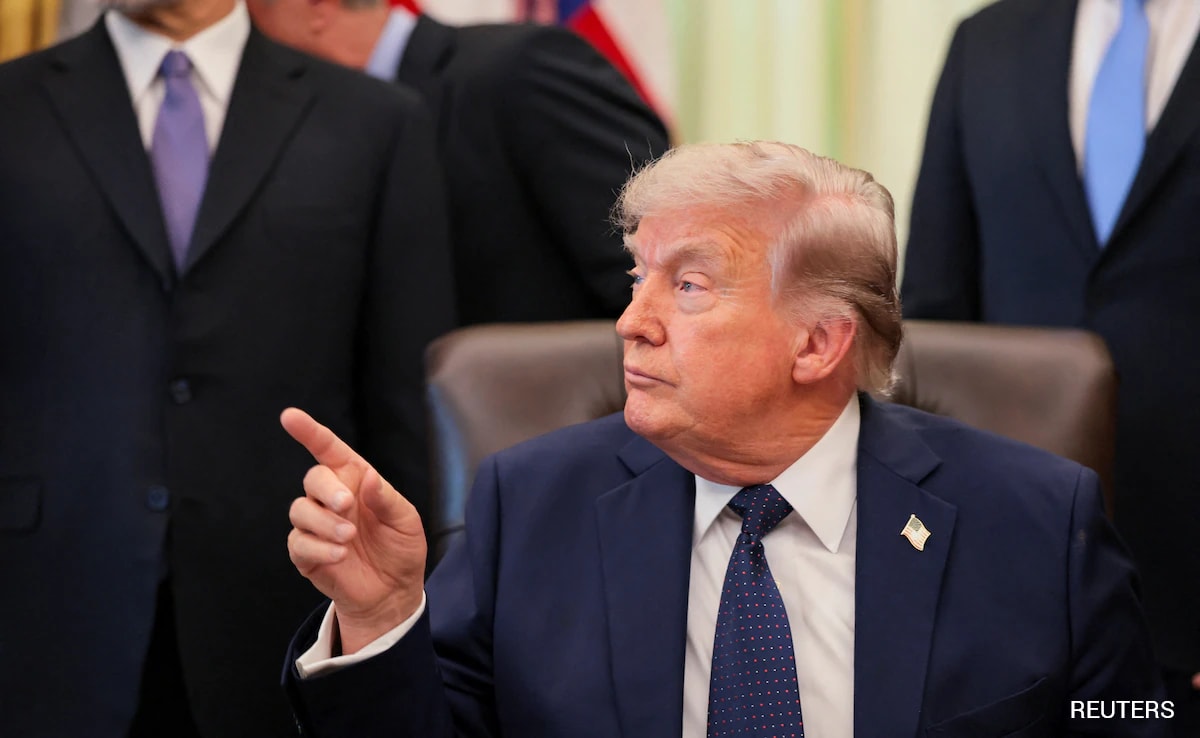
The sudden dismissal of the National Science Board (NSB) marks a tectonic shift in how the United States governs its trillion-dollar research infrastructure. While headlines focused on the shock of the mass firing, the actual mechanics of this maneuver reveal a calculated effort to dismantle the firewall between partisan policy and basic scientific inquiry. By clearing the board, the administration hasn't just replaced personnel; it has effectively neutralized the primary oversight body for the National Science Foundation (NSF), an agency that funds roughly 25% of all federally supported basic research at American colleges and universities.
This isn't just about personalities or political friction. The National Science Board was designed in 1950 to be a buffer. Its members, typically serving staggered six-year terms, were meant to ensure that long-term scientific investments—from quantum computing to pandemic preparedness—wouldn't be subject to the whims of any single election cycle. With that buffer gone, the NSF’s $9 billion budget is now vulnerable to direct executive steering. We are witnessing the conversion of an independent advisory system into a top-down command structure.
The Architecture of a Total Resets
To understand the gravity of this move, one must look at the legal loophole used to execute it. Under the National Science Foundation Act, board members are appointed by the President. However, the tradition of "staggered terms" was specifically created to prevent a single president from packing the board with loyalists. By dismissing the entire roster at once, the administration has bypassed decades of procedural norms.
This was a clean sweep. Historically, even during radical shifts in leadership, incoming administrations would allow terms to expire naturally. This provided institutional memory. It ensured that a Nobel laureate in physics might sit next to a university president who understands the economics of the lab. That continuity is dead. In its place is a vacuum that will be filled by individuals vetted primarily for their alignment with a specific industrial and political agenda, rather than their peer-reviewed contributions to the scientific community.
The administration’s logic is built on "accountability." The argument is that the NSB had become an ivory tower, disconnected from the immediate economic needs of the American taxpayer. From their perspective, the board was a bureaucratic speed bump slowing down competition with foreign powers. By removing the old guard, they claim they can "streamline" innovation. But streamlining in science often looks like cutting the very "blue-sky" research that led to the internet, GPS, and mRNA vaccines—technologies that didn't have a clear commercial application on day one.
The NSF Budget as a Political Tool
The National Science Foundation doesn't just fund test tubes and telescopes. It sets the national agenda for what the future looks like. When you control the NSB, you control the criteria for every grant application in the country. You decide if "climate resilience" remains a priority or if those funds are diverted toward "fossil fuel efficiency."
The Death of Peer Review Autonomy
The most immediate casualty of this purge is the integrity of the peer-review process. While the board doesn't pick every individual grant, it sets the "Big Ideas" and strategic goals. Without an independent board, the NSF Director—who now lacks the protective cover of a non-partisan advisory body—is essentially an employee of the White House.
If a scientist wants to study the socioeconomic impacts of automation, but the administration wants to focus exclusively on domestic manufacturing growth, that grant is as good as dead. This creates a chilling effect across academia. Researchers are already beginning to "scrub" their proposals, removing keywords that might trigger a veto from a politically motivated oversight committee. This isn't speculation; it's a survival strategy already taking root in labs from Cambridge to Palo Alto.
The Industrial Realignment
There is a growing theory among industry analysts that this purge is the prelude to a massive privatization of federal research assets. By removing the traditional academic voices from the NSB, the administration opens the door to corporate executives who may prioritize short-term intellectual property gains over public-domain knowledge.
We are looking at a potential shift where federal dollars act as a de facto R&D arm for specific industries. Instead of funding foundational physics, the money moves toward the late-stage development of proprietary technologies. This might look good for the stock market in the short term, but it guts the pipeline of discovery that sustains a nation over decades.
The Global Stakes of Domestic Disruption
Science is a global currency. For 70 years, the U.S. has been the "bank" where the world’s best minds came to deposit their talent. That status was built on the promise of stability and intellectual freedom. When you fire the entire oversight board of your primary science agency, you send a signal to the global community: American science is now a partisan project.
The Brain Drain Risk
International collaborators are already questioning the longevity of current projects. If a ten-year study on ocean acidification can be defunded because its results are politically inconvenient, why would a researcher in Germany or Japan commit their career to a U.S.-led partnership? We are seeing the first cracks in the prestige of the American lab.
Countries like China and members of the European Union are not missing this opportunity. They are currently increasing their "independence" quotas, offering long-term, non-partisan funding to the very scientists who now feel alienated by the U.S. system. We are essentially exporting our greatest competitive advantage—our ability to seek truth regardless of political pressure.
Why the "Ivory Tower" Argument Falls Short
Critics of the NSB often point to the slow pace of academic research. They argue that the board was too focused on abstract theory while the U.S. was losing its manufacturing edge. This is a fundamental misunderstanding of how the "innovation engine" actually works.
Basic science is the fuel. Applied technology is the car. The administration is trying to make the car go faster by draining the fuel tank to reduce weight. It works for a few miles, but eventually, the vehicle stops entirely. The National Science Board’s job was to make sure the tank stayed full. By dismissing them, the administration is betting that they already have all the "basic" knowledge they need to win the next century. It is a staggering gamble.
The Legal and Legislative Backlash
The purge has already triggered a series of quiet but intense meetings on Capitol Hill. While the President has the authority to appoint, the "for cause" requirement for removal is a gray area that hasn't been tested at this scale. Legal scholars are debating whether a blanket dismissal constitutes a violation of the NSF’s founding statutes.
- The Tenure Trap: If the courts find the firings were illegal, we could see a standoff where two different boards claim authority.
- Congressional Funding: House and Senate committees that oversee the budget are now divided. Some see this as a necessary housecleaning; others see it as a constitutional crisis in the making.
- The Inspector General: Watch for the NSF’s Office of Inspector General to become the new frontline. They are the only ones left with the mandate to investigate political interference in grant awards.
The Long Road to Rebuilding
Replacing 24 board members is not a fast process. Even if the administration has a list of names ready, the vetting and confirmation process (or the use of recess appointments) will take months, if not years, to settle. During this period, the NSF will be in a state of "strategic paralysis." No major new initiatives can be launched. No long-term decadal surveys can be approved.
The vacuum is the point. While the board is empty or filled with interim "acting" members, the executive branch has total control over the agency’s direction. This is governance by attrition. By the time a new, permanent board is seated, the entire 2027 and 2028 budget cycles will have been locked in, redirected toward the administration’s specific vision of "industrial science."
The Immediate Reality for Scientists
If you are a PI (Principal Investigator) at a mid-tier university, the world just became much more dangerous. The "broader impacts" section of your grant—a requirement that used to be about education and public benefit—will now likely be judged on its alignment with "national interest" as defined by a political office.
We are entering an era of "defensive science." Researchers are choosing projects not based on where the data leads, but on what can survive a political audit. This shift is subtle at first—a change in a title here, a deleted variable there—but the cumulative effect is a distortion of the truth. When the oversight board is fired for being independent, the message to every scientist in the country is clear: fall in line, or find another way to pay for your lab.
The dismantling of the National Science Board isn't a headline that will fade in a week; it is the beginning of a new, managed approach to American discovery. The firewall is down. The lab doors are open. The only question remains who will be allowed to walk through them.