Phone calls between leaders make great headlines. Actually stopping a wider conflict is much harder.
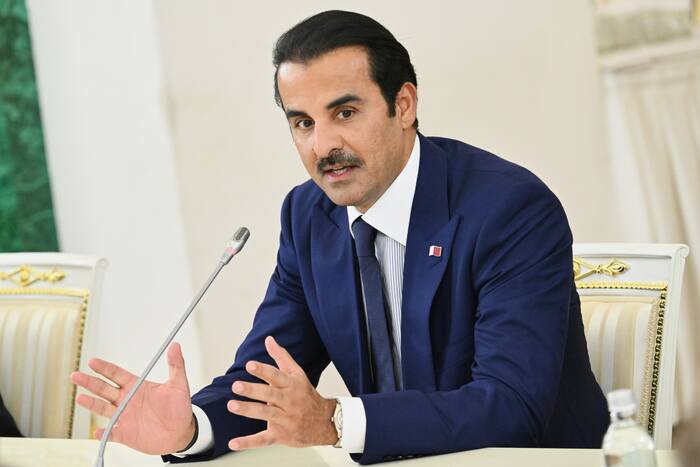
When President Donald Trump spoke with Qatar’s Emir, Sheikh Tamim bin Hamad Al Thani, on November 6, 2026, both sides talked about regional de-escalation, maritime navigation, and energy security. Two weeks later, on November 23, Qatari Prime Minister and Foreign Minister Sheikh Mohammed bin Abdulrahman Al Thani was back in Washington for the eighth US-Qatar Strategic Dialogue with Secretary of State Marco Rubio and a brief White House meeting with Vice President JD Vance. Yet by late November, there was still no clear sign of a breakthrough between Washington and Tehran. Meanwhile, you can find other developments here: State-Level Diplomacy and Congressional Appropriations After the 2026 Midterms.
Honestly, that gap between diplomatic motion and real progress is the whole story right now. People searching for news on Trump, Qatar, and Middle East de-escalation usually want two things. First, they want to know what actually happened and why Gulf diplomacy matters. Second, they want to figure out whether this push can pull the region back from another spike in conflict or if it is mostly buying time.
Why Qatar Is Doing the Heavy Lifting on Middle East De-Escalation
Qatar is not mediating out of pure charity. Geography and self-interest leave Doha with almost no room to sit on the sidelines. To explore the full picture, check out the excellent article by USA Today.
Sitting across the Persian Gulf from Iran while hosting major US military ties and massive liquefied natural gas exports, Qatar gets hit first whenever shipping lanes tighten or regional strikes flare up. Even projects like the Golden Pass LNG effort underscore how closely energy resilience and regional stability are tied to Doha’s economic survival. When Sheikh Tamim stressed freedom of navigation and energy supply security during his call with Trump, that was not boilerplate diplomacy. It was survival talk.
Here is where a lot of outside observers get Doha wrong. Many people assume a mediator needs to be loved by both sides to be useful. In practice, you just need open lines and leverage that neither side wants to burn. Qatar talks regularly to Washington and Tehran, and it keeps channels open with regional players like Turkey, Saudi Arabia, Iraq, and Gulf neighbors.
Still, being the go-between has limits. A messenger can carry proposals, set up rooms, and warn both capitals that the region cannot absorb another round of escalation. A messenger cannot force two governments to swallow political costs they are not ready to pay.
What Happened Between the Early November Call and the Washington Talks
Look at the timeline from early to late November 2026 and you can see how messy the diplomatic track has been:
- November 6: Trump and Sheikh Tamim discussed regional de-escalation, ongoing negotiation efforts, maritime security, and energy supplies. Around the same period, Iranian Foreign Minister Abbas Araghchi held calls with regional counterparts, including Iraq, Tunisia, Turkey, and Gulf officials, while reports noted heightened military tension and naval movement in the region.
- Mid-November: Tensions inside Washington’s own debate over Iran became harder to miss. Following the November midterm elections, reports noted friction over how much focus Vice President JD Vance should put on Iran negotiations versus domestic priorities after Vance criticized the political fallout of the conflict.
- November 23–24: Sheikh Mohammed met Secretary of State Marco Rubio in Washington to launch the eighth US-Qatar Strategic Dialogue, followed by a brief White House meeting with Vance and Qatari envoy Ali al-Thawadi. In remarks reported by Al Jazeera, Sheikh Mohammed warned that the region could not afford further escalation and said Doha was working with both Washington and Tehran to bring positions closer together.
What stands out is how much work Doha is doing just to keep a conversation alive. A ten-minute White House sit-down does not look like a grand peace accord. It looks like triage.
What Is Actually Blocking a Deal Between Washington and Tehran
If both sides say they want to avoid uncontrolled escalation, why are talks stuck? Because their starting demands clash head-on.
Based on reporting around the negotiations in November 2026, Tehran has pushed for conditions that include lifting US sanctions, releasing frozen Iranian assets, and war compensation, while Washington has insisted that preliminary talks address nuclear issues. Neither side wants to give away core leverage before seeing real movement on the other’s red lines.
Why Domestic Politics Complicates Every Move
Foreign policy never happens in a vacuum, and right now domestic politics in the United States is pulling attention in multiple directions. After the 2026 midterms, debates over economic pain, war fatigue, and White House priorities made any compromise on Iran politically sensitive.
That creates a tricky bind for negotiators. If Washington concedes too much too fast, critics call it weakness. If it refuses to budge, talks stall and military risks rise again. Meanwhile, Iran faces its own economic and strategic pressures while talking to partners and major powers like Russia.
What Other Flashpoints Mean for Regional Stability
Middle East crises rarely stay neatly boxed into one file. Even when Washington, Tehran, and Doha focus on de-escalation, maritime routes and surrounding flashpoints keep everyone on edge.
Attacks or claims of attacks around shipping lanes and regional flashpoints—such as reports involving Houthi actions and disputed strikes—remind markets and governments how quickly a localized incident can rattle trade and energy routes. Even when officials insist no new strikes occurred in a given spot, the rumor alone can spike insurance rates, reroute tankers, and harden positions.
Let’s be real for a second. A calm diplomatic statement from Doha or Washington does not erase underlying distrust. It simply lowers the temperature for a few days so diplomats have room to breathe.
Common Misconceptions About Gulf Mediation
When news breaks about a call between the US president and Qatar’s emir, a few myths pop up right away.
Myth 1: A diplomatic call means a deal is right around the corner. Not necessarily. High-level calls often happen precisely because talks are stalled or military risks are rising. Leaders talk to prevent miscalculation, not just to sign agreements.
Myth 2: Qatar controls Iran or the United States. It doesn't. Doha has influence, credibility as a channel, and deep economic and security ties with Washington—including defense cooperation highlighted during the eighth Strategic Dialogue—but Tehran and Washington still make their own sovereign choices.
Myth 3: Bilateral US-Qatar talks solve the whole Middle East. They don't. Bilateral defense, trade, and security cooperation can strengthen regional deterrence and stability, yet lasting calm requires buy-in across multiple capitals and armed actors.
Practical Ways to Follow This Story Without Getting Whiplash
If you want to track whether Middle East de-escalation is moving from talk to action, skip the loudest hot takes and watch concrete signals:
- Read official joint statements and diplomatic briefings side by side. Compare what the US State Department, Qatar’s Foreign Ministry, and independent wire reports like the Associated Press say after meetings. Look for specific working groups or follow-up dates rather than vague pledges of "continued dialogue."
- Watch shipping and energy indicators, not just speeches. Freedom of navigation and energy supply security come up repeatedly for a reason. Real de-escalation usually shows up in calmer maritime routes and fewer sudden escalatory warnings.
- Track who is actually in the room. A formal strategic dialogue with the State Department covers long-term bilateral priorities like defense, trade, and cultural ties. Separate meetings involving envoys focused on Iran signal whether backchannel negotiations are still breathing.
- Check multiple outlets before drawing conclusions. In fast-moving regional stories, claims of responsibility, military actions, and diplomatic leaks often conflict at first. Waiting for verification saves you from reacting to noise.
If you want to keep track of threads like this across sessions without losing your place, signing in to a Google Account makes it easy to save your chat history and pick right back up later.
Real de-escalation takes patience, credible incentives, and fewer surprises—and right now, every single one of those is in short supply.
Al Jazeera report on Qatar's emir and Trump discussing de-escalation
This video is relevant because it directly covers the November 2026 call between Qatar’s Emir and President Trump on Middle East de-escalation and negotiation efforts with Tehran.