Silence.
That is the most terrifying sound in professional football, far louder than the roar of forty thousand screaming fans at Percival Molson Stadium on a crisp Friday night in October, and infinitely heavier than the bone-rattling collision of two three-hundred-pound linemen at the line of scrimmage. When the stadium lights finally click off, when the confetti from the Grey Cup celebration has been swept into industrial trash bags and the equipment trunks are locked away for the winter, the Canadian Football League enters a season that has no television broadcast, no scoreboard, and no mercy. Read more on a connected issue: this related article.
It is the season of the whiteboard.
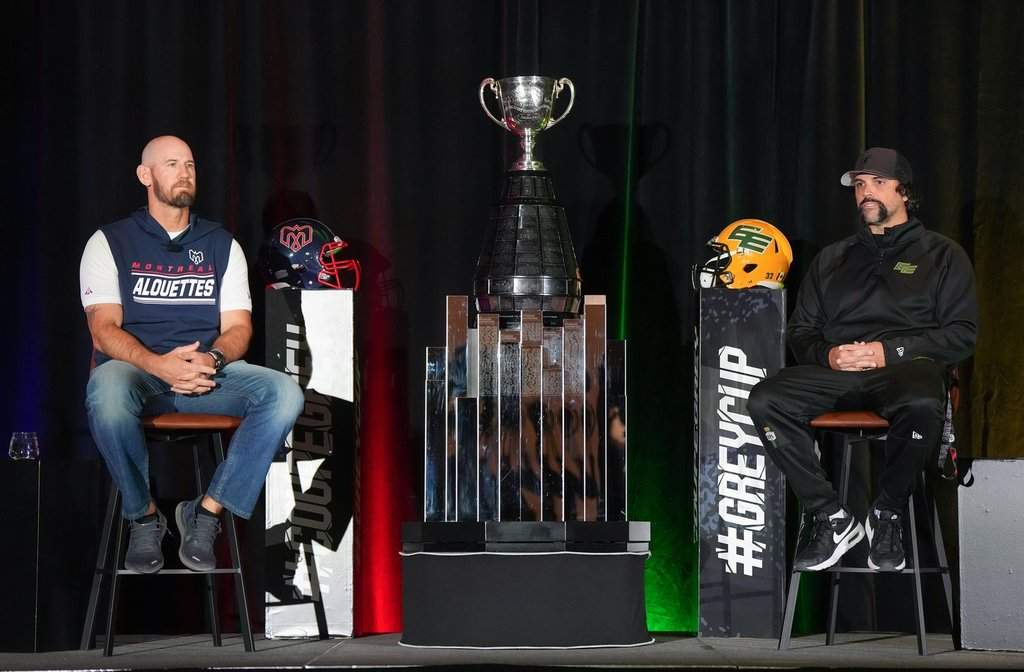
Inside a fluorescent-lit room in Montreal, Jason Maas and Danny Maciocia—alongside newly minted Edmonton Elks head coach Mark Kilam, operating out of his own war room thousands of miles to the west—are staring at magnets. Colored plastic rectangles bearing the names of grown men. Men with mortgages, toddlers, bad knees, and dreams that expire with brutal, mathematical precision. When the local sports wires run a dry, three-hundred-word blurb stating that Maas and Kilam plan to take their time with roster decisions, the casual fan reads it over morning coffee, nods once, and flips to the weather forecast. They see administrative patience. They see standard corporate procedure. More journalism by The Athletic explores similar views on the subject.
They are missing the blood on the floor.
To understand what "taking time" actually means in the trenches of the CFL, you have to strip away the sterile vocabulary of front-office press releases and step into the shoes of the people living inside the pause. Because in three-down football, where the salary cap is a rigid iron cage and free agency turns rosters into spinning turnstiles every February, hesitation is never neutral. Every day a general manager or head coach waits to pick up the phone is a day of quiet psychological warfare for the human beings waiting on the other end of the line.
The Architecture of a Necessary Cruelty
I remember the exact smell of my first November exit meeting—stale Gatorade, damp wool socks, and the sharp, chemical tang of floor wax in a hallway that suddenly felt ten miles long. You walk into the coach’s office carrying a cardboard box or a battered duffel bag, your knuckles still swollen from the final playoff game, your brain still wired for film study and fourth-quarter audibles. You sit across from a man who, forty-eight hours earlier, told you in a crowded locker room that he would go to war with you any day of the week. Now, he is looking at a spreadsheet, and his voice has dropped an octave into the polite, measured cadence of a human resources director.
"We’re going to take our time evaluating the room," he says. "Nothing is decided yet. Stay ready."
Stay ready. Two words that sound like hope when you hear them in the doorway, and taste like poison three weeks later when your phone still hasn't rung.
Consider a hypothetical scenario—a composite sketch drawn from dozens of real careers I have watched unfold and unravel across this league. Meet Marcus. He is twenty-nine years old, a veteran defensive back who has spent six seasons grinding on special teams and starting whenever a hamstring tears in the secondary. He is beloved in the locker room. He knows the playbook backward, forwards, and upside down. Last season, he played four games with a hairline fracture in his ribs because the rookie behind him didn't know how to check out of Cover 2 against motion.
Right now, Marcus is sitting at a kitchen table in a suburb outside Toronto or Calgary, staring at his banking app. His wife is asking if they should renew the lease on their apartment or pack up the crib and move back to Ohio. He cannot answer her. Why? Because Jason Maas in Montreal, or Mark Kilam in Edmonton, is taking time with roster decisions.
This is not malice on the part of the coaches. Far from it. In fact, the cruelty of the CFL offseason is born directly out of a desperate, agonizing attempt to be fair—and to survive.
Think of building a CFL roster like trying to assemble a Swiss watch while riding a roller coaster in the dark. Unlike the National Football League, where guaranteed signing bonuses and multi-year structures allow teams to mortgage the future to keep a core together, the CFL operates almost entirely on one-year contracts and strict ratio rules. Every team must dress a specific number of National (Canadian) players and American players, and they must manage a hard salary cap that sits just above five-and-a-half million dollars for an entire roster of forty-five active players plus a practice squad.
One bad contract—one aging star paid fifty thousand dollars too much—doesn't just hurt your budget. It forces you to cut two reliable depth players who keep your special teams alive in November.
Two Men, Two Mountains
Look closely at the two figures at the center of this winter's deliberate slowdown, because they represent two entirely different pressures on the same fragile ecosystem.
In Montreal, Jason Maas is standing at the summit, trying to figure out how to keep the wind from blowing his flag down. Maas is a man who coaches with his heart exposed on his sleeve—intense, fiery, fiercely loyal to the men who bleed for him, yet relentlessly analytical when the film projector starts rolling. After guiding the Alouettes to a stunning Grey Cup triumph in 2023 and proving in 2024 that Montreal was no fluke, Maas and general manager Danny Maciocia face the hardest puzzle in professional sports: the luxury tax of success.
When you win, everybody gets expensive.
The backup receiver who caught four crucial passes in the Eastern Final suddenly wants starter money. The veteran linebacker whose leadership held the defense together wants one last payday before his body gives out. If Maas rushes into decisions in November and December, emotion takes the wheel. You reward yesterday’s heroes with tomorrow’s cap space, and by August, you are watching younger, faster teams run past your expensive, exhausted veterans. By choosing to slow down, Maas is forcing himself to let the adrenaline drain out of the building. He is waiting for the emotional fog of the season to lift so he can look at tape with cold, surgical eyes.
Now shift your gaze west to Edmonton, where Mark Kilam is staring up at a completely different mountain.
For nearly two decades, Kilam was the heartbeat of the Calgary Stampeders' coaching staff—a legendary special teams coordinator and assistant head coach who built his reputation on identifying hungry, overlooked talent and turning them into relentless killers on kickoff coverage. Now, handed the keys to an Edmonton Elks franchise desperate to reclaim its historic swagger after years of organizational chaos and home-field heartbreak, Kilam isn't trying to protect a dynasty. He is trying to excavate one from the rubble.
For Kilam, taking time with roster decisions is an act of self-preservation. When a new head coach walks into a struggling building, the natural instinct is to swing an axe—cut the dead weight, purge the losing culture, bring in "your guys." Kilam knows better. He has spent nineteen years in this league watching new coaches gut a roster in December only to realize in June that they threw away the only three veterans who knew how to practice like professionals. Kilam has to watch every single snap of Edmonton’s 2024 film—not just the highlights, not just the catastrophes, but the meaningless third-quarter snaps in a twenty-point loss—to see who kept sprinting when nobody was watching.
The Invisible Ledger
What the public never sees in these quiet weeks is the invisible ledger being balanced behind closed doors. Every single name on that whiteboard carries four competing variables, and changing one shifts the entire equation:
- The Medical Gamble: How does a thirty-two-year-old offensive tackle’s knee look in January compared to November? Coaches wait because cartilage doesn't heal on a press release schedule.
- The Ratio Domino: If a team decides to start a Canadian at safety instead of an American, it frees up an American spot at receiver—which immediately changes the market value of three other guys on the board.
- The Free Agency Poker Game: With CFL free agency looming in February, tipping your hand too early tells rival general managers exactly which positions you are desperate to fill, driving up the price overnight.
- The Locker Room Pulse: Who is the quiet glue guy who prevents a two-game losing streak from turning into a mutiny? You cannot measure that on a stopwatch, and you cannot spot it in a box score.
I have sat in rooms where coaches argued for forty-five minutes over a ten-thousand-dollar difference on a veteran long snapper’s contract. To an outsider, ten thousand dollars sounds like pocket change in pro sports. To a CFL front office, that ten thousand dollars is the exact difference between keeping a promising rookie quarterback on the practice roster or losing him to a rival down the highway.
And yet, knowing the math does not make the waiting any easier for the men in the crosshairs.
The Phone That Doesn't Ring
Let’s go back to Marcus, our hypothetical veteran sitting at his kitchen table.
As December bleeds into January, the silence starts to play tricks on his mind. He checks social media every twenty minutes, watching beat reporters break news about teammates signing extensions. Every time a notification pops up—Alouettes extend veteran offensive lineman, Elks lock up key defensive tackle—Marcus feels a strange, hollow tug in his chest. He is genuinely happy for his brothers. He texts them congratulations immediately. Then he locks his phone, sets it face down on the table, and stares at the wall.
Why hasn't his agent called?
If he asks the team directly, he risks sounding desperate, weakening whatever tiny sliver of leverage he still possesses. If he waits quietly, he risks waking up on the first week of February—just days before free agency opens—to a polite phone call thanking him for his service, leaving him scrambling for a job after most teams have already earmarked their budget for younger, cheaper legs.
This is the unspoken truth of professional sports that glossy broadcast packages always edit out: loyalty has a salary cap. Coaches love their players deeply, authentically, and fiercely—right up until the moment the numbers stop working. And the reason seasoned leaders like Maas and Kilam insist on taking their time is precisely because they know how much those decisions hurt. Once you make the call, once you release a man or tell him his role has shrunk, you cannot put the toothpaste back in the tube. Trust, once fractured in a locker room, never quite heals without a scar.
What Happens When the Clock Runs Out
Eventually, the luxury of time evaporates. February arrives with its bitter Canadian winds and its ruthless transactional frenzy. The communication window opens, agents start leaking numbers to insiders, and the magnets on the whiteboard in Montreal and Edmonton stop hovering in limbo and snap into place.
Some men will get the call that validates every ice bath, every 5:00 AM film session, every missed birthday party. They will sign their names on a one-year contract, exhale for the first time since November, and start packing their bags for training camp.
Others will get the quiet, respectful conversation in an empty office or over a crackling cell connection—the one where the coach’s voice is heavy with genuine gratitude, right before he explains that the team is "going in a different direction."
Until that day arrives, the league remains suspended in amber. The fans see an empty calendar. The headlines see a slow news week.
But if you walk past the stadium offices late at night, past the dark concourses and the snow-covered turf, you can still see the faint glow of fluorescent light spilling under the door—and two men staring at a wall of names, trying to decide whose dream survives another winter.