The tarmac at Orly smells of hot rubber and aviation fuel, a scent that stays trapped in the wool of your coat hours after you have left the flight line. Stand there long enough, watching the horizon, and you begin to understand that geopolitics is rarely negotiated in mahogany-lined boardrooms alone. Sometimes, it happens at thirty thousand feet, in the silent, pressurized hush of a cockpit where two pilots from different hemispheres must trust each other with their lives before they ever trust their governments with a treaty.
Prime Minister Narendra Modi stepped off an aircraft into the crisp Parisian air, and the diplomatic corps dutifully recorded the milestones. New heights. Historic ties. Strategic autonomy. The standard lexicon of international relations, designed to be dry enough for morning newspapers and forgettable enough for evening broadcasts. But words like partnership flatten reality. They turn human ambition and cold steel into ink on paper. Meanwhile, you can read similar developments here: What Went Wrong When That Cargo Plane Crashed at Miami Airport.
Consider what happens when a young officer from an air base near Ambala sits down across a desk from an engineer in Bordeaux. They do not speak the same mother tongue. They do not share childhood memories of television shows, rainy season monsoons, or the particular bite of a Mediterranean winter. Yet, they look at the exact same blueprints. They trace the curves of an airframe designed to carry the weight of two ancient nations into an uncertain century.
This is the hidden architecture of what officials call India-France relations. It looks like jet engines. It looks like joint naval exercises in the cobalt waters of the Indian Ocean, where French and Indian sailors share coffee on crowded mess decks, trading stories about families thousands of miles away. It looks like an invisible thread stretching from the cafes of Saint-Germain-des-Prés to the bustling tech corridors of Bengaluru. To explore the complete picture, we recommend the excellent article by Reuters.
We forget how rare this is. In a world fractured by suspicion, where countries constantly posture behind digital walls and economic threats, two massive democracies decided to share their crown jewels. France gave India technology that others guard behind seven locks. India gave France a reliable anchor in the Indo-Pacific, a region that will write the economic and security script of the next fifty years.
To understand why this matters, you have to look past the podiums.
Imagine walking through a manufacturing facility in southern France. The air hums with the high-pitched whine of precision machinery. Sparks fly in amber showers against the dark backdrop of reinforced concrete. A machinist named Laurent, whose grandfather likely worked on early post-war aviation, adjusts a titanium component with micrometer precision. That exact component will soon cross oceans, finding its permanent home inside a machine that protects a coastline millions of people call home. Laurent will never see that coastline. The pilot flying over the Arabian Sea will never buy Laurent a glass of wine. Yet, their lives are bound by a shared calculation of survival and ambition.
That is the human element we miss when we talk about defense deals and trade corridors. We treat nations as monoliths. We talk about gross domestic product, export quotas, and strategic parity as if they were weather patterns sweeping across a map. But nations are just collections of nervous systems. They are people waking up early, drinking too much coffee, worrying about their children, and hoping the choices made by leaders three time zones away will keep the dark at bay.
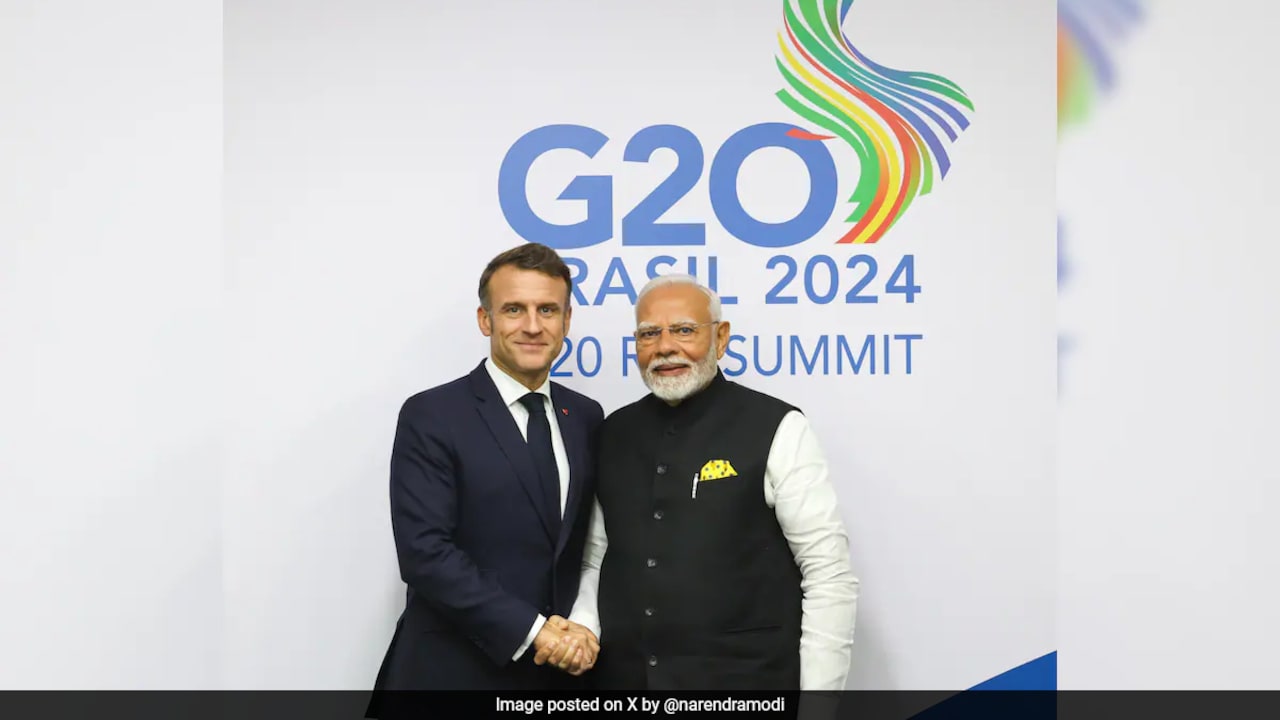
When Modi and French leadership shake hands beneath the ornate chandeliers of the Élysée Palace, the flashbulbs capture a moment of theatre. But the real work began long before the cameras rolled, and it will continue long after the motorcades have cleared the streets. It happens in university labs where Indian and French researchers are mapping quantum computing algorithms together. It happens in quiet conversations between diplomats who have spent decades learning the subtle art of translation—not just of words, but of intentions.
There is a quiet defiance in this partnership. For decades, the global playbook demanded alignment. You had to choose a camp. You had to sign the ledger, march to a pre-arranged drum, and surrender a piece of your sovereign voice to a larger power. Both India and France have a stubborn historical memory of refusing to play that game. France, under de Gaulle, carved out a path of strategic independence that often frustrated its allies. India, emerging from the long shadow of colonial rule, fiercely guarded its right to speak with its own voice, refusing to be a satellite in anyone else's orbit.
That shared stubbornness is the glue holding this relationship together. It is an alliance of proud nations that remember what it means to stand alone, and have decided that standing together makes them infinitely more resilient.
Look closer at the map. The Indian Ocean is no longer a sleepy expanse of blue; it is the grand chessboard of the modern global economy. Ninety percent of global trade moves across water, and a vast portion of it funnels through maritime choke points where the shadow of hegemony looms large. When Indian P-8I surveillance aircraft and French maritime patrol planes share intelligence, they are writing a silent insurance policy for global stability. They are ensuring that the sea lanes remain open for a merchant vessel carrying grain, for a container ship filled with medicine, for the invisible arteries of commerce that keep modern civilization breathing.
Yet, numbers and maps fail to capture the texture of the shift.
Talk to a student in Lyon who just received a scholarship to study renewable energy engineering in Mumbai. She is packing her bags with a mixture of terror and fierce excitement. She knows almost nothing about India except what she has read in history books and vibrant travel blogs. By the time she returns, she will carry a mental map forever altered by the chaotic charm of Indian traffic, the profound warmth of neighborhood hospitality, and the razor-sharp brilliance of her peers. She will become part of the human infrastructure that outlasts any politician's tenure.
This is how deep alliances are actually forged. Not through the stroke of a pen on parchment, but through the accumulation of a million small, ordinary exchanges. A shared coffee during a late-night coding session. A nod of mutual respect between officers on a pitching deck during a midnight storm. A quiet acknowledgment that the future cannot be navigated alone.
The press releases will call it a new chapter. The pundits will debate whether it shifts the global balance of power. But step back from the podiums and the press conferences. Listen instead to the steady, rhythmic roar of an engine being tested in a hangar, built by hands separated by thousands of miles of earth and ocean, yet pulling in the exact same direction.
The horizon is vast, and the winds are unpredictable. But up there, in the thin air where nations test their limits, the path is finally clear.