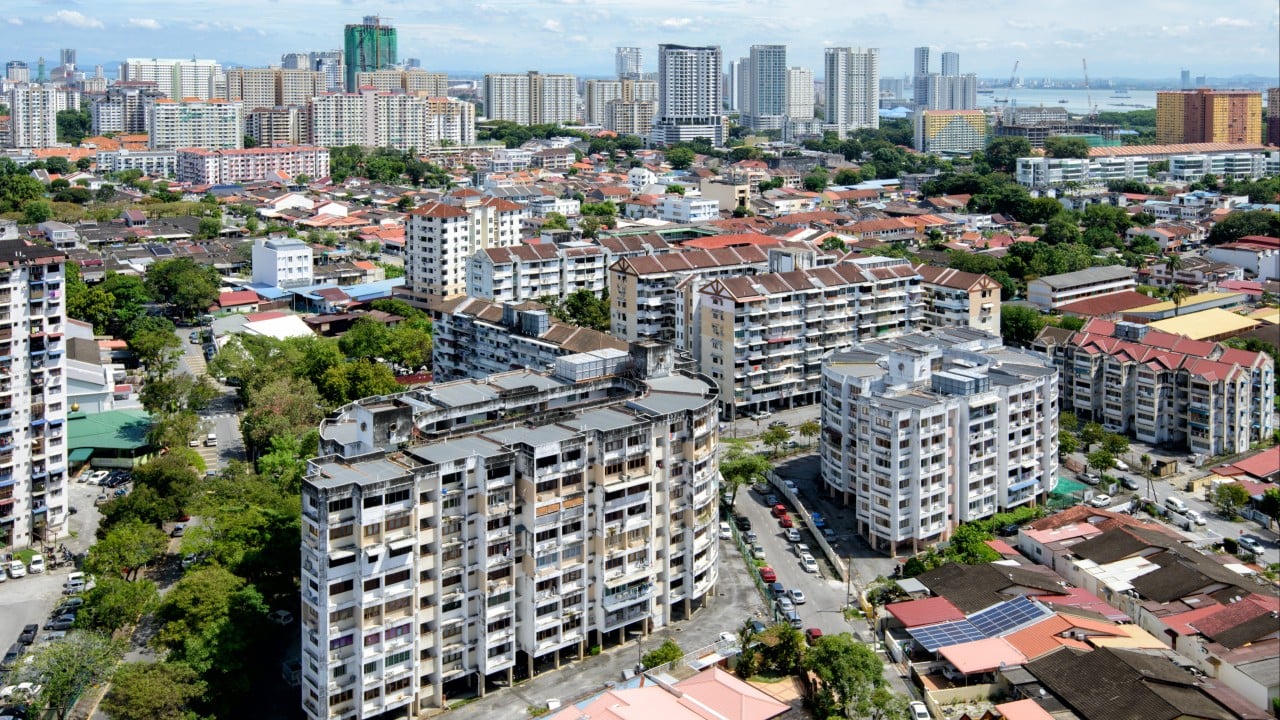
We need to talk about the arithmetic of exhaustion.
When you sit in a glass-walled office in Shenzhen or a high-density flat in Hong Kong watching your wealth get squeezed by tightening margins, domestic regulatory shifts, and a narrowing horizon, you start looking outward. For years, the map offered two classic escape hatches in Southeast Asia. There was Singapore, glittering and immaculate, functioning like a Swiss watch dropped into the tropics. And there was Thailand, sultry and accessible, offering vibrant island living and low price tags at the cost of legal labyrinthine structures and unpredictable political winds.
Then came the penalty of popularity.
Singapore decided to put up a barricade. When a foreign buyer stares down a staggering sixty percent Additional Buyer's Stamp Duty, the romance of Singaporean stability starts to curdle into financial self-harm. Handing over six hundred thousand dollars in pure tax on a one-million-dollar property makes even the most hardened investor wince. It is no longer an investment; it is a punishing luxury tax designed to lock outsiders out.
At the other extreme, Thailand beckons with open arms and low entry costs, but acquiring a permanent foothold often means navigating archaic foreign ownership quotas, leasehold workarounds, or complex corporate proxies that leave you feeling legally exposed.
This leaves a yawning chasm in the middle. And capital, much like water, despises a void.
Enter Malaysia.
To understand why a quiet wave of mainland Chinese and Hong Kong capital is heading south across the South China Sea, consider the choices of a hypothetical investor named Chen. Chen is forty-five, runs a mid-sized tech logistics firm, and wants two things that rarely coexist: a safe, predictable environment where his children can attend British-curriculum international schools without paying Hong Kong tuition rates, and a real estate asset that will not require him to liquidate his company to cover entry fees.
In Singapore, Chen would pay an astronomical penalty before buying a single brick. In Thailand, he might worry about whether his title deed will hold up smoothly down the line if political tides shift. But in Malaysia, he finds a familiar common-law legal system built on British jurisprudence, widespread English proficiency, robust infrastructure, and straightforward freehold property ownership where his name goes directly onto the deed.
The financial friction is real, but it remains grounded. Even with Malaysia's adjustments—such as a flat eight percent stamp duty for foreign buyers—the upfront acquisition cost remains a fraction of what Singapore demands. You get modern medical tourism hubs in Kuala Lumpur and Penang staffed by Western-trained specialists, sprawling suburban spaces instead of claustrophobic high-rises, and school fees that allow families to breathe again.
Geography is destiny, and nowhere is this more evident than at the southern tip of the Malay Peninsula.
Look closely at Johor Bahru, sitting directly across the causeway from Singapore. While tourists see a border town, logistics analysts see a pressure valve. Driven by astronomical rents and punishing housing costs on the island-state, cross-border integration has accelerated dramatically. Data center capacity in Johor has surged by triple digits over the last couple of years, fueled by tech giants and multinational firms looking for a cost-effective operational base that retains an umbilical cord to Singapore’s financial ecosystem.
The upcoming completion of the Johor-Singapore Rapid Transit System Link is turning this corridor into an interconnected economic zone rather than two separate worlds. Smart capital is already positioning itself along these transit veins. Investors are buying up residential and commercial developments, anticipating a massive influx of professionals who want to work within reach of Singapore’s financial engine while sleeping in a home three times the size for a fraction of the cost.
Crucially, this is not a speculative house-flipping frenzy. Analysts who study regional asset flows point out that Malaysia represents a steady, mature play. The government has kept the rules for foreign buyers largely stable through various political transitions, offering a rare commodity in modern geopolitics: predictability.
When you strip away the marketing gloss, what is happening across Malaysia is an architectural realignment of wealth in Asia. It proves that you do not have to choose between institutional safety and financial sanity. You can have the rule of law, the international schools, the efficient hospitals, and the modern infrastructure without watching your capital get bled dry by punitive surcharges or swallowed by ambiguous legal frameworks.
The market has spoken quietly, but clearly. The middle ground is no longer just an alternative. It is where the future is being built.