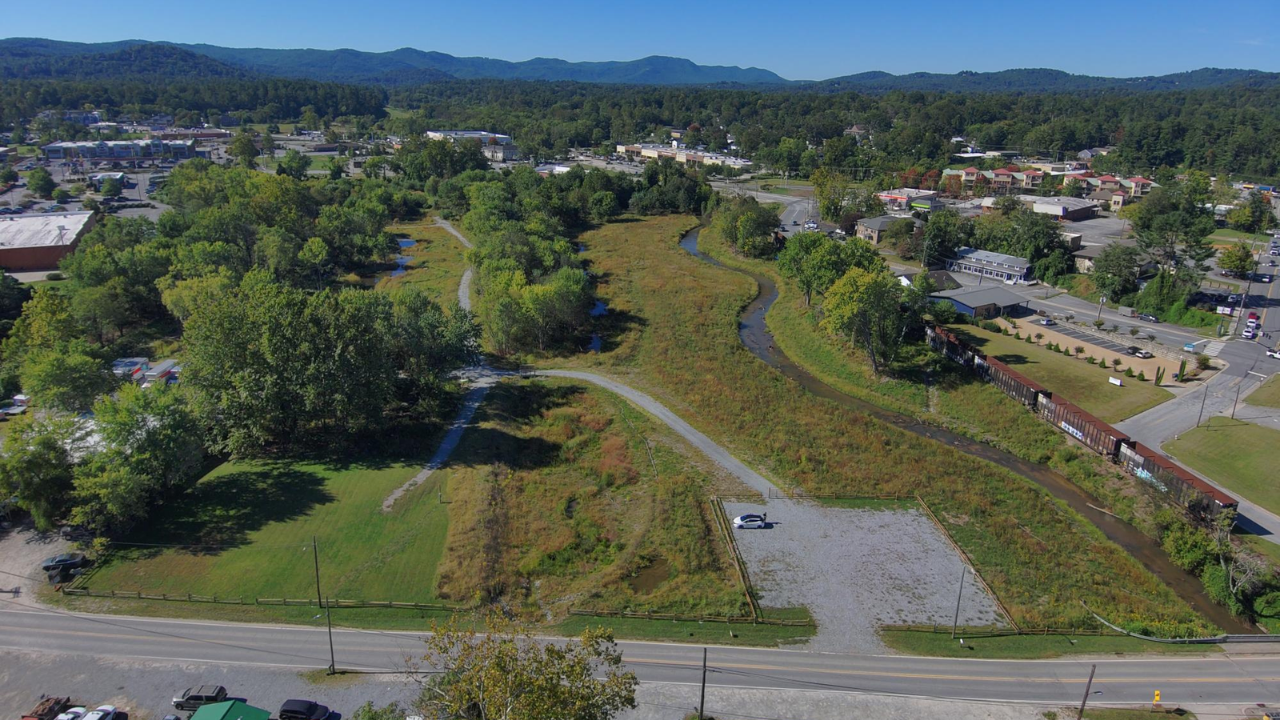
Five minutes outside of Saginaw, the asphalt turns from smooth blacktop into a washboard of patched frost heaves that rattle your fillings loose. You can tell a lot about the health of an American presidency by the sound a suspension makes on a county road in November.
Listen.
That dull, metallic clatter underneath a rusted pickup truck traveling south on M-13 isn't just worn-out shocks; it is the baseline hum of the Rust Belt, a region where political pundits fly in for forty-eight hours, drink black coffee at a local diner, and claim to have taken the pulse of the nation before catching the evening flight back to Washington. They love to talk about Michigan as a monolith—a giant, mitten-shaped chessboard where fifteen electoral votes sit waiting to be claimed by whichever campaign runs the slickest television ads in October.
Political analysts at outlets from the Detroit Free Press to the Cook Political Report routinely point to Michigan as the decisive tipping-point state in presidential politics, noting that whoever captures its razor-thin margins often controls the broader national trajectory. Yet looking at Michigan through the lens of national polling averages misses the real mechanism at work. A presidency isn't won or lost in the aggregate. It is decided in the quiet, unglamorous friction between two very different economies sharing a single state border.
To understand why Michigan holds the leverage over Donald Trump’s second term—and why the tremors felt in Lansing and Detroit dictate the legislative survival of the White House—you have to look past the red-versus-blue electoral maps. You have to look at the kitchen tables where two incompatible versions of the American future are currently colliding.
The Tale of Two Shifts
Consider a hypothetical composite of two workers who live less than forty miles apart, yet inhabit entirely different economic realities.
Let’s call the first one Marcus. He is forty-six years old, wears steel-toed boots that have seen three contract negotiations, and works the second shift at an engine plant outside Flint. For Marcus, the political calculus isn't ideological; it is physical. He measures presidential administrations by the thickness of his overtime checks and the price of diesel. When Trump campaigned on aggressive tariffs, deregulation, and rolling back strict federal electric vehicle mandates, Marcus didn't hear abstract macroeconomic theory. He heard a reprieve. To him, the rapid push toward battery-powered fleets looked less like environmental salvation and more like a downsizing notice printed on glossy paper, given that electric drivetrains require roughly thirty percent fewer parts—and fewer hands—than internal combustion engines.
Now drive forty miles west to a brick colonial in East Lansing and meet Elena. She is thirty-four, works in healthcare administration, and spends her evenings checking the local school board minutes and watching mortgage rates. For Elena, the promise of economic nationalism feels less like a shield and more like an inflationary tax waiting to detonate at the grocery checkout line. She worries about the stability of federal healthcare funding, the predictability of democratic institutions, and what happens to a state economy heavily reliant on cross-border trade with Canada when tariffs become a primary tool of foreign policy.
Marcus and Elena never meet. They don't watch the same news channels, they don't shop at the same stores, and they don't share the same fears.
Yet in Michigan, their ballots carry identical weight.
Historically, presidential administrations have treated the Great Lakes region like a pendulum, assuming that if you pull the lever hard enough on manufacturing nostalgia, the entire state swings in unison. Data from the U.S. Census Bureau and the Bureau of Labor Statistics tells a much more complicated story. While manufacturing remains the cultural backbone of the state—employing roughly 600,000 Michiganders—healthcare, education, and professional services now employ far more. Michigan is no longer just an assembly line; it is a sprawling, uneven patchwork of post-industrial towns, booming college corridors, and quiet lakeside suburbs.
When a president governs from Washington, it is easy to treat these competing interests as mere talking points. In Michigan, they collide in real time.
The Ambassador Bridge Bottleneck
If you want to see the invisible stakes of Trump’s economic agenda, don't look at Wall Street. Stand on the Detroit waterfront and watch the trucks cross the Ambassador Bridge.
Every single day, roughly ten thousand commercial vehicles rumble across that suspension span linking Detroit to Windsor, Ontario. Carrying everything from automotive chassis and raw steel to pharmaceuticals and fresh produce, this single crossing handles more than a quarter of all merchandise trade between the United States and Canada. Economists at the Federal Reserve Bank of Chicago have long emphasized that the North American auto supply chain doesn't merely cross the border—it weaves back and forth across it. A single piston or transmission component might cross the Detroit River half a dozen times before it ever sits inside a finished vehicle on a dealership lot in Ohio.
Here is where abstract policy meets concrete reality.
Think of the North American supply chain not as two separate buckets sitting side by side, but as a single circulatory system. You cannot clamp an artery in Windsor without starving a muscle in Dearborn. When the White House threatens or implements sweeping tariffs on foreign imports—even on close allies—the immediate political applause comes from voters like Marcus, who see a president finally willing to throw a punch on behalf of domestic factories.
But the second-order effects arrive quietly, usually sixty to ninety days later, in the form of supplier invoices.
In 2018 and 2019, during Trump’s first term, steel and aluminum tariffs produced a sharp, immediate lesson in this exact friction. While domestic steelmakers saw short-term price boosts, downstream Michigan manufacturers—the tool-and-die shops, the stamping plants, the mid-sized suppliers tucked into industrial parks from Grand Rapids to Warren—suddenly faced rising raw material costs that squeezed their margins. Retaliatory tariffs from trading partners hit Michigan’s agricultural sector next, turning tart cherry orchards in Traverse City and soybean fields in the Thumb into collateral damage in a broader trade standoff.
For Trump’s presidency, Michigan acts as the ultimate stress test. If his tariff and industrial policies succeed in reshoring jobs faster than they raise consumer prices, Michigan’s working-class counties will solidify into an impenetrable political firewall, giving the administration the mandate it needs to reshape the federal government. If, however, supply chain friction stalls factory output and reignites inflation at the supermarket, the very voters who handed him the keys to the White House will be the first to feel the pinch.
There is no buffer zone here. In coastal states, economic pain is often cushioned by tech capital or financial services. In Michigan, when the assembly lines slow down, the local diner feels it by Friday, and the municipal tax base feels it by the following quarter.
The Shifting Geography of Grievance
Spend enough time driving the two-lane highways north of Bay City, and you realize how deeply political analysts misunderstand rural and small-town resentment. It is rarely about hatred of the other side; most often, it is about the exhausting sensation of being treated as an afterthought.
I remember sitting in a cramped VFW hall in Macomb County during an autumn rainstorm a few years back, listening to a retired toolmaker explain why he had switched parties after voting Democratic for forty years. He didn't recite cable news slogans. He pulled a folded utility bill from his shirt pocket, smoothed it out on the laminate table, and pointed to the delivery charges. "They tell me the economy is growing," he said, tapping the paper with a calloused forefinger. "They show me charts on television where the line goes up. Well, my line goes down every month, and nobody in either party seems to know why."
That sentiment is the fault line running straight through modern American politics, and nowhere is it wider than in Macomb and Oakland counties—the twin suburban engines just north of Detroit.
To understand Michigan’s power over a presidency, you have to understand the tug-of-war between these two neighbors:
- Macomb County: Historically the home of the "Reagan Democrat," this is blue-collar suburbia—brick ranches, union halls, and strip malls where economic nationalism resonates deeply. Trump’s populist message caught fire here because it validated a long-standing suspicion that global trade deals had traded away their children’s futures for cheaper consumer electronics.
- Oakland County: Just across Dequindre Road lies one of the wealthiest, most highly educated suburban counties in the Midwest. Filled with corporate headquarters, medical centers, and white-collar professionals, Oakland has steadily drifted away from traditional Republican messaging, driven by concerns over institutional norms, social policies, and economic predictability.
A president cannot govern effectively without keeping at least a foothold in both worlds. Yet the political gravity of the current moment pulls them further apart every year.
According to election data analyzed by the Associated Press and the MIT Election Data and Science Lab, statewide margins in Michigan have repeatedly come down to fractions of a percentage point—10,704 votes in 2016, roughly 154,000 in 2020, and another razor-thin contest in 2024. When elections are decided by margins that could fit inside the University of Michigan’s football stadium in Ann Arbor, every policy decision made in the Oval Office carries existential weight.
The Midterms and the Legislative Cliff
Why does a single state matter so much after the presidential oath has already been taken? Because in Washington, a president’s power is only as durable as his congressional majority, and the road to the House of Representatives runs straight through Michigan’s swing districts.
Look at the map. From the sprawling rural-suburban hybrid of the 7th District around Lansing to the shoreline communities of the 8th District stretching from Flint to Midland, Michigan holds several of the most fiercely contested congressional seats in the country. Political forecasters at the Sabato’s Crystal Ball and the Cook Political Report consistently place these districts at the center of any calculation regarding control of Congress.
If Trump’s domestic agenda—extending tax cuts, reshaping federal agencies, enforcing stricter border controls, and rewriting energy policy—stumbles in execution, the backlash won't wait four years to register. It will arrive in the midterm elections, channeled directly through frustrated suburbanites in Oakland County and disillusioned independent voters in Grand Rapids.
Lose those Michigan House seats, and the presidency shifts overnight from an engine of legislative action into a defensive crouch, bogged down by subpoenas, budget standoffs, and judicial confirmation battles.
Conversely, if the administration manages to thread the needle—keeping inflation cooled while demonstrating tangible wins in domestic manufacturing—Michigan becomes the proof of concept that validates Trump’s entire governing philosophy. It hands Republicans a blueprint for holding the industrial Midwest for a generation, forcing the Democratic Party into a painful structural reckoning over how it lost the very working-class coalition that built it.
The Unforgiving Ledger
It is tempting to look at all this—the trade data, the county-by-county demographic shifts, the razor-thin electoral margins—and believe we can predict how the story ends. We can't. Anyone who claims to know with certainty how Michigan will react over the next two years isn't paying attention to the volatility on the ground.
Politics here isn't a neat equation. It is messy, contradictory, and deeply personal.
The same voter in Dearborn who applauds aggressive action to bring manufacturing back to American soil might simultaneously recoil at foreign policy decisions affecting family members overseas. The young engineer in Ann Arbor who benefits from deregulation in the tech sector might vote against the administration over climate policy or reproductive rights. The small-business owner in Kalamazoo might love lower corporate tax rates while quietly panicking over the cost of imported parts.
In Washington, politicians deal in narratives. They craft speeches, stage bill signings, and declare victory before the ink is dry.
In Michigan, people deal in ledgers. They look at the price of eggs at Meijer, the interest rate on a used F-150, the Help Wanted signs—or lack of them—outside the stamping plant on the edge of town. They don't care about the rhetoric coming out of the West Wing; they care about whether the math works at the end of the month.
Late on a Sunday evening, if you drive north across the Mackinac Bridge—that five-mile stretch of steel and concrete suspending Interstate 75 above the cold, dark waters where Lake Michigan meets Lake Huron—you feel the sheer scale of the state. To your left is the Upper Peninsula, rugged, isolated, and fiercely independent, where winters are measured in feet of snow and trust in distant authorities is earned slowly, if at all. Behind you lies the Lower Peninsula, with its crowded freeways, gleaming research hospitals, and quiet factory towns waiting to see what the next shift brings.
The bridge sways slightly in the wind off the straits, held together by tension, anchored deep into the bedrock on either shore. Pull too hard in one direction without accounting for the weight on the other, and the whole structure begins to groan.