Cold.
That is the first thing you notice when you step off a bush plane onto the packed snow of a runway in rural Alaska, hours before the sun even considers clearing the horizon. The air bites at your lungs, crisp and unforgiving, carrying the faint, sharp tang of diesel exhaust and woodsmoke. Inside a dimly lit community center—perhaps in a place like Bethel or Nome—a local election worker unlocks a heavy canvas bag, her fingers stiff as she pulls out stacks of paper ballots sealed inside return envelopes. Some of those envelopes arrived by dogsled, others by single-engine Cessna, and still others on the back of a snowmachine bouncing across frozen tundra. Also making waves in this space: Why Superheroes at the France Protests Are More Than Just a Viral Distraction.
For the people living at the edge of the map, casting a vote is rarely a quick stop on the way to work. It is an act of logistical stubbornness. Yet thousands of miles away, under the warm fluorescent lights of federal courtrooms and cable news studios, those very envelopes have become the center of a fierce legal and political storm.
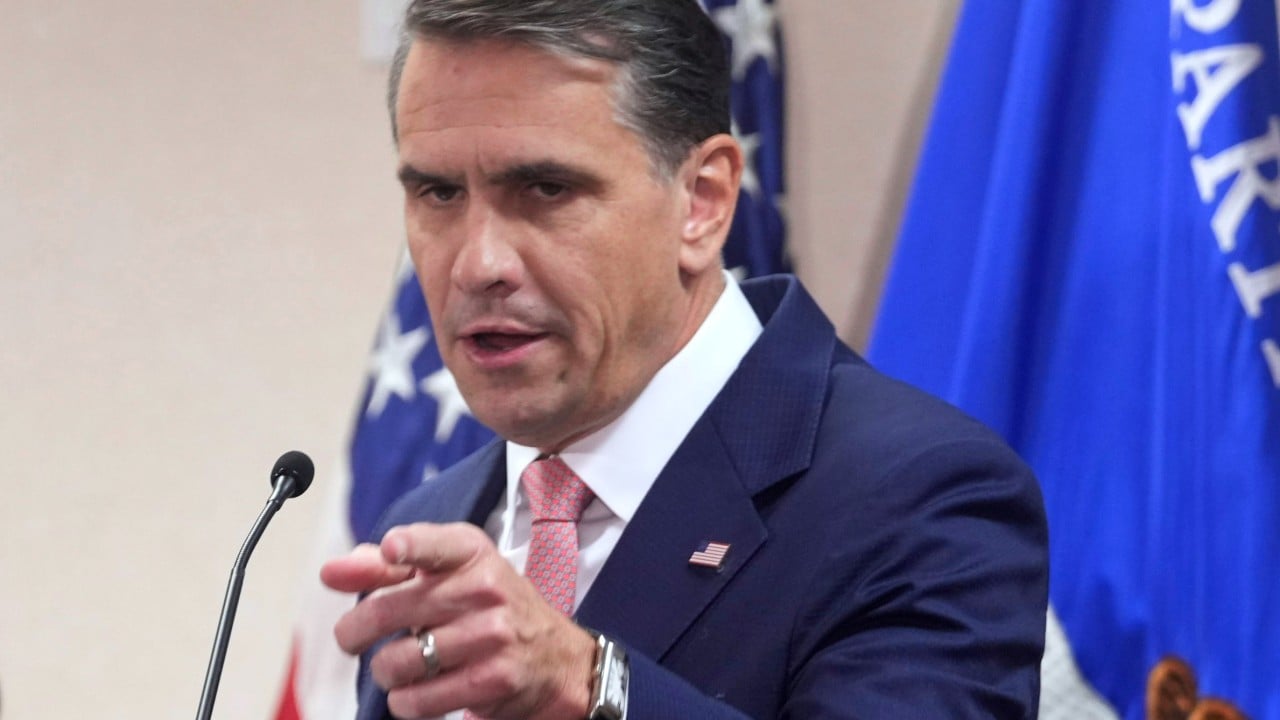
When news broke that Donald Trump had joined a legal challenge targeting the counting of mail-in ballots in Alaska’s Senate race, the reaction split immediately along familiar, jagged fault lines. Critics saw an attempt to reach into the state's machinery and tilt the scales. Defenders saw a necessary fight to enforce clear rules before the final tally is locked in. Stepping forward to defend the legal push was Todd Blanche, a prominent attorney closely tied to Trump’s legal team, who delivered a blunt rebuttal to the accusations of interference. According to Blanche, Trump is "not trying to meddle" in Alaska's election results by suing over the Senate race; rather, the lawsuit aims to ensure that only ballots meeting strict statutory deadlines and requirements are counted. Additional details on this are explored by The New York Times.
To understand why a courtroom argument over postmarks and arrival dates feels so personal—and so precarious—you have to look past the headlines and step into the friction between two deeply held ideas about what makes an election fair.
The Weight of a Postmark
Imagine, for a moment, a hypothetical commercial fisherman named Caleb living on a remote island in Southeast Alaska. Let’s call it a composite of a hundred real places where the mail boat comes twice a week—weather permitting. Caleb fills out his ballot on a Tuesday morning, seals it, and drops it at the local post office before noon. Then a gale blows in off the Gulf of Alaska. The floatplane stays grounded for three days. By the time the canvas mail sack reaches Juneau, Election Day has come and gone.
Under Alaska law, ballots postmarked on or before Election Day can still be counted if they arrive within a specified window afterward—up to ten days for domestic mail, and fifteen days for ballots sent from overseas or military bases. For decades, lawmakers in Juneau designed the system around a simple geographic reality: Alaska is more than twice the size of Texas, with fewer miles of paved road than Vermont. Without a grace period for transit, distance itself becomes a poll tax.
Now consider the competing perspective, the one driving the legal challenge that Todd Blanche stepped up to defend. Put yourself in the shoes of a hypothetical voter named Margaret in Anchorage, who drove through slush on Election Tuesday, stood in line at her precinct, and fed her ballot into the scanner before 8:00 PM. To Margaret—and to the attorneys challenging the post-Election Day receipt window—the phrase "Election Day" is supposed to mean something singular and concrete. In their view, allowing ballots to trickle in days after polls close invites confusion, stretches out uncertainty, and blurs a bright constitutional line.
When Todd Blanche argued that Trump was not trying to meddle in the Alaska Senate race, he was tapping directly into that second worldview. In legal terms, the argument rests on the Elections Clause of the U.S. Constitution, which gives state legislatures—and ultimately Congress—the authority to set the "Times, Places and Manner" of federal elections. Challengers contend that federal statutes establish a single uniform Election Day across the nation, and that counting ballots received after that date conflicts with federal law, regardless of when a postal worker stamped the envelope.
Why Alaska Draws the Spotlight
You might wonder why a state with three electoral votes and a population smaller than Austin, Texas, suddenly commands the attention of national legal strategists. The answer lies in the razor-thin arithmetic of the United States Senate.
In a chamber where control often hinges on a single seat, every race with a narrow margin becomes a national proxy war. Alaska’s elections carry an added layer of complexity: the state uses a nonpartisan open primary paired with ranked-choice voting in the general election. Because instant-runoff tabulations cannot even begin until the fifteen-day window for late-arriving ballots closes, Alaska routinely takes weeks to certify its winners.
For political operatives accustomed to watching networks call races before midnight on the East Coast, that two-week silence feels like an eternity. Into that vacuum rushes suspicion. Every batch of late-counted ballots can shift percentages by tenths of a point, turning a narrow Tuesday night lead into a narrow Friday afternoon deficit.
Think of an election count like a long-distance relay race where different runners start on vastly different terrain. One runner sprints down a paved track; another has to cross a river by ferry. If you blow the whistle and declare a winner the moment the track runner crosses the line, the ferry passenger never stood a chance. On the other hand, if the rules about when the ferry must dock feel unclear or contested while the race is still underway, spectators start questioning the referees.
That tension is precisely why Todd Blanche’s framing matters. By insisting that the lawsuit is about upholding statutory boundaries rather than meddling in an outcome, Trump’s legal allies are trying to separate the process of litigation from the perception of political interference. In courtrooms across the country, lawyers routinely argue that asking a judge to interpret election law is the very definition of playing by the rules—not breaking them.
Yet to election administrators in Juneau and Fairbanks, a lawsuit filed during or immediately after voting feels less like an abstract constitutional seminar and more like an earthquake under an already crowded building.
Inside the Counting Room
I have spent enough time watching local canvassing boards work to know how unglamorous—and exhausting—the reality of ballot verification actually is. There are no smoke-filled rooms or shadowy levers. Instead, there are folding tables, magnifying glasses, fluorescent lights that hum slightly, and bipartisan teams of neighbors checking signatures against voter registration rolls.
When a ballot envelope arrives four days after Election Day, two workers—typically one registered Republican and one registered Democrat—examine the postmark. Sometimes the ink is crisp: NOV 3. Sometimes it is smudged by sleet, requiring them to check postal tracking barcodes or witness signatures. Every envelope that passes inspection is separated from its ballot to preserve secrecy, flattened, and fed through high-speed optical scanners.
When lawsuits challenge the validity of those post-Election Day arrivals, local officials have to segregate the disputed ballots, track them separately, and wait for federal judges to decide whether those voices count. It slows everything down. It breeds headlines about "mystery ballots" showing up late, even when those envelopes sat in a postal sorting facility waiting out a blizzard.
History shows that battles over mail-in deadlines are nothing new in American politics. During the Civil War, fierce debates erupted over whether Union soldiers in the field could cast absentee ballots that arrived weeks after local polls closed. In 2000, the entire presidency turned on how Florida counties interpreted punch-card chads and overseas military postmarks. What has changed in the modern era is the speed and scale of pre-emptive and immediate litigation. Legal challenges are no longer a last resort after a tied race; they have become a standard tool deployed alongside television ads and field organizers.
The Thin Line Between Scrutiny and Doubt
Here is the uncomfortable truth that neither side in a partisan shouting match likes to admit: both impulses—the demand for strict, uniform deadlines and the demand for geographic inclusion—come from genuine concerns about legitimacy.
If you ignore deadlines entirely, public trust erodes because the finish line seems to move. If you enforce a rigid arrival cutoff without accounting for rural mail realities, public trust erodes because entire communities—disproportionately Alaska Native villages off the road system—find themselves effectively disenfranchised by weather and distance.
Courts have had to walk that tightrope carefully. In recent years, federal appellate rulings in other states, such as the Fifth Circuit’s decision striking down Mississippi’s post-Election Day ballot receipt window, have given challengers fresh legal ammunition. Those rulings suggest that under federal law, a ballot is not truly "cast" until election officials physically receive it. That precedent is the legal wind filling the sails of the Alaska lawsuit.
At the same time, defenders of Alaska’s system point out that Congress has never explicitly barred states from accepting mail ballots postmarked by Election Day, and that abrupt judicial changes to longstanding state rules risk punishing voters who followed the instructions printed right on their official ballot envelopes. Imagine following every direction your state government gave you—signing on the line, sealing the secrecy sleeve, mailing it before Election Day—only to be told weeks later by a federal court that your envelope arrived too late to matter.
That is the invisible human cost sitting underneath the legal briefs. While pundits debate whether Todd Blanche’s defense holds water, and while political commentators parse whether Donald Trump’s involvement signals strategy or overreach, thousands of ordinary residents are simply waiting to see if their trip to the post office counted.
The Silence After the Storm
Eventually, the briefs will be filed, the oral arguments will conclude, and a federal judge will issue an opinion written in measured, clinical prose. The legal questions surrounding Alaska’s Senate race will find an answer, whether in Anchorage or before the U.S. Supreme Court.
But long after the attorneys pack their briefcases and fly south to warmer weather, the people who live in the North will still be there. They will still be waiting on the mail plane when the cloud ceiling drops to two hundred feet. They will still be sealing their civic hopes inside paper envelopes, trusting that the distance between their front porch and the state capital is not too wide for their voice to cross.
Outside the community center in Bethel, the snow keeps falling, erasing every footprint within an hour.


