The generator hums at a frequency you feel in your teeth before you hear it in your ears.
Imagine, for a moment, a fictional apartment on the ninth floor of a concrete block in Kharkiv—let’s call its resident Olena, a retired structural engineer who keeps three flashlights taped to the hallway wall like climbing gear. Outside her triple-paned window, the winter air smells of wet ash and diesel exhaust. Every time the city’s electrical grid flickers, Olena looks at the digital clock on her microwave. When the numbers vanish, she knows an air-defense battery somewhere on the eastern perimeter just burned through another interceptor, or a transformer substation took a hit from a drone built with microchips bought through a shell company in Central Asia.
Now picture a very different room, four thousand miles west, where the air smells of floor wax and burnt coffee.
In the wood-paneled corridors of the United States Senate, there are no generators humming outside. Yet the clocks are ticking just as loudly. Bipartisan lawmakers on Capitol Hill have begun pressing the Trump administration to move swiftly on tightening and enforcing Russian sanctions—a political tug-of-war that reads like dry diplomatic boilerplate in morning briefings, until you trace the copper wire connecting a Treasury Department signature in Washington to the dark stairwell outside Olena’s front door.
To understand why senators from both sides of the aisle are suddenly turning up the heat on the White House, you have to strip away the jargon of statecraft and look at what sanctions actually are. They are not magic wands. They are siege engines. And a siege engine only works if you keep cranking the winch.
The Architecture of a Loophole
When people hear the word "sanctions," they tend to picture a giant steel door slamming shut on a bank vault. In reality, economic warfare looks a lot more like water pressing against a cracked earthen dam.
You plug one hole, and the pressure immediately finds three hairline fractures twenty feet down the wall.
Over the past several years, Western allies erected the most expansive financial blockade ever aimed at a major energy-exporting economy. Russian sovereign assets were frozen. Major banks were severed from the SWIFT messaging system. Price caps were slapped onto seaborne crude oil. On paper, the Kremlin’s war chest should have run dry long ago.
Yet Moscow adapted. Slowly at first, then with the frantic ingenuity of a state fighting for survival.
Consider what happens when a tanker full of Russian Urals crude leaves a port in the Baltic Sea. To evade the Western price cap—which prohibits Western maritime insurers and shipping firms from handling Russian oil sold above a set threshold—Moscow assembled a sprawling "shadow fleet" of aging, unflagged, or dubiously insured vessels. These ships turn off their transponders in international waters, transfer cargo hull-to-hull in the dead of night off the coasts of Greece or Malaysia, and route payments through obscure intermediaries in non-aligned jurisdictions.
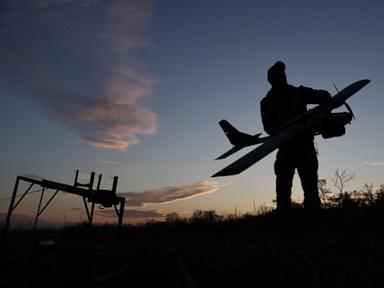
The money still flows. And that money buys artillery shells, recruits contract soldiers from impoverished provinces, and funds the factories churning out Shahed-style attack drones around the clock.
This is the reality keeping lawmakers awake in Washington. Senators pushing the Trump administration aren't arguing that sanctions haven't hurt Russia—inflation inside Russia has climbed, interest rates have surged past 20 percent, and labor shortages are hollowing out civilian industries. Rather, they are warning that partial pressure is a self-defeating strategy. If enforcement slows down while the White House weighs broader diplomatic negotiations, the Kremlin gets breathing room to rebuild its supply chains.
Hesitation has a body count.
Why Capitol Hill Is Losing Patience
Washington politics rarely produces genuine consensus anymore, which makes the friction over Russia sanctions all the more revealing.
On one side, you have a White House weighing leverage. Any incoming or sitting administration eyeing potential negotiations to end the war in Ukraine faces a classic diplomatic dilemma: do you hold back new economic penalties as a bargaining chip to lure Moscow to the table, or do you tighten the screws until the Kremlin has no choice but to negotiate on unfavorable terms?
Inside the Senate Foreign Relations and Banking committees, a growing chorus of lawmakers—including hawkish Republicans who share the president's skepticism of endless foreign entanglement alongside Democrats fiercely committed to Kyiv—has reached a blunt conclusion. You cannot negotiate from strength while leaving your sharpest economic weapons holstered.
Their pressure campaign centers on three urgent pressure points:
- Secondary sanctions on third-party enablers: Targeting the foreign banks, port operators, and tech brokers in third countries that quietly process payments or ship dual-use electronics—like ball bearings, machine tools, and semiconductors—into Russian defense plants.
- Cracking down on the shadow fleet: Sanctioning individual tankers, their shell-company owners, and the registries flying flags of convenience, effectively stranding Russian crude at sea without buyers willing to risk losing access to the U.S. dollar.
- Closing energy and metals exemptions: Eliminating remaining carve-outs that still allow European and global buyers to purchase Russian liquefied natural gas, enriched uranium, or industrial metals while funding the very military machine NATO is trying to deter.
Think of sanctions enforcement like tending a fire in a damp forest. Stop feeding it dry kindling, and within hours you are left staring at gray ash. Senators know that administrative delays—waiting months to designate a batch of shell companies or holding off on secondary penalties out of fear of rattling global oil markets—give Russian procurement networks time to dissolve and reappear under new corporate names in Hong Kong, Dubai, or Istanbul.
The Invisible Math of Attrition
I still remember standing in a muddy staging area outside Kyiv two winters ago, watching a Ukrainian logistics officer tally artillery rations on the back of a cardboard MRE box. He wasn't looking at maps of tank maneuvers. He was doing basic arithmetic.
Every shell fired by a Russian howitzer across the river had a price tag attached to it, paid in petrodollars and rubles minted from state reserves. Every interceptor missile fired by a Ukrainian Patriot battery to knock a ballistic missile out of the sky above a children's hospital had a price tag too—roughly four million dollars a shot, financed by Western taxpayers.
That officer understood something that gets lost in televised debates about foreign aid: financial sanctions are the cheapest air defense system the West owns.
When the U.S. Treasury blocks a shipment of high-precision German or Japanese CNC machine tools from reaching a Russian barrel factory in Yekaterinburg, it saves lives six months later in Donetsk without firing a single American bullet. When secondary sanctions scare a regional bank in Central Asia out of clearing transactions for Russian military contractors, it starves a drone assembly line before the fuselage is even molded.
Yet because economic warfare moves at the speed of spreadsheets rather than explosions, it struggles to hold political attention. A missile strike makes the evening news; a Treasury designation list of four hundred shell companies gets buried on page fourteen.
And that asymmetry is dangerous. It creates the illusion that time is neutral.
Time is never neutral in a war of attrition. Every week that Russian oil flows above the price cap, Moscow converts those revenues into steel and explosives. Every month that Western lawmakers and executive branch officials spend debating the sequencing of sanctions, Ukrainian brigades ration ammunition along a six-hundred-mile front line.
The Doubt Nobody Likes to Admit
Let’s be honest about the skepticism surrounding all of this, because pretending sanctions are a silver bullet insults everyone’s intelligence.
If you feel a pang of doubt when politicians promise that "just one more round of sanctions" will turn the tide, your instinct is sound. History is littered with regimes that endured crippling embargoes for decades without collapsing—from North Korea and Iran to Cuba and Saddam Hussein’s Iraq. Authoritarian rulers do not feel the pain of a shrinking economy the way ordinary citizens do. Vladimir Putin does not stand in line at a Moscow grocery store staring at the price of butter and potatoes. He can squeeze civilian living standards for years to keep his war machine fed.
Even worse, aggressive secondary sanctions carry real risks for Washington. Threaten too many foreign banks with exile from the U.S. financial system, and you accelerate efforts by rival powers to build alternative payment networks outside the dollar's orbit. Clamp down too hard on Russian oil exports right before a winter cold snap, and gasoline prices tick upward in Ohio and Pennsylvania—a political toxin no White House wants to swallow.
These are not trivial objections. They are the exact trade-offs keeping Treasury officials and National Security Council aides locked in late-night meetings.
But acknowledging the limits of sanctions is very different from surrendering their leverage. The goal of swift, decisive sanctions isn't to make the Kremlin wave a white flag tomorrow morning. It is to force a brutal math problem onto Moscow’s balance sheet—to make the cost of continuing the invasion visibly exceed any territorial gain Russia could possibly carve out of eastern Ukraine.
Right now, the Kremlin is betting that Western political will fractures before the Russian economy breaks. Moscow watches Washington closely. It reads the hesitation in delayed sanctions packages and interprets diplomatic caution as fatigue.
What Swift Action Actually Looks Like
If the Trump administration heeds the bipartisan push from Capitol Hill, the shift won't look like a dramatic speech from the Rose Garden. It will look like relentless, unglamorous administrative warfare.
It means empowering Treasury’s Office of Foreign Assets Control to designate shadow-fleet tankers not in cautious trickles of ten or twenty ships every few months, but in sweeping batches that make insuring or docking Russian crude toxic across every major port from Rotterdam to Singapore.
It means picking up the phone and telling financial regulators in countries acting as transit hubs that their largest banks face an immediate choice: cut off accounts linked to Russian defense procurement, or lose correspondent banking access to the United States. When forced to choose between the Russian ruble and the U.S. dollar, global banks rarely hesitate for more than forty-eight hours.
And it means synchronizing Washington’s enforcement calendar with European allies so that loopholes closed in Washington aren't left gaping open in Brussels or London.
None of this requires deploying a single American soldier. None of it requires passing a massive new spending bill through a divided Congress. The legal authorities already exist on the books. What’s missing is velocity.
Back in our fictional ninth-floor apartment in Kharkiv, Olena doesn't follow the committee hearings on C-SPAN. She doesn't know the names of the senators drafting letters to the White House, or the technical distinctions between primary and secondary financial designations.
She only knows the sound of the generator outside her window, and the quiet dread of watching the numbers on her microwave clock blink out in the dark.
Somewhere tonight, a tanker without a transponder is slipping through black water toward an unlit port, carrying the fuel that will pay for tomorrow’s barrage. Whether that ship ever unloads its cargo—and whether Olena’s lights stay on through another winter—comes down to whether Washington decides that the clock on its desk is ticking just as fast as hers.