Silence.
That is the first thing you notice when a workplace starts measuring every breath. Not the clatter of a busy warehouse or the cheerful hum of an open-plan office in Sydney or Melbourne, but a tight, brittle quiet where people hesitate before hitting a key, pause before leaning back, and wonder what a line of code is quietly recording behind their eyelids. If you enjoyed this article, you might want to look at: this related article.
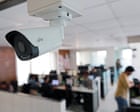
Across Australia, employers are increasingly turning to artificial intelligence and digital monitoring tools to track staff—from keystrokes and instant messages to card swipes, cameras, and productivity scores—sparking urgent calls to strengthen workplace privacy laws. When researchers and advocates raised alarms over covert monitoring, including emerging wearable optics like smart glasses, they were pointing to something far more intimate than software licenses and compliance memos. They were pointing to human dignity.
I know what it feels like to work under a microscope that never blinks. Years ago, in a job far removed from Australia, a manager introduced an automated activity tracker that logged idle minutes and window switches. On paper, it looked harmless—even "objective." In practice, it turned a thoughtful afternoon of reading a dense report into a silent anxiety attack because my mouse wasn't moving. When a human manager watches you, you can read their face, explain a rough morning, or show them the messy middle of a hard problem. An algorithm doesn't see the messy middle. It only sees stillness and calls it drift. For another look on this development, check out the recent coverage from Financial Times.
To make sense of what is happening right now, let us step into a hypothetical scenario grounded in real Australian workplace patterns. Imagine Hannah, a customer support specialist working hybrid hours in Brisbane. Her laptop has company software installed, her badge logs building entries, and her chat channels are scanned for response speeds and sentiment cues. One Tuesday, Hannah spends twenty minutes drafting a delicate apology to an upset customer—re-reading, deleting, softening her tone so a stressed parent doesn't feel brushed off. To a human colleague, twenty minutes of care looks like empathy. To an automated dashboard grading "idle time" or "unusual pauses," those twenty minutes can look like a dip in output.
That gap—between human care and machine measurement—is where trust starts to fray.
Why Old Rules Can't Hold New Eyes
Think of Australian workplace laws right now like a sturdy timber fence built to keep sheep out of the garden, while someone outside has quietly invented a drone. The fence was never meant to stop anything flying overhead.
Australia's surveillance rules are fragmented across states and territories, and federal privacy protections have long treated employee records differently from ordinary consumer data. In places like New South Wales, workplace surveillance legislation has historically focused on notice and categories of monitoring—cameras, computers, tracking—written in an era before generative models, behavioral scoring, and predictive analytics stitched tiny signals together into a continuous profile. Meanwhile, employees across retail, logistics, call centers, and corporate offices often don't know which metrics are active, how long logs are kept, or whether a subtle pattern in their typing speed is feeding a performance review.
Let's pause and be honest about how confusing this gets. Even legal specialists and HR leaders sometimes wrestle with where a legitimate security check ends and intrusive surveillance begins. Employers have real responsibilities: keeping people physically safe on a factory floor or delivery route, protecting sensitive customer records, preventing fraud, and keeping a business afloat. Nobody wants reckless data leaks or unaddressed safety hazards.
The trouble starts when "security" quietly expands into constant behavioral grading.
Consider a metaphor for what happens when monitoring goes unchecked: imagine a neighbor who asks to borrow your ladder once to fix a gutter, and then sets up a permanent tripod aimed straight through your kitchen window just in case a burglar walks by. The original reason sounded practical. The daily reality feels invasive, disproportionate, and impossible to ignore.
Privacy advocates, union voices, and researchers calling for stronger workplace privacy in Australia are asking a deceptively simple question: if a tool can track where you are, what you type, how fast you reply, or even what appears in your surroundings, shouldn't the law set clear limits on when it can be used and why?
The Hidden Toll on Bodies, Minds, and Morale
Surveillance isn't neutral. Human beings weren't built to perform for an invisible audience eight hours a day.
When workers suspect they are being tracked—especially without clear notice or meaningful choice—stress creeps into ordinary habits. Researchers looking into workplace monitoring have highlighted worrying ripple effects, including young workers avoiding shared facilities like changing rooms out of fear of being captured or recorded. Let that sink in for a second. A person holding back from using a basic workplace space because they don't trust who—or what—is watching isn't "being more productive." They are carrying a quiet knot in their stomach all shift.
Back in our hypothetical scenario, suppose a retail distribution center rolls out smart monitoring tools alongside existing cameras and scanners to speed up picking times. At first, management pitches it as a way to smooth bottlenecks. Within weeks, workers stop taking a ten-second stretch for a stiff back, skip brief check-ins with a teammate who looks overwhelmed, and rush through tasks that require careful handling. Speed ticks up on a screen. Injuries, burnout, and turnover quietly climb behind the scenes.
Look at what gets lost when everything is quantified:
- Micro-generosity vanishes. Answering a junior colleague's quick question or noticing someone is having a terrible day doesn't show up as a "high-value metric," yet it holds teams together.
- Thinking time looks like slack. Deep problem-solving often looks like staring out a window or staring at a blank cursor. Penalizing stillness punishes judgment.
- Psychological safety thins out. If every message, pause, or movement is scrutinized, people stop taking smart risks and start playing defensive theater.
What a strange bargain for a company to make. You buy software to squeeze an extra five percent of efficiency out of your staff, and in return you trade away the goodwill, candor, and loyalty that actually make a team resilient.
What Fair Oversight Actually Looks Like
Strengthening workplace privacy doesn't mean turning offices and warehouses into lawless black boxes. It means bringing basic fairness, clarity, and proportionality back into the room.
If Australia tightens its workplace privacy framework, the most practical guardrails focus on a few grounded principles. First, transparency that means something—plain-language notice about what is tracked, why it is tracked, and who gets to see the data, rather than burying dense technical jargon in an onboarding packet nobody can decipher. Second, necessity and proportionality—matching the level of monitoring to a genuine, demonstrable risk rather than collecting everything simply because the software can. Third, a human in the loop—ensuring automated scores or flags don't silently decide someone's standing, pay, or job without context, explanation, and a fair chance to respond.
And there is a fourth element that no statute can write by itself: leadership courage. A good manager doesn't need a secret surveillance feed to know who is pulling their weight. They know through clear expectations, honest conversations, trust, and paying attention to real outcomes rather than performative busywork.
Think about the difference between a workplace built on suspicion and one built on trust. In one, people watch the clock and watch their backs. In the other, people bring their full mind to the work because they know their humanity isn't being sliced into data points behind their back.
When the workday ends and the screen goes dark, a person should be able to close their laptop—or walk out the door—and feel like themselves again, whole and unmonitored.