Seventeen.
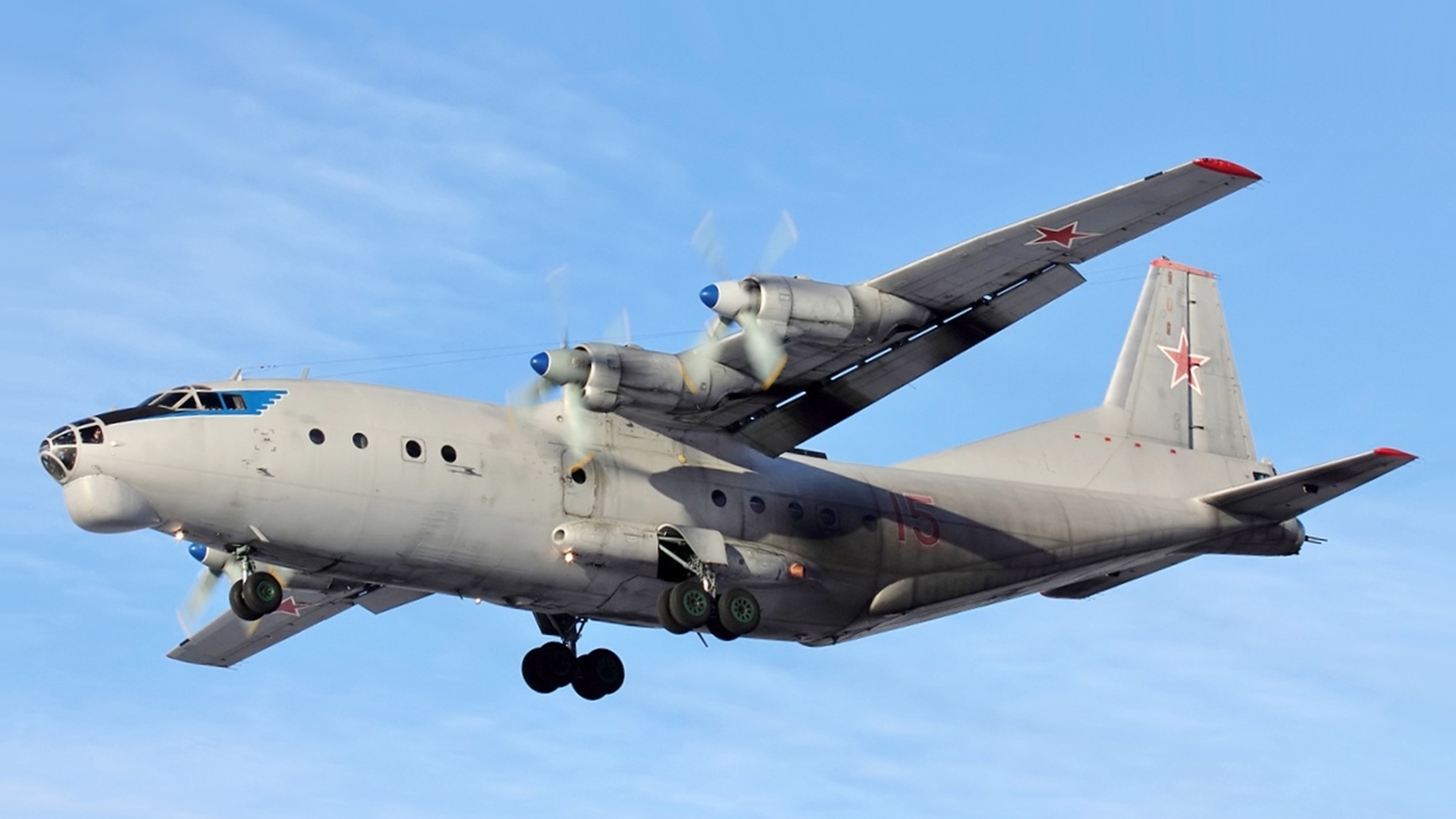
In a wire report, that number sits at the end of a headline like a period at the close of a sentence, neat and final and easy to scroll past before your coffee cools. Seventeen aboard a Russian military transport aircraft, lost somewhere in the vast white expanse of Siberia, zero survivors. The dispatch gives you the skeleton of a tragedy and leaves you to stare at the bones. It tells you where the wreckage lies, maybe the model of the airframe if the defense ministry feels generous, and the standard assurance that a commission has been formed to investigate the cause.
It does not tell you what a turbine sounds like when ice begins to choke the intake at thirty thousand feet. It does not tell you about the thermos of sweet black tea rattling on a metal jump seat, or the specific, suffocating silence that settles over a military garrison town when the snow plows stop moving because everyone is waiting for a phone call that will never come.
To understand what actually happened in that Siberian sky, you have to stop looking at the crash as an isolated mechanical failure and start seeing it for what it really is. It is the collision of brutal geography, aging metal, and the quiet, exhausting weight carried by the people who keep remote air bridges alive long after the headlines move on.
The Geography That Never Forgives
If you have never stood on a Siberian tarmac in late autumn, it is almost impossible to explain how actively the air tries to kill machines.
I remember standing near an airfield outside Irkutsk years ago, watching ground crews prep a turboprop for a routine supply run north. The cold there isn't a passive absence of heat; it is a physical weight that presses against your chest and turns rubber hoses into brittle glass. A wrench dropped on the concrete doesn't clang. It snaps.
When a Russian military transport lifts off from a regional hub in Siberia, it isn't flying over a friendly grid of emergency runways and radar towers. It is crossing a territory larger than the entire continental United States, much of it empty taiga, frozen swamp, and jagged mountain ridges where a forced landing is simply a slower way to die.
In aviation, engineers talk about the "Swiss cheese model" of accidents. Think of every safety protocol, maintenance check, and weather forecast as a slice of Swiss cheese. Each slice has holes—small, acceptable flaws. A single hole doesn't bring down an airplane. A crash only happens when the holes in every single slice line up perfectly, allowing a hazard to pass straight through from the hangar floor to the cockpit.
In Siberia, the cheese has more holes, and the slices are thinner.
When the defense ministry confirms that a military aircraft has gone down with seventeen people on board, the public immediately looks for a villain. Was it pilot error? Was it a missile? Was it sabotage? The truth, grounded in decades of post-Soviet aviation records, is usually far less dramatic and far more terrifying. It is almost always the quiet accumulation of deferred maintenance, harsh atmospheric icing, and an operational tempo that demands aging aircraft fly into weather that would ground commercial airliners on the spot.
Seventeen Lives Behind the Manifest
Let us step away from the cold metal for a moment and consider the manifest. Because we do not yet have the names released by the families—and because military secrecy often shrouds casualty lists in red tape for weeks—let us construct a composite, clearly hypothetical picture of who sits in those seventeen seats, based on hundreds of real Russian military transport manifests from similar regional flights.
Imagine a flight engineer named Alexei, forty-two years old, whose fingers are permanently stained with hydraulic fluid that no amount of industrial soap can scrub out. He knows the quirks of this specific airframe better than the manual does. He knows which fuel gauge sticks when the cabin temperature drops below freezing and which bulkhead vibrates when the starboard engine runs slightly rich. For him, this flight isn't a geopolitical event. It is Tuesday. It is the leg between an overhaul depot and a remote radar outpost, the last run before he gets four days off to fix the roof on his garage.
Beside him, picture a handful of young specialists in their early twenties—signal technicians, mechanics, maybe a junior logistics officer carrying sealed paper orders in a worn leather briefcase. They are wearing heavy sheepskin coats over their uniforms because the cargo hold of a military transport is never heated for comfort; it is heated just enough to keep the avionics from freezing.
They are talking about nothing important. Football scores. The terrible instant coffee at the departure lounge. Whether the roads back home have iced over yet.
When an aircraft suffers a catastrophic failure in that environment, there is no cinematic warning. There is no long, dramatic monologue over the radio. Modern flight data recorders recovered from similar Siberian crashes—such as the devastating Il-18 and An-26 accidents over the last decade—reveal a chillingly consistent pattern. Everything is normal until the exact second it isn't. A sudden asymmetric loss of thrust, a rapid buildup of clear ice on the wing leading edges that destroys lift faster than the pneumatic boots can crack it off, or a structural fatigue failure in a part that passed inspection three months ago.
Within forty seconds, the horizon vanishes into a whiteout. The alarms in the cockpit—sharp, insistent klaxons designed to wake a tired crew—scream over the roar of straining engines. And then, against the unforgiving granite and frozen larch trees of the Siberian interior, the noise stops.
The Invisible Strain on the Fleet
Why does this keep happening? If you look at the broader pattern of Russian military aviation incidents over the last several years, a stark, uncomfortable reality emerges.
Russia operates one of the largest military transport fleets in the world, tasked with stitching together eleven time zones where roads simply do not exist for half the year. Without these planes—workhorses like the Antonov An-26, the Ilyushin Il-76, and older twin-engine utility craft—entire northern garrisons would starve for fuel, spare parts, and personnel rotation.
Yet this vast logistical web relies heavily on airframes designed during the Brezhnev era. Metal has a memory. Every pressurization cycle, every hard landing on a frost-heaved runway, every rapid thermal shift from a heated hangar to minus-forty-degree air leaves microscopic stress fractures in the aluminum alloy.
Under normal circumstances, keeping these planes airworthy requires an immense, uninterrupted supply of precision bearings, specialized alloys, and Western-grade avionics components. Over the past few years, sweeping international sanctions and the relentless demands of active military operations elsewhere have stretched Russia’s domestic aerospace supply chain to its absolute limit.
Think of it like driving a heavy freight truck across a mountain pass every single day while using patched tires and salvaged brake pads because the factory that makes the originals is working triple shifts for another front. You might make the trip a hundred times without incident. You might make it a thousand. The driver gets confident. The dispatcher stops asking questions. Until the one morning when the ice is a little thicker, the load is a little heavier, and the patched tire finally gives way on a blind curve.
That is the hidden equation behind a headline that reads all 17 aboard killed. The crash site in Siberia is thousands of miles away from any active frontline, yet it is still bound to the same systemic exhaustion. When a nation’s military industrial complex is running at redline capacity, the margins of safety on routine domestic transport flights quietly erode. Experienced mechanics are reassigned. Training hours are compressed. Aging airframes are pushed past their scheduled overhaul windows because there is simply no other plane on the ramp to carry the cargo.
What Happens When the Radar Track Drops
I have spoken to families of aircrew lost in remote northern accidents, and they all describe the same agonizing limbo that begins the moment a plane misses its scheduled check-in.
In a major city, a disaster is instantly visible. Sirens wail, news vans block the intersections, and cameras broadcast the smoke within minutes. In Siberia, a crash happens in a void.
First comes the silence on the air traffic control frequency. The controller calls the aircraft's call sign once, twice, three times, waiting for that familiar, static-laced voice to read back an altitude. Nothing. Just the low hiss of an open channel.
Then comes the scramble. Search and rescue helicopters—usually Mi-8s fitted with auxiliary fuel tanks—have to be fueled, de-iced, and launched into the exact same weather system that likely doomed the first plane. Ground teams on tracked all-terrain vehicles begin grinding their way through snowdrifts that can swallow a truck whole, moving at the speed of a brisk walk.
Back at the base, rumors travel faster than official bulletins. Wives and mothers gather near the gates, watching the faces of the duty officers for any flicker of news. It is a specific kind of dread, sharp and hollow, where hope doesn't die all at once; it gets chipped away hour by hour as the daylight fades at three in the afternoon and the temperature plunges another twenty degrees. Even if someone survives the initial impact in a Siberian crash, the cold collects whatever the wreckage spared within hours.
When the search helicopters finally spot the blackened scar against the snow—a jagged trail of snapped pine tops leading to twisted, smoking aluminum—the official statement is already drafted. The flight recorders are pulled from the ash, packed into insulated cases, and flown to Moscow for readout. The families are given state condolences, a modest pension, and a closed casket.
The Lie of the Routine Flight
There is a dangerous comfort in the way we consume news about military accidents. Because the word military is in the headline, we tend to file the loss away under the mental category of acceptable occupational hazard. Soldiers know the risks. Flyers know the sky is unforgiving. We nod, register the number seventeen, and move on.
That distance is a comforting lie.
The men and women who board transport planes in the dead of a Siberian winter are rarely seeking glory. They are technicians, clerks, junior officers, and career flight engineers doing the unglamorous, essential work of keeping infrastructure running at the edge of the habitable world. They trust the signatures on the maintenance logs. They trust that the fuel in the wings has been properly filtered against water crystals. They trust that the institution they serve values their lives enough to ground a plane when the risk outweighs the schedule.
When that trust is broken—whether by a sudden squall of freezing rain, a fatigued turbine blade, or a system stretched too thin to catch a preventable flaw—the tragedy isn't just the loss of an expensive piece of military hardware. It is the quiet erasure of seventeen entire worlds. Seventeen sets of house keys that will never turn in a lock again. Seventeen unfinished conversations.
Out in the taiga right now, heavy snow is already falling over the recovery site, softening the jagged edges of the wreckage, burying the scorched earth beneath a clean, indifferent white blanket. By spring, the moss will begin to creep over whatever scraps of metal the recovery teams missed. The official investigation will eventually publish a dry, technical paragraph blaming a combination of meteorological conditions and human factors, and the file will be closed.
Only the empty chairs at seventeen kitchen tables will remain to prove that the silence in the Siberian sky was ever broken at all.


