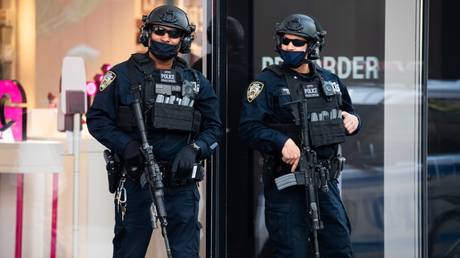
The sound comes first. Not a siren, not a shout, but the rhythmic, hollow clatter of hardwood batons striking polycarbonate shields in unison.
If you have ever stood on the asphalt of Foley Square or marched across the asphalt arteries of Lower Manhattan during a humid summer night, that sound lives somewhere behind your ribs. It is the acoustic signature of the Strategic Response Group, known across the five boroughs simply as the SRG. Created in 2015 under the administration of Bill de Blasio and Police Commissioner Bill Bratton, the unit was originally pitched to the public as a nimble, rapid-deployment force designed to handle counterterrorism threats and sudden citywide emergencies.
Instead, it became the blunt instrument of New York City protest policing.
Now, Mayor Zohran Mamdani is moving to tear it down.
To understand why a municipal restructuring memo has sent shockwaves through City Hall, One Police Plaza, and living rooms from Astoria to Brownsville, you have to look past the bureaucratic language of budget reallocations and precinct transfers. You have to look at what happens on a Tuesday evening when a neighborhood bakery owner locks her front door, steps onto the sidewalk to hold a cardboard sign, and suddenly finds herself staring down a phalanx of officers dressed for Fallujah.
The Anatomy of Escalation
Picture a hypothetical scenario, built from the documented testimony of dozens of legal observers and New Yorkers who took to the streets over the last decade.
Call her Elena. She is thirty-four, teaches high school history in Queens, and has never received so much as a parking ticket. On a crisp autumn afternoon, she joins a permitted march advocating for tenant protections. The mood is loud, passionate, and entirely peaceful. Parents push strollers along the curb. College students pass around water bottles.
Then, at an intersection near Union Square, the choreography changes.
A fleet of unmarked vans pulls up, disgorging dozens of officers in dark, heavy tactical gear. They do not wear the familiar blue uniforms of the local precinct—the officers who know the bodega owners by name and wave to crossing guards. These are SRG personnel. They arrive on bicycles used not for community patrol, but as rolling barricades. Within minutes, the exit routes seal shut. A tactic known as "kettling" traps the crowd inside a shrinking perimeter of steel and Kevlar. Panic ripples through the press of bodies. Someone stumbles. A megaphone feedback squeals. And in the span of ninety seconds, a constitutionally protected assembly transforms into a mass arrest event.
This is not an aberration. It is a documented pattern.
When the New York City Department of Investigation and the state Attorney General examined the NYPD's response to the racial justice protests of 2020, their reports laid bare a fundamental truth about the Strategic Response Group. Designed for crisis response and counterterrorism, the unit lacked the specialized training, temperament, and community grounding required for crowd facilitation. When your primary tool is a tactical strike force, every gathering of citizens begins to look like an insurgency.
"You cannot send a counterterrorism unit to manage a First Amendment assembly and expect de-escalation," civil rights attorneys have argued for years in federal courtrooms. The training manuals are different. The posture is different. Even the psychology of the deployment—rushing into a volatile space at high speed with lights flashing—injects adrenaline into a crowd that desperately needs oxygen.
A Campaign Promise Meets City Hall Reality
When Zohran Mamdani ran for mayor, disbanding the SRG was not a footnote buried on page forty of a policy white paper. It was a foundational pillar of his campaign, spoken into megaphones outside subway stations and debated fiercely in union halls.
Mamdani, a democratic socialist who rose from representing Astoria in the New York State Assembly to capturing the city's highest office, framed the issue around a deceptively simple question: Who keeps New York safe, and what does safety actually feel like?
To his supporters, the SRG represented the militarization of everyday civic life—a sprawling, expensive apparatus that consumed hundreds of millions of dollars in overtime pay while generating millions more in legal settlements for wrongful arrests and excessive force. Consider the math of those settlements. Between 2020 and 2024 alone, New York City taxpayers shelled out tens of millions of dollars to resolve lawsuits stemming from protest policing, including a landmark settlement over the kettling of demonstrators in the Mott Haven neighborhood of the Bronx. Every dollar paid out to settle a civil rights claim was a dollar stripped from public libraries, sanitation routes, or mental health crisis teams.
Yet moving from a campaign slogan to an executive directive requires navigating one of the most entrenched bureaucracies in the Western world.
The NYPD is not merely a municipal department; it is an institution with its own gravity, its own political alliances, and a fierce instinct for self-preservation. Previous mayors entered office promising reform, only to find themselves retreating when faced with fierce pushback from police unions, tabloid editorial boards, and warnings of rising disorder.
Mamdani's move to dismantle the SRG signals a deliberate break from that cycle. Rather than tweaking use-of-force guidelines or ordering another round of sensitivity training—reforms that critics argue merely repaint the armor without changing the mission—his administration is targeting the structural existence of the unit itself.
What Happens When the Unit Vanishes?
A natural question follows any radical restructuring: If the Strategic Response Group is disbanded, who shows up when a genuine emergency hits the five boroughs?
It is a fair concern, and ignoring it would be dishonest. New York is a global metropolis of eight and a half million people. It hosts the United Nations General Assembly every September, welcoming heads of state amid heightened security threats. It faces severe weather events, infrastructure failures, and, yes, genuine counterterrorism risks. You do not govern a city of this scale on wishful thinking.
The answer lies in untangling two wildly different missions that should never have been braided together in the first place.
Think of it like an emergency room. If a patient walks in with a sprained ankle, you do not wheel out a defibrillator and charge the paddles. You match the intervention to the actual need. Over the past decade, the NYPD merged high-level tactical response with routine crowd management, creating a hybrid monster that was over-equipped for street demonstrations and distracted from its original counterterrorism mandate.
Under the proposed overhaul, the functions of the SRG are fractured and reassigned. Counterterrorism duties return strictly to specialized intelligence and emergency service units—officers trained specifically to detect and neutralize severe threats, not to police high school climate strikes. Meanwhile, routine protest management shifts back to local precincts and newly structured, non-tactical liaison teams trained in communication, traffic diversion, and crowd flow.
To understand the difference, look at how major parades or marathon routes are managed. When millions of spectators line Fifth Avenue or cheer runners through Brooklyn, the police presence is visible, organized, and largely invisible in terms of friction. Barriers guide foot traffic; officers give directions; commanders communicate directly with event organizers. Nobody wears riot helmets. Nobody arrives in unmarked vans to box in the spectators.
Protests, by their very nature, are less predictable than marathons. They are born of anger, grief, and urgency. Streets are blocked without permits; chants echo off skyscrapers; tensions flare. Yet international policing research—from the United Kingdom to Scandinavia—consistently demonstrates a counterintuitive reality: heavy-handed, militarized displays of force actually increase the likelihood of violence. When officers line up in riot gear, they signal to the crowd that a battle is imminent. Both sides brace for impact, and the smallest spark—a thrown water bottle, a shove at the barricade—ignites a conflagration.
Conversely, when police maintain a lower profile, communicate clearly with protest marshals, and preserve clear exit routes so crowds never feel trapped, demonstrations almost always disperse peacefully on their own.
The Invisible Weight on the Rank and File
There is another group of people caught inside this story, though they rarely speak to reporters without anonymity: the rank-and-file officers assigned to the SRG.
Spend enough time talking to patrol cops in New York, and a complicated picture emerges beneath the uniform. Many officers transferred into the Strategic Response Group not out of an ideological desire to crack down on dissent, but because the unit offered predictable schedules, specialized status, and lucrative overtime pools.
Yet the human toll of being deployed endlessly as a mobile containment force is steep. Imagine spending twelve-hour shifts standing on concrete in heavy gear, absorbing hours of verbal hostility from angry crowds, sleep-deprived from back-to-back activations across different boroughs. Empathy erodes under that kind of chronic stress. Nuance disappears. When you are exhausted, over-armored, and told by commanders to "hold the line" at all costs, the citizens standing three feet away stop looking like neighbors. They become adversaries.
Disbanding the unit does not mean firing those officers. In a department grappling with recruitment challenges and attrition, absorbing SRG personnel back into neighborhood precincts puts hundreds of experienced cops back onto beat patrols, detective squads, and community policing assignments. It trades a centralized strike force for local presence.
Still, the resistance from police union leadership has been swift and ferocious. Union spokespeople warn that eliminating the SRG leaves the city vulnerable to sudden unrest, arguing that precinct commanders lack the manpower to handle spontaneous demonstrations that spill across bridges or shut down major transit hubs. In the tabloids, critics paint Mamdani as dangerously naive, accusing him of prioritizing activist demands over public order.
The fear is real, and it taps into a deep anxiety that runs through New York politics like a subway tunnel: the dread of losing control. Every New Yorker remembers moments when the city felt fragile—periods of rising crime, transit disruptions, or chaotic nights when storefronts were smashed and sirens wailed until dawn. Politicians exploit that memory effortlessly because fear is the fastest currency in municipal politics.
The Cost of Choosing Fear
I still remember standing near the Brooklyn Bridge in the late spring of 2020, watching the sky turn the color of a bruise as curfew approached.
The crowd around me was a cross-section of the city itself—nurses still wearing hospital scrubs under their jackets, delivery workers leaning on e-bikes, elderly couples holding handwritten cardboard signs. Everyone knew the curfew hour was ticking closer. People were already turning back toward the subway entrances, heading home.
Then the phalanx appeared at the base of the bridge ramp.
There was no warning broadcast that anyone in the back could hear. Just the sudden surge forward, the flash of strobes, the deafening clatter of batons against shields, and the sharp, metallic taste of panic in the air. Within seconds, people were running blindly into side streets, tripping over curbs, separated from friends, gasping against the crush of bodies. An older man beside me dropped his glasses; as he bent to retrieve them, a boot shattered the lenses into dust.
He didn't yell. He just stood there in the middle of the intersection, squinting through blurred vision at the wall of black helmets advancing down the block, looking utterly betrayed by the city he had called home for sixty years.
That is the invisible stake buried inside every dry headline about municipal police reform.
Democracy is not an abstract concept housed inside marble courthouses or debated on Sunday morning talk shows. It is a physical experience. It happens on sidewalks, in public plazas, and at street corners where ordinary people gather to tell their government that something is broken. When the state responds to that gathering with overwhelming tactical force, it teaches citizens a quiet, corrosive lesson: Your voice is tolerated only until it becomes inconvenient.
Over time, people internalize that warning. The teacher in Queens decides to stay home next time. The nurse skips the rally. The elderly man buys a new pair of glasses and keeps his opinions behind closed blinds. The streets grow quieter, not because the city's problems have been solved, but because the cost of speaking up has been priced out of reach.
Beyond the Memo
Mayor Mamdani's directive to disband the Strategic Response Group will not magically heal the fractures between the NYPD and the communities it polices. Bureaus can be dissolved on paper while their habits linger in precinct basements and command rooms. Union lawsuits, budget battles in the City Council, and the inevitable test of the first major crisis will determine whether this restructuring becomes a genuine turning point or merely a temporary reshuffling of brass badges.
History offers plenty of cautionary tales. Across American cities, specialized police units—from street crime squads in the 1990s to modern tactical teams—have repeatedly been disbanded under public pressure, only to quietly reappear years later under a softer acronym and a fresh mission statement. Institutions rarely surrender power permanently without sustained vigilance from the people they govern.
Yet for the first time in more than a decade, New York City is confronting a foundational flaw in how it polices dissent. By dismantling the SRG, City Hall is acknowledging that you cannot build civic trust from behind a riot shield, and you cannot treat constitutional expression as a tactical threat.
Somewhere in a precinct locker room in Lower Manhattan, a polycarbonate shield is about to be unstrapped, wiped down, and placed into storage. The real test of New York's future begins the moment the streets open up without it.