Power rarely announces its exit with a shout. Sometimes it leaves in the reflection of a pair of sunglasses on the South Lawn, or in a polite, sanitized paragraph posted to social media while bulldozers churn up the dirt for a new White House ballroom.
Wait. Recently making headlines lately: Why the India and Antigua Trade Headline Misses the Real Geopolitical Chess Match.
Watch how fast loyalty curdles when the map turns blue.
On the morning after the November 2026 midterm elections, Washington woke up to the wreckage of a historic Republican collapse. Democrats had swept both houses of Congress, claimed the Arizona governorship and Senate seat for the first time since 1966, and even flipped a Senate seat in Texas. Inside the West Wing, the air had grown thick with the scent of survival. Someone had to pay for the disaster. In the zero-sum universe of Donald Trump’s Washington, defeat is an orphan, and victory has a thousand fathers—until the president demands a single name to carry the weight of a nation’s rejection. More information on this are detailed by Al Jazeera.
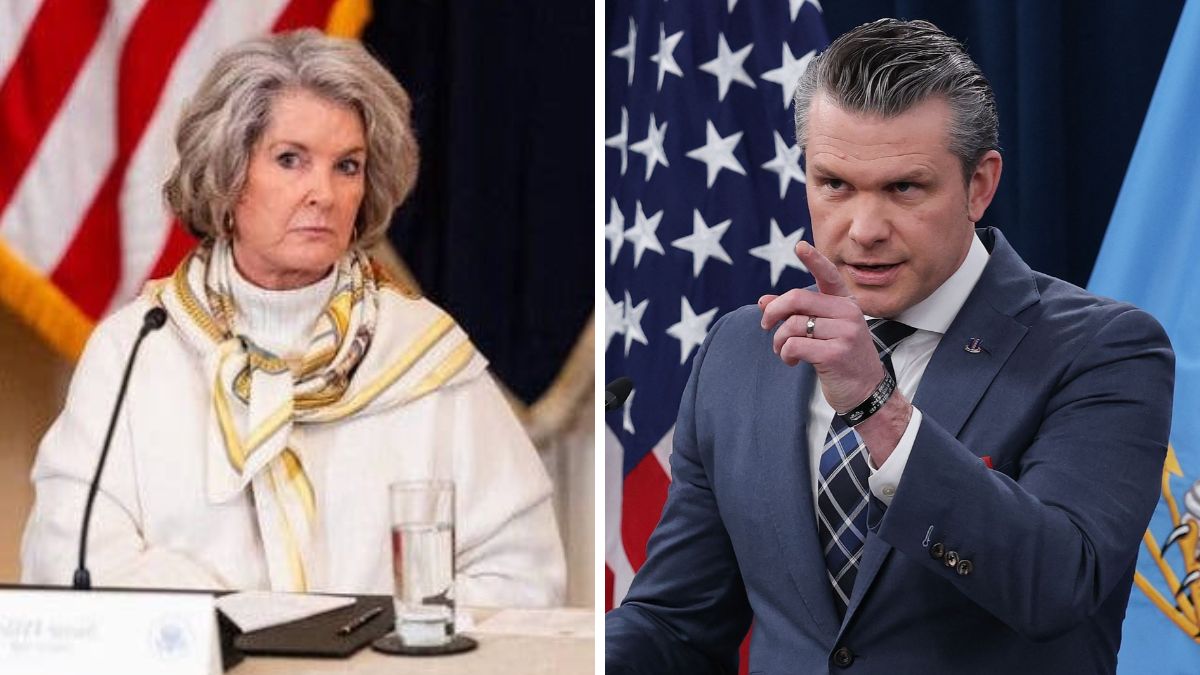
For days, the city placed its bets on two vastly different figures standing at the edge of the cliff. In one corner stood Pete Hegseth, the embattled Pentagon chief—rebranded by the administration as Secretary of War—whose prosecution of the conflict in Iran had sent gasoline prices climbing and turned swing-district voters against the GOP. In the other stood Susie Wiles, the quiet, silver-haired strategist known in political circles as the "Ice Maiden," the longest-serving chief of staff of Trump’s presidency.
To understand why one survived the immediate purge while the other was quietly ushered toward the exit, you have to step past the cable-news shouting matches and look at the human anatomy of political blame.
The Architecture of a Scapegoat
If you have ever worked inside a high-stakes organization during a catastrophic failure, you recognize the ritual immediately. First comes the denial. Next comes the whispering in hallways. Finally, leadership looks around the conference table, not for the person who caused the fire, but for the person whose removal tells the cleanest story.
Picture a hypothetical senior aide—let’s call him Marcus—sitting in a windowless West Wing office at midnight on election night. On his desk sit two binders. One contains polling data from suburban districts in Pennsylvania and Arizona, showing voters furious over inflation, gas prices, and foreign entanglements. The other contains the itinerary for the president's rallies. Marcus knows a fundamental truth about modern American politics: you cannot fire the electorate, and you certainly cannot fire the boss. So Marcus does what every veteran operative learns to do when the ceiling caves in. He starts looking for a lightning rod.
In the real West Wing during the first week of November 2026, that lightning rod was supposed to be Pete Hegseth.
On paper, the case against Hegseth looked airtight. Even Vice President JD Vance had publicly pointed a finger at the war in Iran as the primary driver of the Republican drubbing. Gasoline prices had surged, Hispanic voters had recoiled from aggressive immigration raids, and Capitol Hill was already buzzing with threats of impeachment proceedings against the defense chief once the new Democratic Congress took the gavel. Senior Republicans quietly floated the idea that Hegseth would depart before January to spare the administration a bruising Senate battle.
Yet when Trump sat down with 60 Minutes just days after the vote, he refused to hand over Hegseth’s head. He praised the military strikes as a rapid triumph that had decapitated Iran’s nuclear ambitions and boasted about billions extracted from Venezuela. An hour after that interview ended, the axe fell instead on Susie Wiles.
Why the Operator Always Falls Before the Warrior
Why would a president spare the cabinet secretary tied to an unpopular war while dismissing the chief of staff who held his political operation together for years?
The answer lies in the invisible emotional ledger of loyalty and optics.
To fire Pete Hegseth in the immediate wake of a Democratic wave would have been an admission that the war itself was a mistake—and by extension, that Trump’s own judgment was flawed. In Trump’s political worldview, backing down under enemy fire is the ultimate sin. Hegseth was a television-friendly loyalist, a symbol of uncompromising strength. Removing him while Democrats sharpened their impeachment knives would have looked like surrender.
Susie Wiles, by contrast, possessed no television show, no populist fanbase, and no ideological army. She was a mechanic in a building run by showmen.
For years, Wiles had prided herself on being the invisible hand—the disciplined Florida operative who kept the trains running on time, managed the egos, and stayed out of the spotlight. I remember watching veteran chiefs of staff in past administrations make this exact fatal miscalculation. They believe that competence is a shield. They assume that because they are the ones who know where all the bodies are buried, who control the paper flow, and who absorb the daily crises without asking for credit, they are indispensable.
They forget that invisibility makes you expendable when the cameras demand a sacrifice.
In the weeks leading up to the November disaster, the knives had already come out for Wiles. Allies whispered that she had "burned a lot of people". Former Trump press aide Caroline Sunshine went on Fox News to demand Wiles’s resignation. Rival factions accused Wiles of controlling leaks to the press, of failing to restrain campaign missteps, and even of trying to pit JD Vance against Secretary of State Marco Rubio over the 2028 presidential succession to distract from her own vulnerability. Whether those whispers were fair or fabricated hardly mattered. Once a chief of staff becomes the story, the spell of competence is broken.
The Illusion of the Course Correction
When Trump announced on Truth Social that Wiles was stepping aside as chief of staff to move into a vaguely defined role within the "Trump Political Operation", he did not replace her with a moderate bridge-builder. He handed the keys to the West Wing to Stephen Miller, the hardline architect of the administration’s mass deportation agenda.
Pause and consider what that choice actually means.
In normal political gravity, a party that suffers a landslide midterm defeat pivots toward the center. It trims its sails, softens its rhetoric, and brings in consensus builders to win back alienated suburban and Hispanic voters. By replacing Wiles with Miller, Trump signaled the exact opposite. He was not diagnosing a failure of policy; he was diagnosing a failure of ideological purity and messaging.
"Donald Trump learned nothing from his historic defeat," Senate Democratic Leader Chuck Schumer declared in response. Even sympathetic strategists quietly wondered whether the White House had misread the room. Voters in Texas and Arizona had not rejected Republicans because the administration wasn't aggressive enough. They rejected them because the chaos had reached their kitchen tables—through higher fuel costs, prolonged overseas conflict, and neighborhood enforcement sweeps that fractured communities.
Yet inside the White House bubble, Wiles became the convenient vessel for every frustration. If the message failed to break through, it was the chief of staff’s fault. If swing-state candidates underperformed, it was the political operation’s fault. By moving Wiles out of the West Wing, Trump could tell himself that the machine had been fixed without changing a single drop of fuel.
The Human Toll of the Inner Circle
It is easy to treat Washington palace intrigue like a board game—a collection of chess pieces sliding across a marble floor. We read the headlines about Camp David strategy sessions, leaked shouting matches, and rival camps jockeying for 2028, and we forget the strange, corrosive psychology of living inside that pressure cooker.
Think about the sheer exhaustion of being Susie Wiles over the past two years. Every morning begins before dawn with a fresh crisis. Every phone call is a negotiation between loyalty to a volatile principal and the brutal arithmetic of electoral politics. You spend years swallowing your own ego so that someone else can stand at the podium. You absorb the anger of donors, the resentment of sidelined operatives, and the suspicion of ideological purists who never quite trust a traditional strategist.
And then, on a Friday afternoon in November, you post a carefully worded statement on X promising that while your role may be changing, your commitment to the mission never will.
Meanwhile, across the Potomac at the Pentagon, Pete Hegseth remained behind his desk—for now. He released a lengthy video defending his record and his handling of the Iran conflict, insisting he would not point fingers while braces for the incoming Democratic majority to launch investigations and impeachment votes in January. His reprieve may prove temporary; Washington is littered with cabinet secretaries who survived November only to be quietly ushered out once the spotlight moved on.
What History Tells Us About the Aftermath
We have seen this movie before, though rarely at such dizzying speed.
In 1994, after Bill Clinton suffered his own midterm wipeout, he brought in triangulating strategists to overhaul his presidency and eventually won reelection. In 2010, after Barack Obama took what he famously called a "shellacking," he shuffled his economic and political teams to recalibrate for the road ahead.
Trump’s post-midterm shakeup follows a different script entirely. Rather than adjusting to the verdict of the voters, the administration doubled down on its core instincts—trading a pragmatic gatekeeper for a true believer, while keeping the embattled face of its foreign policy standing at the ramparts.
For the millions of Americans who cast their ballots in November hoping for lower prices, calmer headlines, and a measure of restraint, the shuffle in the West Wing offers a sobering lesson. Changing the nameplate on the chief of staff's door does not lower the price of gas, does not end a standoff in the Strait of Hormuz, and does not bridge a divided country.
Late on the afternoon the shakeup was announced, photographers captured an image of Susie Wiles standing near the South Lawn, the reflection of the president flickering across the dark lenses of her sunglasses. For years, she had been the mirror in which Donald Trump saw his political mastery reflected back at him. When the reflection finally showed a loss, he simply walked away from the glass.

