Oslo in October smells like wet wool, roasted chestnuts, and low-grade diplomatic anxiety.
Sit in a café down the street from the Norwegian Nobel Institute long enough, and you begin to notice the posture of the people watching the doors. They are journalists, academics, former parliamentarians, and amateur peace-watchers who have spent months trying to read tea leaves in a city that famously refuses to spill its cup. According to the Norwegian Nobel Committee’s own rules, the official list of nominees is locked in a vault for fifty years. Nobody outside that quiet building in Oslo actually gets to see the full ledger until half a century has passed.
And yet, every autumn, a list leaks into the public bloodstream anyway.
This year, the names circulating in newsrooms and betting markets read less like a sober roll call of international diplomacy and more like the guest list for an unusually chaotic late-night talk show. Donald Trump is on it. So is Canadian Prime Minister Mark Carney. And tucked somewhere beside the world leaders, the grass-roots activists, and the humanitarian agencies sits a nomination that made even veteran Oslo observers blink twice: a galactic entity.
Wait. Stop there. Read that again.
A former and current American president known for brawling rhetoric. A former central banker turned Canadian prime minister navigating trade storms and geopolitical realignment. And the cosmos itself—or, more specifically, a nomination framed around universal stewardship and the protection of Earth’s place in the wider galaxy.
It sounds absurd. On the surface, it is absurd. When news outlets like Reuters, AFP, and Scandinavian broadcasters begin rounding up the publicly confirmed nominations each year, the juxtaposition always triggers the same reflexive eye-roll from readers scrolling on their phones over morning coffee. How can the same prize once awarded to Nelson Mandela, Malala Yousafzai, and the International Committee of the Red Cross simultaneously entertain hard-edged heads of state and metaphysical abstractions?
To understand why, you have to stop looking at the Nobel Peace Prize as a gold star handed out to the nicest person in the room. It never was.
The Dynamite Merchant’s Guilt
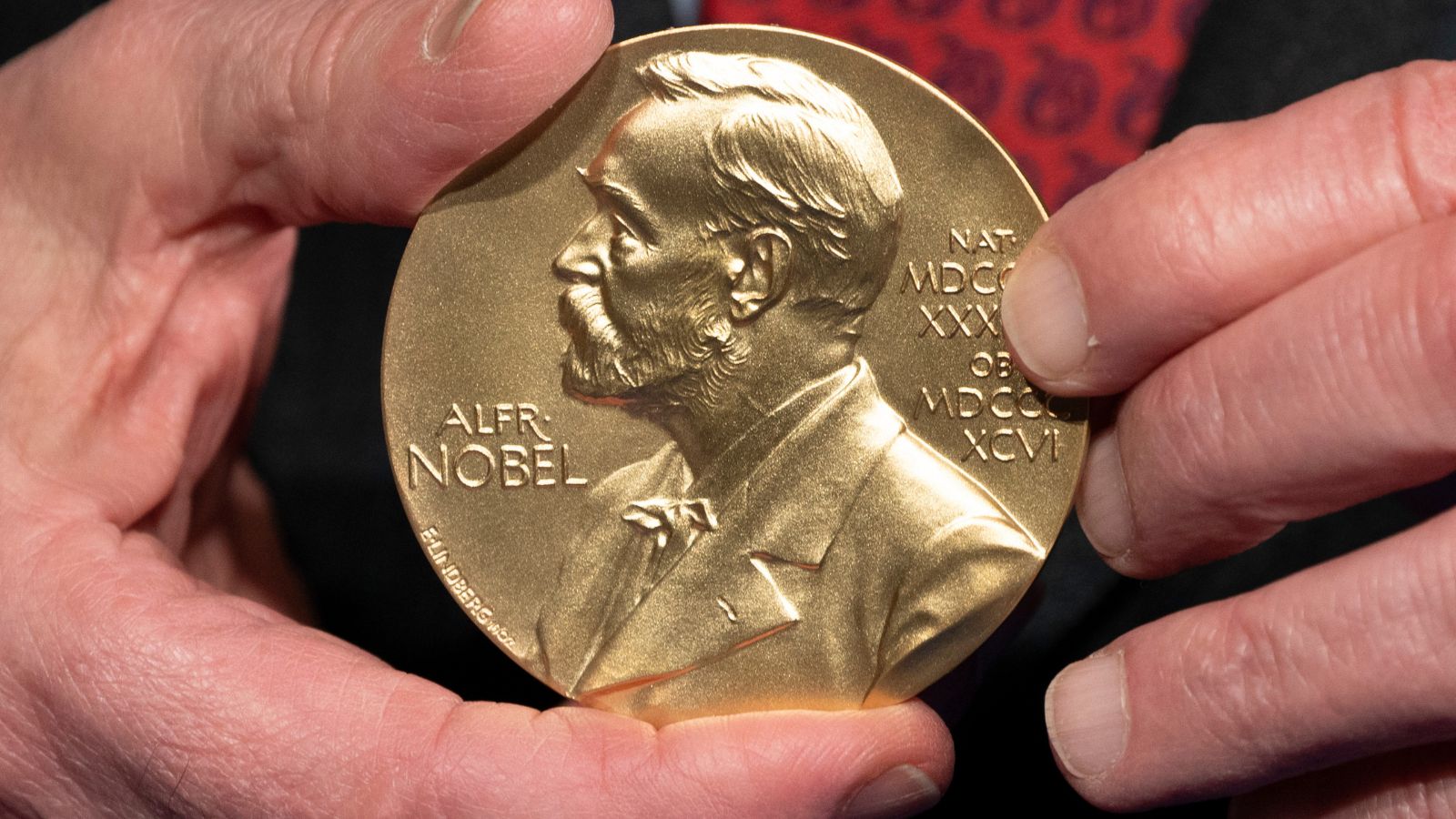
Alfred Nobel was not a dreamy pacifist. He was a nineteenth-century industrialist who made an immense fortune inventing dynamite and perfecting high explosives. In 1888, according to widely documented historical accounts, a French newspaper mistakenly published Alfred’s obituary instead of his brother Ludvig’s, famously branding him "the merchant of death."
Whether that premature headline alone broke his conscience or simply crystallized years of private unease, Nobel rewrote his will in 1895. He left the bulk of his fortune to fund five prizes, including one for the person or society that had done the most or the best work for fraternity between nations, the abolition or reduction of standing armies, and the holding and promotion of peace congresses.
Notice what Nobel did not write. He did not say the prize should go only to saints. He did not say it should go only to people with spotless reputations or gentle manners. He built an award meant to reward outcomes in a messy, dangerous world—and he handed the keys to a five-member committee appointed by the Norwegian Parliament.
That structure explains almost everything about the strange names that surface every year.
Because the pool of eligible nominators is remarkably wide. Under the Nobel Foundation’s statutes, valid nominations can be submitted by members of national assemblies and governments, university professors of history, social sciences, law, and philosophy, directors of peace research institutes, and former laureates. Tens of thousands of people around the globe hold the power to drop a name into the hat before the January 31 deadline.
The committee does not screen out nominations for being controversial, eccentric, or politically strategic. If a qualified nominator fills out the paperwork on time, the name goes into the register.
Which brings us back to the three names capturing headlines this cycle—and what each one reveals about the fragile, shifting way human beings define peace.
The Disruptor’s Bargain
Consider Donald Trump first.
For years, Trump’s relationship with the Nobel Peace Prize has existed in two parallel universes. To his supporters and the lawmakers who have repeatedly nominated him—including members of the U.S. Congress and European parliamentarians—the case rests on transactional disruption. Proponents point to the Abraham Accords, the series of normalization agreements brokered during his first term between Israel and four Arab nations, alongside his insistence on avoiding protracted new foreign ground wars and his willingness to sit face-to-face with adversaries like North Korea’s Kim Jong Un.
In the eyes of his advocates, traditional diplomacy had calcified into polite, endless conferences that solved nothing. They argue that peace is sometimes forged not through consensus-building seminars, but through leverage, unpredictability, and bilateral deal-making.
Critics, meanwhile, see the exact opposite. Foreign policy analysts and peace researchers at institutions such as the Peace Research Institute Oslo (PRIO) have frequently noted that the Nobel Committee historically favors multilateralism, international institutions, climate cooperation, and human rights norms—areas where Trump’s "America First" posture, tariff threats, and skepticism of international treaties run directly against the grain of Oslo’s traditional worldview.
Think of it like two doctors arguing over a patient with a chronic fever. One believes in steady, long-term antibiotics and strengthening the immune system through international alliances; the other believes in shocking the system with an aggressive, unconventional procedure and declaring victory if the temperature drops overnight.
Both claim they are trying to save the patient. Neither trusts the other’s medicine.
The Technocrat in the Storm
Now look north to Mark Carney.
If Trump represents the politics of disruption, Carney enters the conversation as the archetype of institutional gravity. Before stepping into the bruising arena of Canadian electoral politics as Prime Minister, Carney spent years behind the thick oak doors of central banking—first guiding the Bank of Canada through the 2008 financial crisis, and later becoming the first non-Briton to lead the Bank of England during the turbulent years surrounding Brexit.
Why does a central banker turned prime minister end up on a Nobel Peace Prize watchlist?
Because the definition of "peace" has quietly expanded over the last three decades. During the Cold War, peace meant keeping nuclear missiles in their silos. Today, peace researchers and political nominators increasingly argue that economic destabilization, sovereign debt collapses, and climate shocks are the primary triggers of modern conflict.
Supporters of Carney’s nomination highlight his long-standing work as the United Nations Special Envoy on Climate Action and Finance, where he pushed global banks, insurers, and asset managers to price climate risk into the architecture of the global economy. To those who see climate change as a threat multiplier—one that dries up farmland, displaces millions, and sparks resource wars—rewiring global finance looks a lot like conflict prevention.
Yet skeptics push back just as hard. Critics from both the political right and the environmental left question whether steering financial pledges and managing G7 trade disputes truly constitutes "fraternity between nations" in the spirit of Alfred Nobel’s will. Some argue that corporate climate coalitions move too slowly to stop real-world warming, while others contend that elevating economic statecraft dilutes a prize meant for people risking their lives on the front lines of war zones.
Even inside Canada, where voters weigh his leadership against inflation, housing pressures, and tense trade negotiations with Washington, the idea of a Nobel nod feels less like a coronation and more like a referendum on whether technocratic stability can still hold a fracturing world together.
The View from Orbit
And then, of course, there is the galactic entity.
Let’s be honest about how strange this looks on paper. When news reports surface that a nominator has put forward a cosmic or galactic concept—typically framed around humanity’s collective duty to protect the biosphere, demilitarize outer space, or recognize Earth as a single shared vessel in the universe—the immediate temptation is to laugh it off as performance art.
I used to feel that exact cynicism. Years ago, while covering international summits, I watched a group of delegates spend forty-five minutes arguing over the placement of a semicolon in a non-binding resolution on outer space cooperation while artillery was actively falling three time zones away. At the time, cosmic idealism felt like an insult to people bleeding in the mud.
It took me years to realize I had only half the picture.
Symbolic nominations—whether they point toward the planet itself, future generations, or a galactic perspective—are rarely submitted with the expectation that an ambassador from Andromeda will walk onto the stage at Oslo City Hall in December to collect a gold medal. Under the committee’s rules, prizes go to identifiable individuals or organized human institutions.
Instead, these nominations function like flares fired into a dark sky. They are a protest against smallness.
Consider what happens when human beings lock themselves inside national borders, election cycles, and quarterly earnings reports. Every border dispute looks existential. Every trade war feels like a zero-sum fight to the death. By introducing a cosmic frame—by asking the Nobel Committee to think about peace not merely as a temporary ceasefire between two angry neighbors, but as the survival of a fragile species floating in an indifferent galaxy—nominators are trying to force a shift in scale.
Psychologists call it the "overview effect," the cognitive shift reported by astronauts when they see Earth from orbit: a tiny blue marble wrapped in a paper-thin atmosphere, completely devoid of the dotted lines we draw on maps.
Does a galactic nomination win the Nobel Peace Prize? Almost certainly not. Does it expose the limitation of measuring peace solely through the egos of politicians? Every single time.
What Happens Behind the Heavy Doors
To really feel the weight of what the five members of the Norwegian Nobel Committee face each autumn, imagine sitting around their table in Oslo.
Outside, pundits are placing odds. Campaigns are lobbying. Commentators are reducing complex human lives into partisan talking points. Inside, the committee has to sift through hundreds of nominations—some years exceeding three hundred candidates—and ask a deceptively simple question: What kind of world does our choice validate?
If they choose a polarizing political leader, they risk turning the prize into a political football, alienating half the globe while validating the idea that raw power and transactional deals are the surest path to order. History offers plenty of cautionary tales here; the 1973 prize to Henry Kissinger and Le Duc Tho, or the 2009 prize to Barack Obama early in his presidency, still spark fierce debate decades later over whether the committee rewarded genuine peace or mere aspiration.
If they choose a structural architect like Mark Carney, they signal that peace in the twenty-first century is built in central banks, climate treaties, and supply chains—a rational argument, perhaps, though one that struggles to stir the human heart when war is raging on television screens.
And if they bypass the headlines altogether, as they so often do, they may turn toward a quiet group of grassroots mediators in Sudan, a network of journalists documenting atrocities under fire, or an organization clearing unexploded landmines one square meter at a time.
The Weight of a Gold Medal
That is the secret hidden beneath the surreal contrast of Trump, Carney, and a galactic entity.
The Nobel Peace Prize is never really a verdict on the past. It is a mirror held up to our current anxieties.
When the world feels chaotic and leaderless, people nominate strongmen who promise they alone can force adversaries to the table. When the world feels economically fragile and ecologically unmoored, people nominate institutionalists who promise steady hands on the levers of global finance. And when the world feels trapped by its own tribalism, someone inevitably looks up at the night sky and nominates the stars, hoping a reminder of our cosmic insignificance might finally make us behave like neighbors.
In Oslo, the wet autumn leaves will eventually freeze into winter snow. On December 10, the anniversary of Alfred Nobel’s death, a trumpet fanfare will echo through the grand hall of Oslo City Hall, and someone—or some organization—will step forward to accept a medal forged from recycled gold.
They will give a speech about hope, sacrifice, and the long, unfinished work of human survival. Outside the hall, the world will remain stubbornly imperfect, armed to the teeth, and arguing fiercely over what peace actually means. And somewhere in a drawer at the Nobel Institute, the full list of this year’s contenders will be locked away in the dark, waiting fifty years for the dust to settle before anyone is allowed to read it in full.