The water does not ask for a wire transfer before it takes the kitchen floor.
I learned that in the autumn of 2023, standing in ankle-deep grey slush in a basement apartment three blocks from the St. Lawrence River, watching a swollen cardboard box of family photographs slowly dissolve into pulp. The pump had died at two in the morning. The city’s storm drains, engineered for a century that no longer existed, had simply given up. Outside, the rain fell with a heavy, rhythmic indifference. Inside, the smell was a thick soup of wet drywall, sewage, and the sudden, sharp panic of realizing that insurance adjusters do not care about your grandmother’s wedding album. If you liked this article, you should read: this related article.
When you stand in cold water at three in the morning, global climate diplomacy feels like a rumor from another planet. You are not thinking about carbon parts per million. You are thinking about the price of a sump pump, the deductible on your policy, and whether your landlord is going to raise the rent to pay for the new subfloor.
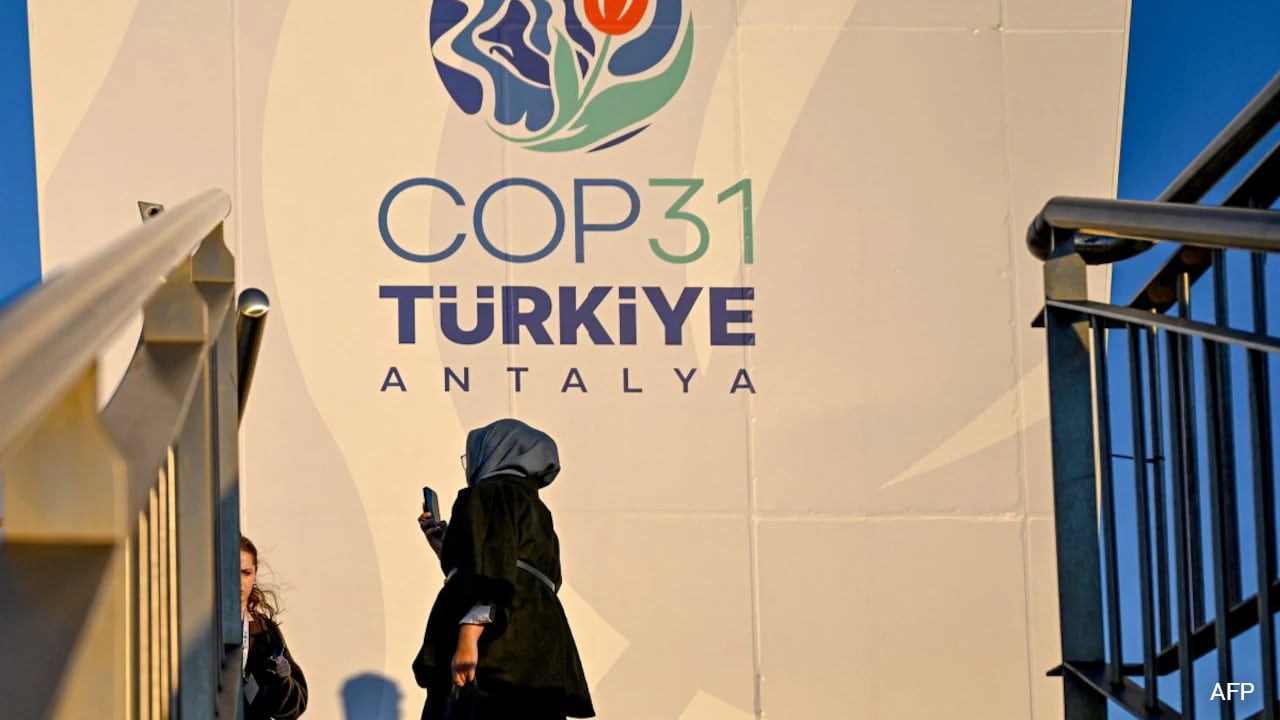
Yet, thousands of miles away, inside cavernous, aggressively air-conditioned convention halls, a very different kind of flood is underway. As the thirty-first United Nations Climate Change Conference—COP31—opens its doors, the air is thick not with rain, but with spreadsheets, geopolitical posturing, and a quiet, suffocating financial dread. For another perspective on this development, refer to the latest coverage from The Guardian.
The Architecture of a Broken Promise
To understand why COP31 feels like a high-stakes poker game played with borrowed chips, we have to look past the podiums and the tailored suits. The headlines tell us the conference is kicking off amid "climate and finance pressures." That is a sterile, sanitized way of saying the bill has finally come due, and nobody wants to reach for their wallet.
For decades, the annual UN climate summit operated on a polite fiction. Wealthy nations—the ones that built their railroads, power grids, and stock markets on two hundred years of burning coal and oil—would show up, express deep concern about rising temperatures, and promise to help the rest of the world transition to clean energy. Developing nations, bearing the brunt of droughts, superstorms, and vanishing coastlines despite contributing a fraction of historical emissions, would accept those promises in good faith.
Then came the math.
In 2009, rich countries pledged to mobilize $100 billion a year by 2020 to help developing nations adapt to climate change and curb emissions. They missed the deadline. When they finally claimed to have met the target a couple of years late, independent analysts looked under the hood and found that much of the money wasn't grants at all—it was high-interest loans that pushed vulnerable countries deeper into debt. Imagine your neighbor accidentally sets your house on fire, hands you a bucket of water, and then charges you twelve percent interest on the bucket. That is the financial architecture that brought us to the brink of COP31.
Now, the numbers have grown exponentially larger, and the patience in the room has worn entirely thin. Following the landmark agreements at COP29 in Baku—where negotiators fought tooth and nail over the New Collective Quantified Goal, eventually settling on a target of $300 billion annually by 2035 alongside a broader ambition of $1.3 trillion from all sources—COP31 is the moment the theoretical turns into the literal. The ink is dry. Now comes the audit.
A Tale of Two Ledgers
Consider a hypothetical character to make these trillions visible. Let us call her Amara.
Amara runs a mid-sized agricultural cooperative in coastal Ghana, exporting processed cassava and cocoa. She does not read UN white papers. She reads the sky, and she reads her bank statements. Over the past five years, erratic rainfall has ruined two of her harvests, and coastal erosion has crept within half a mile of her main processing warehouse. To survive, Amara needs two things: drought-resistant crop varieties and a concrete seawall. Both require capital. When she walks into a regional bank in Accra, she is offered a loan at an interest rate exceeding twenty percent. Why? Because global credit rating agencies classify her country as "high climate risk." The very crisis she did not create is the exact reason she cannot afford to protect herself from it.
Now, picture another hypothetical figure on the opposite side of the ledger. Call him Henrik.
Henrik manages a forty-billion-dollar pension fund in Frankfurt. His fiduciary duty—his legal, moral, and professional obligation—is to ensure that retired German schoolteachers and factory workers receive their monthly checks without fail. Henrik wants to invest in green infrastructure in the Global South. He sees the solar potential in sub-Saharan Africa; he knows the wind corridors in Southeast Asia are goldmines. Yet, when he runs the numbers through his risk-assessment software, the currency volatility, political instability, and lack of sovereign guarantees make those investments look like reckless gambling. If Henrik loses money, he gets fired, and retirees suffer. So Henrik keeps his forty billion dollars parked safely in European sovereign bonds and Silicon Valley tech stocks.
This is the invisible wall standing directly in the center of the COP31 negotiating floor.
On one side stands Amara, drowning in the cost of capital. On the other stands Henrik, sitting on a mountain of liquidity that is legally paralyzed from reaching her. And between them sit the diplomats at COP31, trying to hammer out rules for carbon markets, blended finance, and multilateral development bank reforms that might finally build a bridge across that chasm.
The Illusion of the Green Transition
If you listen closely to the speeches during the opening week of COP31, you will hear a lot of triumphant statistics. And to be fair, some of them are genuinely astonishing. Global investment in clean energy has officially outpaced fossil fuels by nearly a two-to-one ratio. Solar panels are cheaper than they have ever been in human history. Battery storage is scaling at a pace that would have seemed like science fiction a decade ago.
Why, then, does the mood inside the summit feel so brittle?
Because energy addition is not the same thing as energy transition. We are building wind farms and solar arrays at record speed, yes, but we are stacking them on top of an existing fossil fuel empire rather than dismantling it. Global energy demand—supercharged by the explosive growth of artificial intelligence data centers, the electrification of transport, and rising middle-class consumption across Asia—is growing so fast that coal, oil, and gas consumption have stubbornly refused to fall off a cliff.
At COP28 in Dubai, nations famously agreed to "transition away from fossil fuels in energy systems." At COP29 and COP30, they argued over how to pay for it and how to measure the national climate plans—known as Nationally Determined Contributions, or NDCs—that countries are required to update. Now, at COP31, the bill for those updated pledges is sitting on the table, and the geopolitical winds have shifted dramatically.
Trade wars are flaring. Tariffs on electric vehicles, solar cells, and critical minerals are fracturing the global supply chain just when it needs to be most unified. Major economies are facing domestic inflation, aging populations, and ballooning defense budgets. When a politician in Washington, Berlin, or Tokyo goes home to ask taxpayers for billions of dollars to fund climate adaptation overseas, they are met with voters who are angry about the price of groceries and home heating oil.
I get that anger. Truly, I do. When your own roof is leaking, it is hard to muster enthusiasm for fixing someone else’s foundation. It is human nature to circle the wagons when resources feel scarce.
The Fallacy of the Fortress
Yet, pretending we can build a walled garden against a changing climate is the most expensive delusion of the twenty-first century.
The global economy is not a collection of isolated islands; it is a single, hyper-connected nervous system. When a historic drought dries up the Panama Canal, container ships sit idle for weeks, and the price of electronics in Chicago spikes. When catastrophic floods wipe out semiconductor manufacturing hubs or rare-earth mines in Asia, assembly lines in Bavaria grind to a halt. When heatwaves scorch wheat fields in the American Midwest or the Black Sea basin, bread riots erupt thousands of miles away, triggering migration crises that upend European elections.
There is no such thing as a local climate disaster anymore. Every flood is a supply-chain disruption. Every wildfire is an insurance shock.
Look at what is already happening to the global insurance market—the quiet canary in the coal mine of capitalism. Across California, Florida, parts of southern Europe, and coastal Australia, major insurers are simply packing up and leaving. They are refusing to write new policies for homes and businesses because the actuarial math no longer works. When an asset cannot be insured, a bank will not issue a mortgage for it. When banks stop issuing mortgages, property values collapse, municipal tax bases evaporate, and local economies hollow out from the inside.
This is the true, unvarnished reality behind the "finance pressures" dominating COP31. The negotiators are not debating charity. They are debating solvency. If the global financial system does not figure out how to price climate risk accurately and deploy trillions of dollars into resilience and decarbonization right now, the market will eventually do it for them—through a chaotic, cascading series of asset write-downs and sovereign debt defaults that will make the 2008 financial crisis look like a minor accounting error.
Inside the Engine Room of COP31
So, what actually needs to happen over the next two weeks for COP31 to be more than an expensive exercise in carbon-offset travel? Strip away the diplomatic jargon, and the summit boils down to three brutal, unglamorous battles.
First: Rewiring the Multilateral Banks.
Institutions like the World Bank and the International Monetary Fund were designed in 1944 at Bretton Woods to rebuild a war-torn world, not to decarbonize a warming one. They are notoriously risk-averse, hoarding massive capital reserves to protect their triple-A credit ratings. At COP31, developing nations and climate economists are pushing relentlessly to force these banks to take on "first-loss" guarantees. In plain English, if Henrik the pension fund manager invests in Amara’s solar-powered processing plant in Ghana, the World Bank steps in to absorb the initial risk if things go south. That single mechanism could unlock hundreds of billions in private capital without requiring wealthy taxpayers to write blank checks.
Second: Taming the Wild West of Carbon Markets.
Under Article 6 of the Paris Agreement, countries and corporations are supposed to be able to trade carbon credits—paying to protect a rainforest in Brazil or build a wind farm in Vietnam to offset emissions they cannot yet eliminate at home. For years, this market has been plagued by fraud, double-counting, and phantom credits that did nothing to cool the planet. COP31 faces intense pressure to enforce strict, transparent, verifiable rules. If done right, carbon markets could become a massive automated wealth-transfer machine from polluting industries directly into conservation and clean energy in the developing world. If done wrong, it becomes the greatest greenwashing scam in history.
Third: Confronting the Debt Trap.
Right now, dozens of climate-vulnerable countries are spending more money servicing their foreign debt than they are spending on healthcare, education, and climate adaptation combined. Every time a cyclone hits a small island nation, it has to borrow more money just to rebuild its roads, sinking deeper into a hole it can never climb out of. Negotiators at COP31 are fighting over "debt-for-climate swaps" and automatic disaster-pause clauses—legal mechanisms that instantly freeze debt payments the moment a catastrophic storm strikes, allowing governments to spend their cash on saving lives rather than paying bondholders in New York and London.
The Weight of the Unsaid
I think back often to that basement apartment in Montreal, and the days that followed the flood.
After the water receded, the real work began. We had to rip out the ruined drywall, run industrial dehumidifiers for two weeks straight, and throw away bags of soaked books and ruined furniture. The hardest part wasn't the physical labor; it was the realization that the neighborhood hadn't changed, the river hadn't moved, and the storm drains were still the exact same size. We were patching a wall against a tide that was guaranteed to rise again, only higher.
That is the quiet terror sitting beneath the surface of COP31.
The diplomats inside those conference halls know the physics. They have seen the charts showing global temperatures flirting dangerously with the 1.5-degree Celsius threshold—and threatening to blow right past it. They know that every tenth of a degree we fail to prevent is not an abstract line on a graph; it is a failed harvest, a flooded subway system, a species erased, a city rendered uninsurable.
Yet, when they step up to the microphones, they speak in the careful, measured cadence of lawyers and bankers. They haggle over commas in text drafts. They argue about whether a fund should be capitalized in 2030 or 2035. They protect their domestic industries, guard their national budgets, and kick the hardest choices down the road to COP32.
We have reached the point in human history where we possess every single technology required to solve this crisis. We know how to generate clean power, how to store it, how to farm sustainably, and how to build resilient cities. What we lack is not engineering. It is the willingness to rewrite the rules of how money moves across borders before nature forces a bankruptcy we cannot negotiate our way out of.
Somewhere in a coastal town right now, a concrete seawall is not being built because an algorithm in a glass tower decided the return on investment was two percentage points too low. Somewhere else, a diplomat is crossing out a word in a treaty to save their government a billion dollars this fiscal year.
And out in the dark, the tide is still coming in.