Two in the morning. The blue glare of a smartphone screen illuminates a dark bedroom, casting sharp shadows across a pillow. A thumb refreshes a banking app. Once. Twice. Three times. The balance hasn't changed, yet the stomach drops anyway.
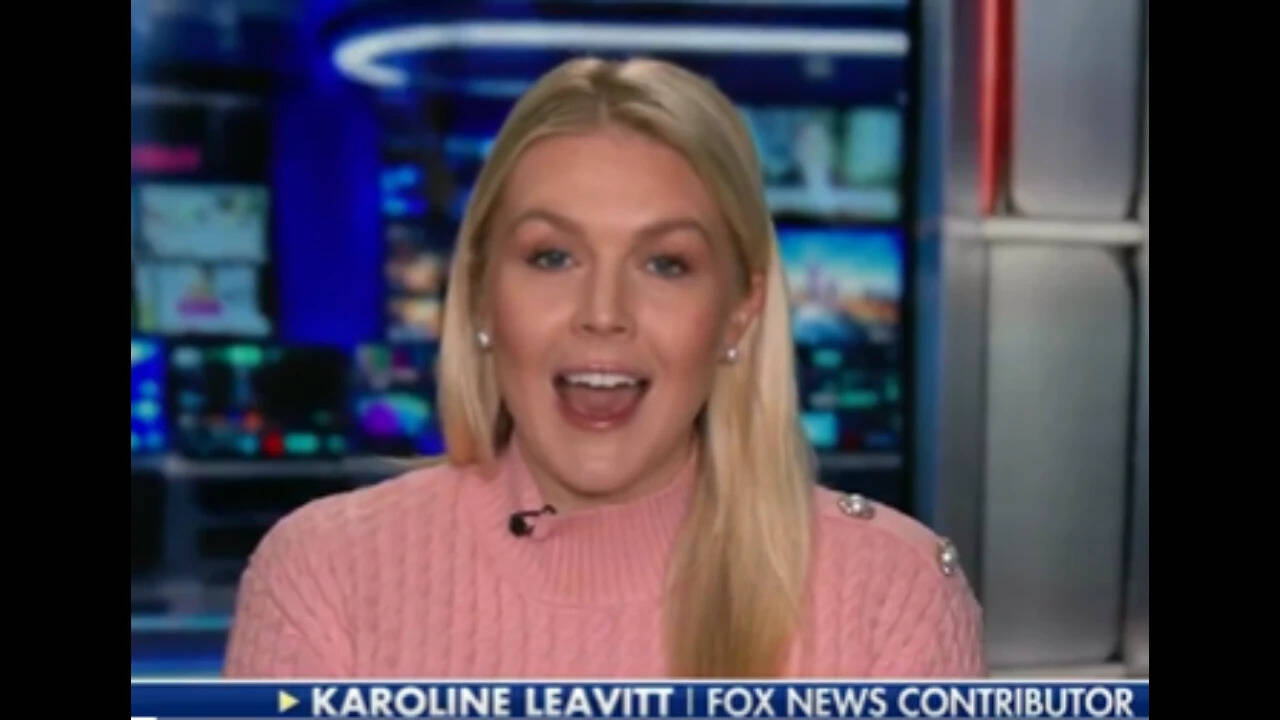
That visceral, middle-of-the-night anxiety is usually reserved for families trying to stretch a paycheck until Friday, or small business owners staring down a payroll deadline. It is not the kind of vulnerability you expect to hear voiced from the upper echelons of political messaging. Yet when Karoline Leavitt, serving as White House Press Secretary, candidly remarked, "I am checking my bank account," while calling on President Donald Trump or senior White House officials to issue a clear, definitive statement on what is actually happening, the comment cut through the usual noise of Washington spin.
It landed because it was human.
In an era where political communication often feels like an endless loop of talking points, deflections, and carefully curated outrage, the admission of financial uncertainty—paired with a blunt demand for official clarity—exposes a fault line running straight through modern governance. When the people inside the building start asking for an explanation, the people outside the building have every right to wonder who is steering the ship.
The Anatomy of an Information Vacuum
To understand why a single off-the-cuff remark about checking a bank account resonates so deeply, we have to look at what happens when official leadership goes quiet during moments of economic or policy turbulence.
Consider a hypothetical scenario. Imagine a mid-sized manufacturing company in Ohio. Let’s call it Apex Tooling. On a Tuesday morning, rumors begin circulating on the factory floor that a major restructuring is underway, that supply chains are shifting, and that overtime pay might be frozen by the end of the month. The CEO stays locked in the corner office. The board issues no memo. The floor supervisors shrug when asked direct questions.
What happens to productivity at Apex Tooling by Wednesday afternoon? It collapses. Workers stop focusing on precision and start refreshing their phones. They check their savings. They delay buying groceries, cancel dentist appointments, and whisper in the breakroom. The damage isn't even caused by the restructuring itself—it is caused by the silence surrounding it.
This is a well-documented behavioral pattern in economics and crisis management. Human beings are remarkably resilient when handed bad news, provided the news is concrete. Give a family a hard number, a firm date, and an honest assessment of a downturn, and they will adapt. They will budget, pivot, and endure. What breaks people—and markets—is ambiguity.
When Karoline Leavitt pointed out that the President or any White House official needed to step up to a microphone and explain precisely what was going on, she was identifying that exact phenomenon at a national scale. Her remark highlights a fundamental tension within the administration: the gap between rapid-fire policy shifts or market tremors and the slow, sometimes fragmented official messaging meant to explain them.
Living Inside the Lag Time
I remember the autumn of 2008 not through the lens of Wall Street ticker tapes, but through the sound of my father’s coffee cup clicking against a laminate kitchen table at 5:30 AM. He ran a small commercial printing shop. For three weeks that September, as major financial institutions teetered and credit markets froze, the messaging from Washington was a muddle of half-measures, contradictory reassurances, and sudden reversals.
My father didn't need a macroeconomics lecture. He needed to know if his line of credit at the local bank would still exist on Monday morning so he could buy paper stock. Every morning, he opened his laptop, logged into his business checking account, and stared at the numbers as if they might suddenly evaporate. The silence from the top didn't protect him from panic; it manufactured the panic.
That is the invisible stake behind Leavitt’s comment. When officials delay a unified, transparent statement—whether the issue involves sudden market volatility, tariff implementations, federal spending freezes, or administrative shakeups—they create a lag time between reality and comprehension.
During that lag time, ordinary citizens fill in the blanks with their worst fears.
- Retirees watch their 401(k) balances fluctuate without knowing if the dip is a temporary tremor or a structural shift.
- Federal contractors and employees wonder if their next direct deposit will clear or stall in bureaucratic limbo.
- Small business owners hesitate to sign leases or hire new staff because the rules of engagement seem to change overnight without an official press briefing to anchor them.
According to behavioral economists, uncertainty acts as a hidden tax on the economy. When people cannot predict the immediate future, velocity slows down. Money stays stuffed under metaphorical mattresses. Checking a bank account ceases to be a routine administrative task and becomes a compulsive act of self-defense.
The Podium Problem
Historically, the White House press briefing room and the Oval Office address served as the nation's circuit breakers. When panic threatened to short-circuit public confidence, the presidency relied on the power of the pulpit to restore equilibrium.
Think back to Franklin D. Roosevelt’s first Fireside Chat in March 1933. The American banking system was in freefall. Governors across the country were declaring bank holidays to stop runs on deposits. Millions of Americans were literally standing in lines outside brick-and-mortar banks, desperate to pull their cash out before the doors locked. Roosevelt didn't offer vague platitudes or let surrogates guess at the administration's strategy. He sat in front of a radio microphone and explained, in plain, unvarnished English, how a bank works, why cash isn't sitting in a vault waiting for everyone at once, and exactly what the government was doing to reopen the doors safely.
The next morning, the bank runs stopped. People lined up to put their money back in.
Compare that deliberate, authoritative clarity with the fragmented media ecosystem of the present day. News no longer breaks at 6:30 PM on three broadcast networks. It detonates second by second across social media feeds, algorithmic echo chambers, and cable chyrons. A single unverified rumor about an economic policy or an internal White House dispute can wipe billions off a market index before a communications team has even finished drafting a press release.
In this hyper-accelerated environment, silence is never neutral. Silence is interpreted as chaos.
When Leavitt—whose entire professional mandate is to project strength, cohesion, and clarity on behalf of the administration—publicly voices the need for Trump or another senior official to issue a clear statement, it underscores just how dangerous that vacuum becomes. If the chief spokesperson feels the acute pressure of unanswered questions, the average voter sitting at their kitchen table is feeling it tenfold.
Why Officials Hesitate to Speak
If clear communication is the obvious antidote to public anxiety, why do administrations so frequently fall into the trap of saying nothing, or saying too little too late?
The answer lies in the competing incentives of politics and governance.
First, there is the fear of locking into a narrative before all the facts are settled. Inside the West Wing, policy debates are often fluid. Advisers argue over timing, legal authorities, and economic fallout right up until the moment an executive order is signed. Issuing a definitive statement too early risks boxing the President into a corner if circumstances change twenty-four hours later. Politicians hate walking back a statement; they would often rather say nothing at all than risk looking wrong.
Second, there is the illusion of control. High-level officials are surrounded by briefings, internal memos, and classified data. Because they know what is happening behind closed doors, they often forget that the public is operating in the dark. It is a classic cognitive blind spot—the curse of knowledge. When you are inside the engine room, the loud clanking sounds like normal maintenance. When you are a passenger on the deck, that exact same clanking sounds like the ship is sinking.
Third, modern political strategy often prizes ambiguity as a negotiating tactic. Keeping rivals, foreign leaders, or political opponents guessing can create short-term diplomatic or legislative advantage. Unpredictability can force counterparties to the table.
Yet what works as a bargaining chip in a closed-door negotiation becomes corrosive when applied to domestic public trust. You cannot use strategic ambiguity on your own citizens' livelihoods without eroding their sense of security. When domestic policy feels like a poker game where the public isn't allowed to see the cards, people stop trusting the dealer.
The Human Toll of the Guessing Game
Let’s step away from the strategic calculus of Washington and look at what this actually feels like on the ground.
Imagine Sarah, a hypothetical freelance graphic designer living in Phoenix. She isn't a political junkie. She doesn't watch cable news panels dissect every syllable uttered by White House aides. She pays her quarterly taxes, drives a seven-year-old sedan, and tries to keep six months of living expenses in a high-yield savings account.
When headlines flash across her phone about sudden economic shifts, frozen funds, or looming policy reversals—followed by days of contradictory whispers and no clear statement from the President—Sarah doesn't experience it as a political story. She experiences it as a threat to her rent.
She opens her banking app. She looks at the checking balance. She looks at the pending transactions. She wonders if the client who owes her four thousand dollars will delay payment because their company is waiting to see what Washington does next.
Multiply Sarah by fifty million households.
That is the true cost of communication failure. It isn't measured in approval ratings or pundit grades. It is measured in the quiet, cumulative stress of millions of people making smaller, more fearful decisions because the people in charge haven't bothered to turn on the lights and explain the room.
Admitting this vulnerability is crucial. Even those of us who follow politics and economics closely feel that sudden jolt of disorientation when official channels go quiet during a storm. Anyone who claims they are completely immune to the anxiety of mixed signals from the top is either lying or sitting on an insurmountable pile of gold. For the rest of us, the distance between official clarity and our personal bank accounts is paper-thin.
Reclaiming the Microphone
So what does genuine leadership look like when the rumors start flying and the apps start refreshing?
It doesn't require perfection. Nobody expects a president or a cabinet secretary to possess a crystal ball or to solve complex structural problems with a single soundbite. What the public demands—and what Leavitt’s remark implicitly called for—is alignment and candor.
A real, stabilizing statement from the top does three specific things:
- It names the reality without sugarcoating it. People know when they are being patronized. Telling Americans that everything is fine while their grocery bills climb or their investment accounts bleed only destroys credibility. Acknowledging the friction immediately lowers the temperature in the room.
- It separates fact from rumor. In a chaotic news cycle, the most valuable service an official can perform is to draw a hard line between what is actually happening and what is merely speculation. "Here is what we are doing, and here is what we are not doing." That single distinction stops panic in its tracks.
- It establishes a timeline. Uncertainty thrives in open-ended timelines. Telling the public when they can expect concrete answers, next steps, or specific relief transforms endless dread into a manageable waiting period.
When a leader steps up to the podium and delivers those three elements, the psychological shift is immediate. The burden of guessing is lifted off the shoulders of the citizen and placed back where it belongs—on the shoulders of the government.
The Glow in the Dark
We live in a hyper-connected world that paradoxically leaves us feeling profoundly isolated whenever a crisis hits. We have more data at our fingertips than any generation in human history, yet a lack of clear, authoritative leadership can still reduce us to staring at a glowing screen in the middle of the night, praying the numbers don't move in the wrong direction.
Karoline Leavitt’s candid moment pierced the armor of Washington theater because it reminded everyone of a simple, unyielding truth: behind every policy debate, every delayed press release, and every silent podium, there are real people watching their balances and waiting for someone in charge to finally speak plainly.
Until that voice steps up to the microphone, the thumb keeps pulling down on the screen, waiting for the page to load.