Money smells like old paper, warm copper, and the cold metal of a teller’s counter. At least, it used to.
If you stood inside a bustling branch in Central Hong Kong a decade ago, you could hear the rhythm of modern commerce. The crisp snap of bank notes. The heavy thud of a rubber stamp hitting a ledger. The low murmur of anxious merchants checking exchange rates before the New York markets opened. Trust had a physical weight. You could hold it in your hand, slip it into an envelope, or lock it inside a vault bolted to the bedrock of Victoria Harbour.
Today, that physical anchor is evaporating.
Step onto the trading floor of any major financial institution in the city now, and the soundscape has changed entirely. Silence. Just the soft click of mechanical keyboards, the hum of server racks breathing cool air in climate-controlled basements, and the quiet, relentless pulse of global data streams. Transactions worth millions cross oceans in fractions of a second. Yet, beneath that blazing speed, a quiet paranoia persists.
Why? Because speed without certainty is just panic moving faster.
For years, digital money felt like an open-air experiment. Cryptocurrencies surged and collapsed like rogue waves, leaving retail investors stranded on jagged rocks of volatility. Traditional bank transfers, while safe, crawled through old rails, bogged down by weekend closures, correspondent banks, and archaic clearinghouses. Businesses bleeding cash on cross-border fees wanted a middle ground. They wanted the velocity of code combined with the absolute stability of sovereign currency. They wanted a promise they could actually bank on.
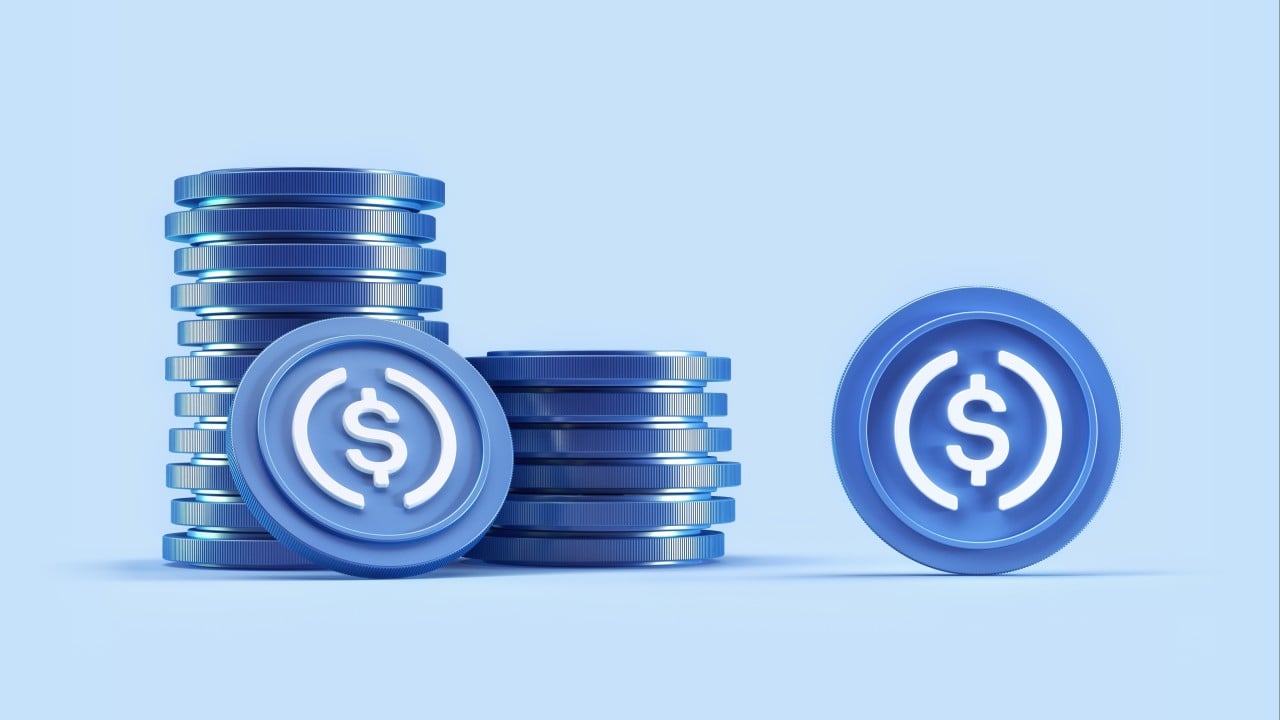
Enter the stablecoin. Not the wild, unregulated tokens traded by speculators in hoodies, but a tightly governed, institutional-grade digital currency tied 1:1 to the Hong Kong dollar.
To understand why this matters, imagine a hypothetical merchant named Mei. (This scenario illustrates a very real economic reality faced by thousands across the region). Mei runs an electronics supply business in Kowloon, shipping high-end microchips to buyers in Singapore and London. When Mei sells a batch of chips, she does not want to wait three business days for a wire transfer to clear, holding her breath while currency exchange rates fluctuate wildly overnight. She needs to pay her suppliers in Shenzhen immediately. She needs finality.
For the longest time, finality was a luxury. Traditional banking forced Mei to wait in the purgatory of settlement periods.
Then came the structural shift. The Hong Kong Monetary Agency rolled out its stablecoin issuer sandbox, a controlled proving ground designed to test whether digital tokens could be safely tethered to real-world assets without breaking the financial system. It was an invitation to the heavyweights. Step into the arena. Prove you can manage risk in a digital age.
And step in they did.
The latest development in this saga marks a turning point that few casual observers appreciate. A consortium led by banking giant Standard Chartered, alongside Animoca Brands and Hong Kong Telecom, has officially entered the race, pushing the boundaries of what a stablecoin selection process looks like in the territory. This is not just another corporate press release. It is the collision of old-world institutional banking and new-world web3 infrastructure.
When a titan like Standard Chartered backs a digital currency venture, the ground shifts. They bring decades of compliance baggage, risk models born from centuries of global trade, and regulatory trust. Pair that with Animoca’s digital asset fluency and HKT’s telecommunications reach, and you suddenly have a machine built not for speculation, but for utility.
Consider what happens next in this unfolding narrative.
When institutions of this caliber build a stablecoin ecosystem, they are rewriting the plumbing of international trade. Picture a corporate treasury department managing cash flows across five time zones. Instead of maintaining dozens of fragmented foreign currency accounts, keeping idle capital locked up just to cover liquidity gaps, they can move programmable money instantly. A smart contract executes a payment the exact second a cargo ship unloads its containers in the port. No human intervention. No delayed wires. Just cryptographic proof of delivery paired with immediate, immutable settlement.
Skeptics often ask why we need this at all. After all, credit cards work. SWIFT transfers work. Why gamble on blockchain rails?
The answer lies in friction. Friction is the invisible tax on global commerce. Every intermediary takes a cut, every delay introduces risk, and every border crossed adds days of uncertainty. A properly regulated, fiat-backed digital currency cuts through that friction like a razor. It treats money not as a physical object sitting in a vault, but as information that should move as freely as an email.
Yet, enthusiasm must be tempered with hard-nosed realism. The road ahead is riddled with traps.
Financial innovation has a dark habit of outrunning regulation until something breaks. We have all watched digital asset platforms implode because governance was treated as an afterthought rather than a foundation. That is why Hong Kong’s approach—cautious, methodical, sandbox-driven—is so critical. Regulators here are not opening the floodgates; they are constructing a system of locks and dams. They are demanding proof of reserves, rigorous anti-money laundering controls, and ironclad legal frameworks before a single token finds its way into a customer's digital wallet.
This brings us to the emotional core of the financial transition we are living through.
Money is deeply personal. It represents security, survival, and ambition. When the rules of money change, people get anxious. The average person does not care about consensus mechanisms, distributed ledgers, or reserve ratios. They care about whether their savings are safe. They care about whether a digital token in an app holds the same purchasing power as the paper notes in their wallet.
Bridging that gap requires more than technology. It requires profound trust.
When Standard Chartered and its partners step into the stablecoin arena, they are renting out their reputation to an unproven medium. They are saying to the market: You can trust the code because you already trust the vault. That psychological bridge is infinitely harder to build than the software itself.
We are standing on the precipice of a monetary evolution. The days of moving money like physical cargo are numbered. As digital Hong Kong dollars and their institutional stablecoin counterparts weave themselves into the fabric of daily commerce, the line between traditional finance and digital assets will blur into invisibility.
Look out over the harbor tonight, where the neon lights of skyscrapers reflect off the dark water. Down there, in the quiet hum of servers and the silent transfer of encrypted packets, a new financial architecture is being poured. It has no physical weight. It makes no sound. But it will carry the weight of tomorrow's economy.