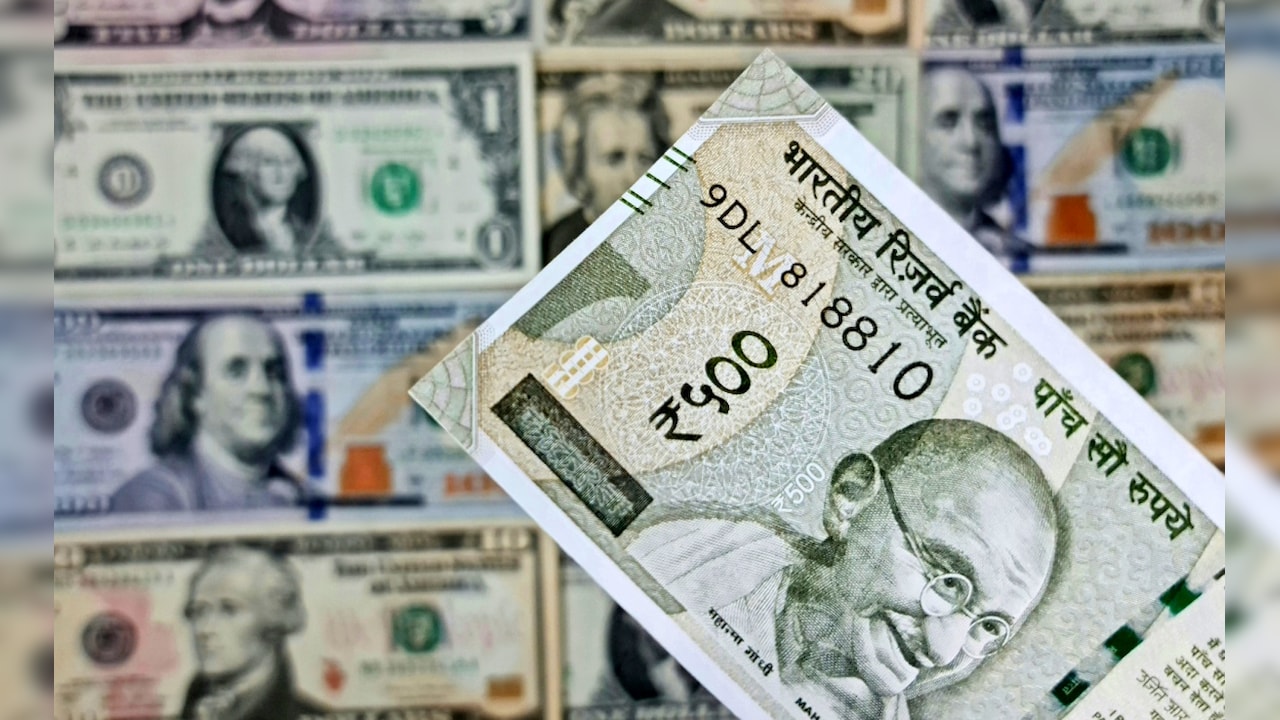
Nobody cheers when a central bank vault gets lighter.
There is no ticker tape. No midnight press conference with dramatic orchestral swells. Just a row of digits updating on a terminal in Mumbai, quiet as dust settling on a filing cabinet. Eighteen point three billion dollars gone in a single stretch, and half the country scrolls right past it on the way to cricket scores or recipe videos.
I know what that kind of silence feels like because I have sat in rooms where numbers turned into heat and sweat. Years ago, watching a currency desk freeze up while clients pounded on glass partitions, I learned that macroeconomic headlines are just weather reports written in code. You read about a reserve dip and your brain files it under "central banker problems." You picture suits in air-conditioned offices arguing over basis points.
You do not picture a pharmacy shelf in Pune running out of insulin. You do not picture a textile weaver in Tiruppur staring at a pile of dyed yarn she cannot ship because her importer’s bank suddenly wants cash up front instead of sixty-day credit.
Eighteen point three billion dollars is not a trophy number on a scoreboard. It is a shock absorber. And when a shock absorber takes a hard hit, the next pothole rattles your teeth.
What a Reserve Actually Is
Most people hear "foreign exchange reserves" and imagine a literal warehouse stacked with crisp green bills guarded by men with rifles. That is a convenient picture, though mostly wrong. In reality, India’s foreign exchange stash is a mix of foreign currency assets (mostly US dollars and euros parked in sovereign bonds and deposits), gold, Special Drawing Rights at the International Monetary Fund, and its reserve position there. Think of it as an emergency pantry stocked with canned goods and bottled water while the rest of your wealth is locked inside your own house.
If your house catches fire, you cannot pay the firefighters with deeds to your living room. You need cash they accept right now.
For years, India treated that pantry like a point of pride. Watching the reserve pile climb past six hundred billion dollars felt like wearing a winter coat in July—heavy, maybe a little boastful, comforting nonetheless. Whenever global markets sneezed, policymakers could point to that mountain of dollars and say, "We are fine. Look how big our cushion is."
Now pause and notice what I just did. Calling reserves a "cushion" is a metaphor, and like most metaphors, it hides sharp edges. A cushion softens a fall. Foreign reserves do not actually stop a shock from arriving; they buy time while you scramble to adjust. When eighteen point three billion vanishes, the cushion has not disappeared, yet the thud you feel when you land gets noticeably louder.
Let us make this concrete with a hypothetical scenario. Picture Meera, a mid-sized auto-parts manufacturer outside Chennai. She does not wake up reading Reserve Bank of India bulletins. She wakes up checking steel prices, port congestion, and whether her container of precision valves cleared customs in Rotterdam. Meera imports specialized alloys priced in dollars and sells components to European assemblers. When the rupee slides or dollar liquidity tightens globally, her input costs jump overnight while her invoices take months to clear. A healthy reserve buffer keeps the broader financial plumbing steady so banks keep opening letters of credit for businesses like hers. When reserves drop sharply, banks get skittish. Skittish banks ask Meera for higher margins, shorter timelines, or collateral she does not have sitting idle.
Suddenly, an abstract eighteen-point-three-billion-dollar line item is deciding whether Meera runs two shifts or lays off her night crew.
The Anatomy of a Sudden Drain
How does eighteen point three billion dollars slip through the fingers of one of the world’s largest economies?
It rarely happens because a villain broke into the vault. Usually, it is death by a thousand mundane transactions colliding at once.
Consider what happens when global interest rates shift, or when investors decide US Treasuries look safer and shinier than emerging-market debt. Foreign portfolio investors pull money out, converting rupees into dollars and sending them home. At the same time, India’s import bill—heavy with crude oil, electronics, and industrial inputs—keeps hungry for greenbacks. When demand for dollars outstrips supply in the domestic market, the rupee faces downward pressure.
To keep the currency from tumbling into a disorderly freefall, the central bank steps in. It sells dollars from its reserves and scoops up rupees. Each intervention is defensible on its own. Taken together over a stretch of weeks, the ledger shows an eighteen-point-three-billion-dollar hole.
But the real problem lies elsewhere: reserves do not shrink in a vacuum, and defending a currency with reserves has a ceiling.
I remember talking to a veteran treasury dealer during an emerging-market wobble a decade back. He had dark circles under his eyes and three cold cups of tea on his desk. "People think reserves are infinite ammo," he told me. "They’re not. Every dollar you sell to hold the line is a dollar you don’t have when the real storm hits."
That warning stuck with me because it captures the trap baked into reserve drawdowns. If you spend too aggressively to defend a specific exchange rate, you burn through your shield and leave yourself exposed if an external shock—say, a sudden spike in oil prices or a geopolitical shipping bottleneck—hits right afterward. If you step back and let the currency fall faster, inflation creeps into fuel, food, and imported machinery, squeezing households that already feel stretched thin.
There is no painless button on that console. Every choice trades one bruise for another.
Why "Just a Number" Is a Dangerous Comfort
When a big headline lands, human brains reach for excuses to relax. We tell ourselves India is a continental economy with domestic demand, young demographics, and digital infrastructure that older economies envy. All true. Domestic consumption has kept growth humming when parts of the world stumbled.
Yet domestic strength does not make a country immune to external arithmetic.
India still imports the vast majority of its crude oil. Even if domestic refineries process it and domestic drivers buy the fuel, the crude itself is bought in dollars. Fertilizers, edible oils, semiconductors, active pharmaceutical ingredients—pull apart almost any modern supply chain in the country and you find imported pieces waiting at the border.
Now imagine a second hypothetical scenario, this one closer to the kitchen table. Suppose Arjun runs a neighborhood provision store in Lucknow. He never thinks about foreign exchange. Then cooking oil prices inch up because global vegetable oil markets tighten and the rupee is softer than last year. Freight charges tick higher because diesel costs more. Arjun cannot pass every rupee of cost onto his regulars without losing them, so his margins thin out. Meanwhile, his customers feel their grocery bills creep upward by a few hundred rupees a month. Nothing dramatic enough for street protests. Just a slow, grinding erosion of purchasing power.
Macroeconomic shocks rarely arrive as cinematic collapses. More often they arrive as fatigue.
And this is where my own skepticism creeps in. Whenever I hear pundits wave away an eighteen-point-three-billion-dollar drop with phrases like "still hundreds of billions left" or "routine volatility," I wonder if they are confusing survival with comfort. Having six hundred billion instead of six hundred and eighteen billion sounds like a rounding error if you live in a spreadsheet. If you are managing risk in a world where interest rates, war risks, and supply chains can flip in forty-eight hours, losing eighteen point three billion is a flashing yellow light on the dashboard.
You do not pull over immediately when a yellow light flickers. You stop pretending the engine is untouched.
Lessons Written in Older Ink
History has a habit of recycling the same plot with different costumes.
Look back at 1991, when India’s foreign exchange reserves plunged so low they could barely cover a couple of weeks of imports, forcing the country to pledge gold reserves to get through the crisis. Or look at the 2013 taper tantrum, when talk of US Federal Reserve stimulus tapering triggered capital outflows, sent the rupee sliding, and forced emergency policy maneuvers.
India is far stronger today than in 1991. Its reserve buffer is vastly larger, its institutional credibility is deeper, and its financial markets have matured. Comparing today’s eighteen-point-three-billion-dollar contraction to a full-blown balance-of-payments crisis would be lazy alarmism.
Still, ignoring the warning because the crisis is smaller is equally foolish.
The 2013 episode taught policymakers an expensive lesson: waiting until markets panic to shore up confidence costs far more than acting early and keeping external buffers ample. Reserves work best when markets believe the central bank has plenty left in reserve—pun entirely intended. The moment traders start calculating how many weeks of intervention remain at the current burn rate, psychology shifts. Speculation feeds on itself.
Consider what happens next when confidence wobbles even slightly. Exporters hold onto dollars abroad hoping for a better exchange rate later instead of bringing them home. Importers rush to prepay bills before the currency slips further. Local corporates scramble to hedge exposures that sat unhedged during calmer months. Suddenly, domestic demand for dollars spikes from inside the country, compounding whatever pressure came from abroad.
That feedback loop is the invisible stake inside the number. It is not just about what left the vault last month. It is about what people expect to happen next month.
The Human Ledger Behind the Curtain
If you want to understand why this matters beyond trading floors, follow the chain of trust.
Global trade runs on trust between strangers separated by oceans. A buyer in Hamburg trusts a supplier in Surat because banks backstop the transaction. A hospital in Jaipur orders diagnostic equipment from abroad because currency markets stay orderly enough to price risk. Behind every smooth cross-border transaction sits a quiet assurance: the system can absorb normal turbulence without snapping.
An eighteen-point-three-billion-dollar reserve drop chips away at that quiet assurance by a fraction. Not enough to break trust today, yet enough to make risk managers sharpen their pencils.
I have watched small business owners carry that weight silently. They rarely complain in interviews. Pride gets in the way. A factory owner tells his workers orders are "temporarily delayed" rather than admitting his bank tightened credit lines after a currency swing. A young founder tells investors his burn rate is "strategic" while quietly cutting hiring plans. People absorb macroeconomic friction into their own bodies—lost sleep, strained marriages, delayed weddings, postponed medical checkups.
None of that shows up in the Reserve Bank’s weekly statistical supplement.
And frankly, I find the gap between official calm and everyday unease unsettling. Economists love clean models where shocks dissipate neatly over two quarters. Real life is messier. Supply chains have memories. Workers remember months when overtime vanished. Families remember when school fees felt heavier than they should have.
Reading the Signal Without Losing Your Head
So what do we actually do with a warning like an eighteen-point-three-billion-dollar reserve dip?
First, stop treating it as either trivia or doom. It is a diagnostic reading. A pulse check. When your resting heart rate jumps for a week, you do not write your will, and you do not ignore it either. You look at what stressed the system.
Second, pay attention to the underlying drivers rather than the headline alone. Was the drop driven by temporary market noise and seasonal flows, or by persistent trade deficits and sustained capital outflows? Are domestic inflation pressures cooling enough to give monetary policy room to breathe, or is the central bank boxed in between supporting growth and defending the rupee?
Third, remember that resilience is built long before the storm hits. Export competitiveness, energy transition, domestic manufacturing depth, fiscal discipline—none of those are quick fixes. They take years of unglamorous execution. When reserves take a hit, they expose how much real structural work still sits on the to-do list.
I keep coming back to that image of a central bank vault. No sirens. No broken glass. Just eighteen point three billion dollars quietly stepping out of the frame while life goes on outside.
Somewhere tonight, a night-shift worker is packing goods for a morning flight, a trader is staring at a blinking screen, and a family is calculating whether next month’s bills will fit inside this month’s paycheck. None of them asked for a lesson in international finance. Yet every one of them is living inside the answer.