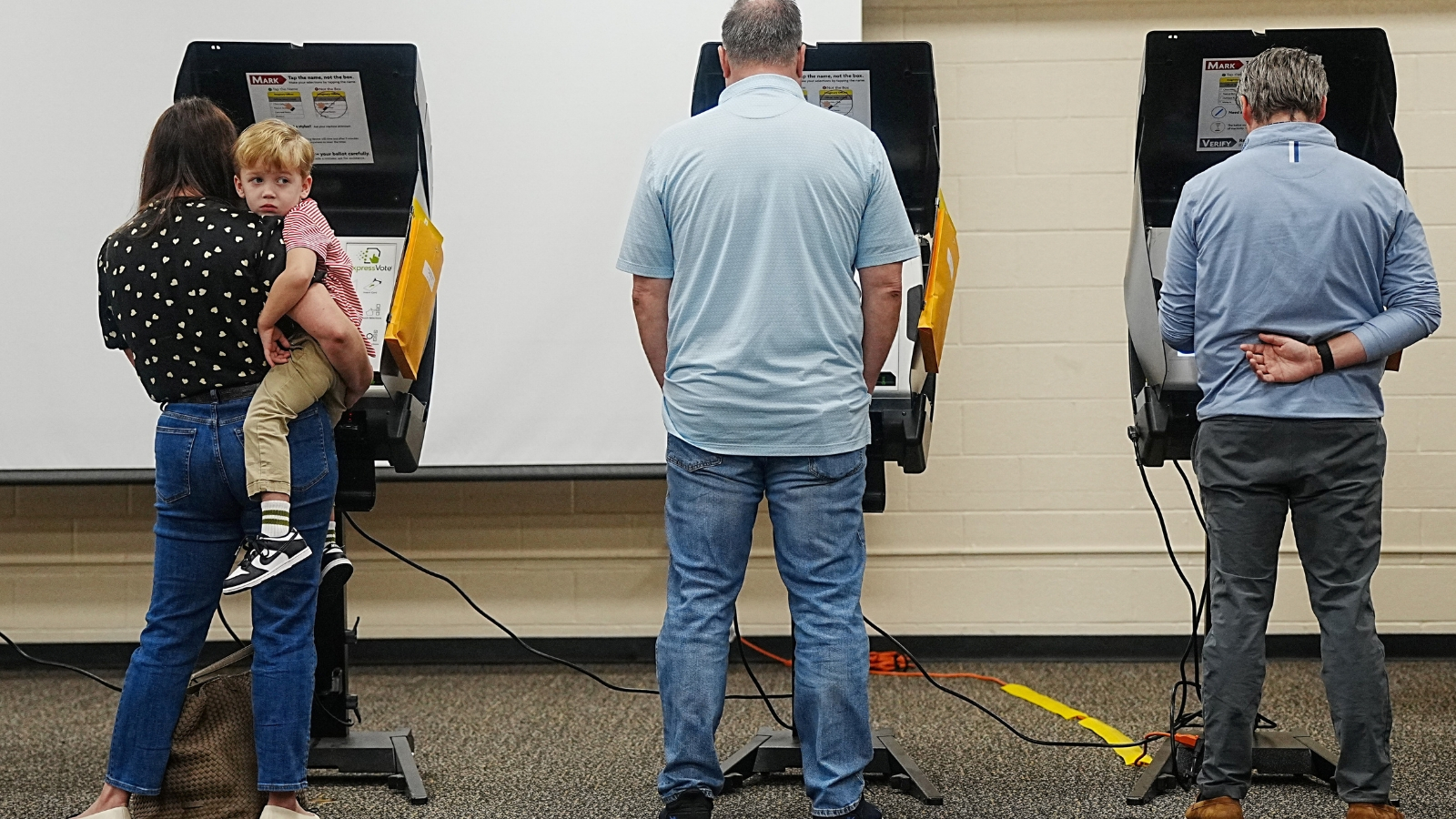
The fluorescent lights in the gymnasium of Jefferson Elementary buzz with a low, persistent hum that settles right behind your eyes. It is 6:45 AM on a Tuesday in November 2026. The smell of floor wax mingles with the sharp, bitter aroma of burnt drip coffee brought in by a poll worker named Arthur, whose hands shake slightly as he tapes a laminated arrow to the cinderblock wall. Outside, the pre-dawn chill of suburban Pennsylvania bites through wool coats. Inside, three folding tables sit draped in blue vinyl, waiting.
Nobody here is talking about cable news chyrons. Nobody is reciting the historical averages of off-year elections or debating the strategic brilliance of campaign managers in Washington.
They are looking at their shoes. They are checking the time on cracked phone screens before the morning shift starts at the logistics warehouse down the highway. And when they step behind the gray plastic privacy screens, they are carrying a weight that the political pundits rarely bother to measure.
Two years into Donald Trump’s second term in the White House, the American electorate has arrived at the midterms. The headlines tell you this is a referendum on a president, a high-stakes battle for control of the House of Representatives and the Senate, and a brutal test of whether a governing party can hold onto power when the initial adrenaline of inauguration has faded into the grind of governance.
Those headlines are accurate. They are also completely missing the point.
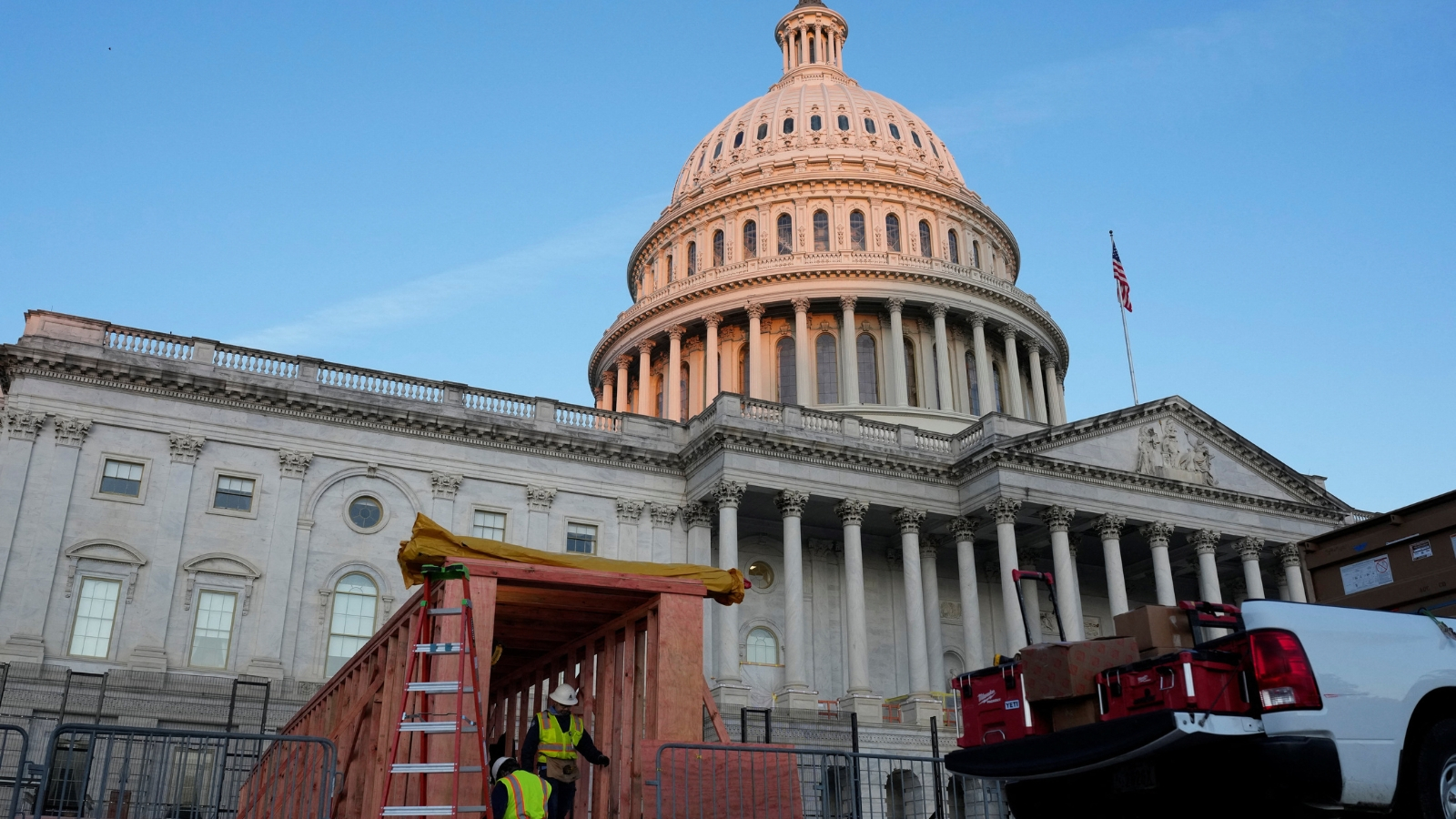
To understand what actually happens when millions of Americans cast their ballots in the 2026 midterm elections, you have to leave the marble corridors of Capitol Hill and sit down at a kitchen table in a place like Luzerne County, or Maricopa, or Macomb. You have to look at the ledger of daily life. Because a midterm election is never really about the person sitting in the Oval Office. It is a mirror held up to the exhaustion, the hope, and the quiet desperation of the people living under the policies that office produces.
The Architecture of a Second-Term Reckoning
History is a stubborn creature, and in American politics, it has a favorite party trick. Almost without exception, the party occupying the White House gets hammered in the midterms. Since the Civil War, the president’s party has lost seats in the House of Representatives in nearly every single midterm cycle—an average loss of roughly twenty-eight seats. Only a handful of exceptions exist, usually triggered by extraordinary external shocks like the aftermath of the September 11 attacks in 2002 or the economic boom and impeachment backlash of 1998.
Think of a presidential administration as a massive cargo ship leaving port. During the first two years, the crew is loud, the engines are roaring, and the wake is dramatic. Executive orders fly off the desk. Tariffs are raised, regulations are gutted, judicial appointments are pushed through the Senate at breakneck speed, and tax policies are rewritten. The ship turns hard.
By the time November of the second year rolls around, the wake reaches the shoreline. And the people standing on the beach—the ones whose businesses, grocery bills, and healthcare premiums are suddenly swamped by the waves—get to decide whether they want to hand the captain a new crew or take away his rudder.
In 2026, the stakes of that rudder are unusually stark. With Republicans entering the cycle defending narrow margins in Congress, the entire legislative engine of the Trump administration hangs by a thread. All 435 seats in the House are up for grabs, alongside 35 seats in the Senate. A shift of just a few thousand votes across a dozen swing districts from California’s Central Valley to the suburbs of Philadelphia could flip the gavel from Republican hands back to the Democrats.
If the Republicans hold both chambers, the final two years of the presidency become an unobstructed runway for cementing a generational conservative agenda—more conservative judges on federal benches, deeper cuts to federal agencies, and an aggressive continuation of economic nationalism. If the Democrats recapture the House, the runway vanishes overnight. Legislation grinds to a halt. Subpoenas replace floor votes. Oversight committees spin up investigations into every corner of the executive branch, turning the final twenty-four months of the term into a trench war of attrition.
We know the mechanics. We know the math. Yet knowing how an engine works does not tell you where the car is going, or how it feels to ride in the backseat without a seatbelt.
The Ledger of Daily Life
Consider a hypothetical family—let us call them the Millers—living in a split-level ranch house outside Grand Rapids, Michigan. This is a thought experiment, an illustrative composite built from the economic realities defining the 2026 electorate, rather than a profile of real individuals.
Elena Miller works as a scheduling coordinator for a regional hospital network. Her husband, Marcus, manages inventory for a mid-sized auto parts supplier. In November 2024, Marcus voted for Donald Trump. He did it because the cost of groceries, auto insurance, and borrowing money had made him feel like he was running up a down escalator. He wanted disruption. He wanted someone who promised to break the bureaucratic paralysis in Washington, bring manufacturing back to the Midwest, and put more money in his pocket. Elena, skeptical of the rhetoric and deeply worried about healthcare access and the tone of national politics, voted for the Democratic ticket.
Now it is November 2026. The Millers sit at their oak kitchen table on a Sunday evening, a stack of envelopes fanned out between a half-empty carton of takeout and a laptop glowing with an open spreadsheet.
Marcus got a modest bump in his take-home pay after the administration’s tax provisions took effect, and he likes the administration’s tough posture on border enforcement and energy production. When he fills up his truck, gas is manageable. For him, the promises made on the campaign trail feel tangible.
Elena sees a different ledger. The aggressive tariffs implemented over the past eighteen months have rippled through Marcus’s own supply chain, raising component costs and forcing his company to freeze holiday bonuses. Meanwhile, the cost of their family’s health insurance deductible crept up again in October, and local school board battles over curriculum and funding have turned their quiet neighborhood Facebook group into a daily bloodsport.
When Elena and Marcus drive to their local precinct to vote in the 2026 midterms, they are not voting on abstract political theory. They are voting on that spreadsheet.
This is the invisible reality of the midterm electorate. Voters rarely experience policy the way lawmakers write it. Lawmakers write in billions of dollars, percentage points of GDP, and statutory amendments. Voters experience policy in the price of a carton of eggs, the wait time for a pediatric specialist, the anxiety of watching a 401(k) swing wildly on a Tuesday afternoon when a trade war escalates, or the relief of seeing a long-stalled local infrastructure project finally break ground.
The Anatomy of the Swing District
To grasp why the 2026 map is so volatile, you have to understand how dramatically the political geography of the United States has sorted itself. Out of 435 congressional districts, fewer than forty are genuinely competitive. The rest have been carved by demography, self-sorting, and aggressive partisan redistricting into impenetrable fortresses where the real election happens in the spring primary, not the November general.
That leaves the fate of the United States Congress—and the trajectory of the presidency—in the hands of roughly two dozen suburban and exurban battlegrounds. Places like Orange County in California, the collar counties around Chicago, the sprawling suburbs of Atlanta, and the rust-belt corridors of Wisconsin and Pennsylvania.
In these districts, the electorate is a volatile cocktail. You have college-educated suburbanites who recoil at the combative style of the White House and prioritize institutional norms, reproductive rights, and climate policy. Living three miles away from them, you have working-class families without college degrees who feel abandoned by coastal elites, squeezed by globalized trade, and fiercely protective of traditional values and economic nationalism.
I remember standing outside a polling place in a swing district during a previous off-year cycle, watching the rain soak through the cardboard signs staked into the mud. A woman in nurse’s scrubs walked out of the building, pulled her hood up against the drizzle, and paused next to a volunteer handing out sample ballots. She looked exhausted. "I don't love either of them," she said, her voice barely audible over the traffic splashing past on the four-lane road. "I just want somebody to stop yelling and fix the roads."
That sentiment—that bone-deep fatigue with permanent political warfare—is the sleeper variable of 2026.
In a presidential year, turnout is a flood. Casual voters, swept up by the spectacle, the rallies, and the sheer cultural gravity of the race for the White House, show up in massive numbers. In a midterm year, the tide goes out. Turnout routinely drops by fifteen to twenty percentage points. Who stays home matters just as much as who shows up.
For Republicans, the existential challenge of 2026 is what strategists call the "low-propensity trap." Donald Trump has a unique, almost magnetic ability to pull disengaged working-class voters to the polls when his own name is on the ballot. When his name is not on the ballot, those voters historically drift away, leaving the party reliant on traditional, higher-propensity conservatives. Can the president transfer his personal political gravity to down-ballot House and Senate candidates who lack his instinctive command of the spotlight?
For Democrats, the mirror-image trap waits. Out of power in the White House, the party relies heavily on anger and urgency to fuel turnout among its base—particularly younger voters, Black and Latino communities in urban centers, and suburban women. Anger is a potent fuel, but it burns hot and fast. Two years into a presidency, outrage can curdle into apathy if voters feel their own party lacks a coherent, forward-looking vision beyond simply saying no to the president.
What Actually Changes on Wednesday Morning
There is a peculiar silence that descends on Washington the Wednesday morning after a midterm election. The confetti is swept up. The concession speeches have been delivered in hotel ballrooms to crowds holding plastic cups of warm beer. The television panels pivot immediately to the next presidential race, because the American political media machine cannot tolerate a vacuum for longer than forty-eight hours.
Yet beneath the noise, the tectonic plates of governance have shifted in ways that will dictate the lives of ordinary citizens for years.
Let us trace the two futures waiting behind the curtain of the 2026 count.
Scenario A: The Unified Mandate. Suppose Republicans defy the historical midterm curse, hold their Senate majority, and retain control of the House of Representatives. For the White House, this is an intoxicating signal. It tells the president that the country has absorbed the shock of his first two years and is asking for more.
In practical terms, unified control means the legislative machinery keeps humming. Temporary tax cuts can be made permanent, locking in corporate and individual rates that will shape federal deficits and investment strategies for a decade. The administration gains unchecked latitude to reshape the federal workforce, dismantle regulatory frameworks governing everything from banking to environmental emissions, and confirm conservative judges to appellate courts—judges who serve for life and whose rulings on labor law, voting rights, and executive power will outlast every politician currently serving in Washington. Abroad, allies and adversaries alike read the result as proof that America’s sharp turn toward unilateralism and transactional diplomacy is not a temporary detour, but the new permanent highway.
Scenario B: Divided Government and the Veto Pen. Now flip the script. Suppose the historical pattern holds, the suburban swing districts break toward the opposition, and Democrats win back the House—or even pull off an upset in the Senate.
By noon on January 3, 2027, when the new Congress is sworn in, the presidency transforms overnight. Without the House, the president’s legislative agenda is effectively dead on arrival. No major tax bills, no sweeping healthcare overhauls, no partisan budget reconciliations can reach his desk without Democratic signatures. Governance retreats to the executive branch. The president must govern through executive orders, regulatory tweaks, and foreign policy—tools that are powerful, fast, and entirely reversible by the next occupant of the Oval Office.
Meanwhile, the power of the congressional gavel shifts from passing laws to asking questions. House committees gain the authority to issue subpoenas, compel testimony from cabinet officials, demand internal documents from federal agencies, and hold televised hearings that dominate the news cycle. Every misstep, every controversial contract, every contentious policy rollout becomes the subject of formal investigation. If Democrats also capture the Senate, the administration’s pipeline of judicial and cabinet confirmations slows to a crawl, forcing the White House to negotiate every appointment with an opposition majority leader.
For the average citizen, divided government feels like a stalemate—and often, it is. The debt ceiling becomes a recurring game of chicken. Government shutdowns loom every autumn like bad weather. Yet for millions of voters who intentionally split their tickets, gridlock is not a bug in the American constitutional system. It is a feature. It is the emergency brake pulled by a public that does not fully trust either party with the keys to the entire house.
The Illusion of Control and the Reality of Choice
It is easy, standing in line at a dreary elementary school gymnasium at seven in the morning, to feel small. One ballot slipped into an optical scanner looks absurdly fragile against the colossal machinery of modern American politics—the billions of dollars in dark money saturating airwaves with apocalyptic attack ads, the algorithmic echo chambers designed to keep you furious, the gerrymandered maps drawn in back rooms to predetermine outcomes before a single vote is cast.
I confess that there are moments when the whole enterprise feels like theater, a ritual we perform to convince ourselves we are in charge while vast, impersonal forces—global capital, technological disruption, demographic tides—actually steer the ship. Watching the breathless coverage on election night, where anchors treat human lives like colored squares on a touch-screen map, it is hard not to feel a creeping cynicism.
Then I think back to Arthur, the poll worker taping arrows to the cinderblock wall at 6:45 AM. He is seventy-four years old, retired from a career repairing municipal water mains, and he will sit in a folding chair for fourteen hours today for minimum wage because he believes somebody has to make sure the machine works.
And I think of the margins that actually decide these races. In 2022 and 2024, multiple House races across the country were decided by fewer than a thousand votes—margins small enough to fit inside a single high school auditorium. When the margin is that thin, the giant, impersonal machine ceases to matter. What matters is whether three hundred people in a rainy precinct decided to stop by the school gym on their way home from picking up their kids at daycare.
The 2026 midterm elections are billed as a test of Donald Trump’s presidency, a referendum on his policies, his temperament, and his vision for the country. And they are. By tomorrow morning, the pundits will have constructed a neat, authoritative narrative explaining why the voters did what they did, reducing millions of individual moral and financial calculations into a single, tidy headline.
Do not let the headline fool you into thinking the story is simple.
Behind every tally mark in the final count is a human being standing alone behind a gray plastic curtain, weighing the price of groceries against the value of stability, balancing loyalty to a tribe against loyalty to a neighbor, trying to guess which lever will leave their children slightly better off four years from now. The politicians in Washington think they are the authors of this story. They aren't. They are just waiting to hear what the rest of the country decided to write.