It is 11:42 PM on a Tuesday in Columbus, Ohio, and the drive-thru lane is glowing like a runway.
Inside a battered silver sedan, a nurse named Elena—let’s call her Elena, though you have seen her a thousand times in the rearview mirror of your own midnight errands—is counting out crumpled bills for a Baconator and a chocolate Frosty. She has been on her feet for fourteen hours. She does not care about EBITDA margins. She does not track institutional ownership percentages, and she certainly does not spend her precious break time reading Form 8-K filings from the Securities and Exchange Commission.
Yet, in a glass-walled boardroom hundreds of miles away, a group of men in bespoke suits are deciding whether Elena’s late-night ritual belongs to her, to a billionaire activist investor, or to a corporate defense mechanism straight out of a 1980s Wall Street thriller.
Stop. Look closely at what just happened in the fast-food aisle.
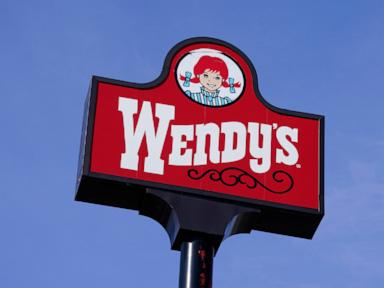
On the surface, the news sounds like standard financial white noise. Trian Fund Management, the powerhouse activist hedge fund led by Nelson Peltz, made a move to potentially buy out The Wendy’s Company, only for the burger chain’s board of directors to slam the door shut and swallow a "poison pill."
Most people read that headline, shrug, and keep scrolling. Boardroom drama feels distant, sterile, and entirely disconnected from the grease-stained paper bag sitting on your passenger seat.
That indifference is a mistake.
When an activist investor circles a legacy brand like Wendy’s, and the company responds by activating one of corporate America’s most aggressive defensive weapons, the fallout does not stay trapped inside spreadsheets. It ripples outward. It alters the price of your lunch, the wages of the teenager working the fryer, the survival of local franchise owners, and the very soul of an American icon that built its reputation on never cutting corners.
The Billionaire at the Drive-Thru Window
To understand why Wendy’s just drew a line in the sand, you have to understand the man standing on the other side of it.
Nelson Peltz is not a villain out of central casting, nor is he a passive bystander. He is a legendary activist investor—a financial tactician who buys massive stakes in struggling or undervalued companies and forces them to change how they operate. Think of an activist investor like a high-priced house flipper who walks into a beloved, slightly dated family home. The family sees memories in the scuffed hardwood floors and the quirks of the old kitchen; the flipper sees wasted square footage, inefficient plumbing, and untapped resale value.
Peltz and Trian Fund Management are no strangers to Wendy’s. In fact, Trian has been one of the company’s largest shareholders for years, holding roughly 16% of the stock, with Peltz himself serving as the non-executive chairman of the board. They helped orchestrate the 2008 merger between Wendy’s and Arby’s—a corporate marriage that eventually ended in an amicable divorce—and guided the chain through years of menu reinventions and store remodels.
Then came the shift.
Trian signaled that it was exploring a potential takeover bid to acquire the rest of Wendy’s, taking the publicly traded company private. On paper, the logic looked clean. Fast-food chains were battling brutal inflation, skyrocketing beef and labor costs, and cash-strapped consumers who were suddenly balking at $12 combo meals. Taking a company private removes the exhausting pressure of quarterly Wall Street earnings reports. You can overhaul operations in the dark without panicking public shareholders every ninety days.
Wendy’s board of directors, however, looked at the offer and saw something else entirely. They saw a price tag that undervalued the brand’s long-term future, and a creeping threat of a hostile takeover where one powerful player could accumulate enough shares on the open market to seize control without paying a fair premium to everyone else.
So, they reached into the medicine cabinet and pulled out the poison pill.
Anatomy of a Corporate Poison Pill
The phrase itself sounds like espionage. In reality, a "poison pill"—officially known as a shareholder rights plan—is a defensive legal maneuver invented in 1982 by famed corporate lawyer Martin Lipton to stop predatory raiders from swallowing companies whole.
Here is how it works, stripped of the suffocating legal jargon.
Imagine you own a neighborhood bakery. One morning, a wealthy developer starts quietly buying up partial ownership shares from your cousins and neighbors until he owns 19% of your shop. Once he hits 20%, he plans to storm into the kitchen, fire your head baker, replace your butter with cheap margarine, and sell the building for scrap.
To stop him, you enact a rule: the exact second anyone crosses that 20% threshold without the board’s blessing, every other owner in the bakery gets the automatic right to buy brand-new shares at a massive discount—say, half price.
Suddenly, the bakery is flooded with new shares. The developer’s 20% stake is instantly diluted down to a fraction of what it was, making a hostile takeover prohibitively expensive and mathematically miserable. It does not kill the company; it makes the company impossible to digest for an uninvited buyer.
Wendy’s set its tripwire at 15%—or, for investors like Trian who already held more than that, any attempt to accumulate even a tiny fraction more without board approval. By adopting this shareholder rights plan, the board sent an unmistakable message across the table to Peltz: You do not get to buy this company on your terms, and you cannot creep through the back door.
I remember watching a similar standoff unfold years ago at a mid-sized manufacturing firm where my uncle worked as a floor supervisor. For months, rumors of an activist buyout hung over the breakroom like stale cigarette smoke. Nobody knew if the new owners would invest in safer machinery or gut the pension plan to boost short-term cash flow. When the board finally blocked the bid, the relief on the factory floor was palpable, even though the uncertainty never truly vanished.
That is the human reality behind corporate governance. Wall Street treats companies like poker chips, forgetting that every chip represents thousands of real livelihoods.
The Invisible Stakes Behind the Counter
Why should anyone outside of Manhattan’s financial district care whether Wendy’s stays public or goes private under an activist fund?
Because private buyouts and activist restructurings follow a very specific playbook, and someone always pays the bill.
When a firm takes a restaurant chain private—especially in an era of elevated interest rates—it rarely pays entirely with cash sitting in a vault. It uses leveraged buyouts, loading billions of dollars of debt onto the company’s own balance sheet. Suddenly, the burger chain isn't just selling square hamburgers and spicy chicken nuggets; it is servicing a massive, suffocating mortgage.
To pay off that debt, management has to squeeze every nickel out of the system. Look at what happens next:
- The Franchisee Squeeze: Over 90% of Wendy’s restaurants are owned and operated by independent franchisees—small and mid-sized business owners who mortgaged their homes to open three or four stores in towns like Toledo, Boise, or Macon. Under intense financial pressure from corporate headquarters, franchisees are often forced to pay higher royalty fees, fund mandatory equipment upgrades out of pocket, or slash local promotions that actually bring neighbors through the door.
- The Quality Erosion: Dave Thomas founded Wendy’s in 1969 with a deceptively simple gimmick: fresh, never-frozen beef shaped into squares so the meat hung over the edges of the bun, proving you weren't getting cheated. When private equity or debt-heavy owners take the wheel, "fresh" becomes an expensive luxury. Portions shrink imperceptibly. Suppliers get swapped for cheaper alternatives. The customer might not notice on day one, but by month eighteen, the burger tastes like cardboard and the dining room carpet is peeling.
- The Labor Crunch: Fast food already runs on razor-thin staffing. When corporate debt demands higher margins, the easiest line item to cut is labor hours. That means one overworked cashier running the front counter, the drive-thru headset, and the mobile pickup shelf simultaneously while customers grow furious over a twelve-minute wait for fries.
Wendy’s board knew this. Rejecting the buyout wasn't merely an act of pride; it was an assertion that the company’s existing turnaround strategy—investing in breakfast menus, digital ordering, and international expansion—needed room to breathe without being dismantled for quick financial engineering.
The Danger of the Shield
Still, it would be naive to paint the board of directors as flawless knights in shining armor.
The poison pill is a double-edged sword, and history proves it can be abused just as easily as it can protect. When a board adopts a shareholder rights plan, it insulates itself from outside pressure. Sometimes, that protection shields a visionary management team building long-term value. Other times, it entrenches executives who are failing at their jobs, allowing them to collect multimillion-dollar pay packages while the stock price stagnates and competitors eat their lunch.
Look at the broader fast-food battlefield. McDonald’s has spent years refining its digital loyalty machine. Chick-fil-A dominates customer satisfaction with ruthless operational consistency. Meanwhile, Wendy’s has fought tooth and nail to carve out its identity as the quality alternative, famously roasting rivals on social media while quietly trying to prove that a late-night drive-thru chain can command premium prices.
If Wendy’s management rejects a buyout bid and hides behind a poison pill, the burden of proof shifts squarely onto their shoulders. They can no longer blame market headwinds or activist distractions. They have to deliver.
Ordinary shareholders—including teachers’ pension funds, retirement accounts, and everyday retail investors who bought a few shares because they liked the brand—are caught right in the middle. A buyout bid usually offers an immediate cash premium, a guaranteed payday right now. Rejecting it asks investors to trust that the company will be worth significantly more two or three years down the road.
Trust, in the restaurant business, is harder to earn than a Michelin star.
What Happens When the Smoke Clears
Walk back out to that glowing drive-thru lane in Columbus at 11:42 PM.
Elena pulls up to the second window. A teenager with tired eyes hands her a warm brown bag and a frosty cup sweating condensation onto his wrist. Neither of them knows what a shareholder rights plan is. Neither of them read the press releases dissecting Trian Fund Management’s valuation models or the board’s fiduciary duty arguments.
Yet both of them are living inside the outcome of that fight.
Because the board stood its ground, Wendy’s remains answerable to the public market—and, by extension, to the brutal, immediate verdict of everyday customers. If the food slips, the stock price drops in real time. If the breakfast menu flops, analysts dissect it on live television the very next morning. There is nowhere to hide behind closed private-equity doors.
At the same time, the clock is ticking loudly inside Wendy’s Dublin, Ohio headquarters. You only swallow a poison pill when you believe you are strong enough to survive the antidote. Management has bought itself time, autonomy, and control over its own destiny, but Wall Street has a notoriously short memory and an unforgiving appetite.
Elena takes a sip of her Frosty, puts her sedan into drive, and merges back onto the quiet highway, completely unaware that a billion-dollar tug-of-war just played out over the exact square burger sitting beside her on the seat.