Silence.
That is what fills a diplomatic reception hall when a single word is left off a printed card, or when an invitation arrives in an inbox instead of a sealed envelope with an official crest. Meanwhile, you can read other stories here: The Spatial Dynamics of Coastal Search Operations Following Fatal Shark Encounters.
This year, with China hosting the Asia-Pacific Economic Cooperation summit in Shenzhen, the question of how Beijing will receive Taiwan's most senior representative is rarely framed as a human story. Analysts treat it like a chess puzzle or a legal footnote. Yet behind every seating chart, security detail, and press credential lies something far more fragile: dignity, fear, and the quiet exhaustion of people who spend their lives trying to keep a bridge from collapsing while standing on a fault line.
To see what is really happening, let us use a hypothetical scenario—not to invent facts, but to feel the weight of the room. Picture Lin, a mid-level protocol officer who has worked cross-strait and multilateral events for fifteen years. She knows the smell of hot floor wax in convention centers, the hum of simultaneous-interpretation booths, and the exact millimeter between "cordial" and "cold" in a handshake. Lin does not set grand strategy. She checks name badges, verifies motorcade routes, and watches how cameras angle away—or linger—when a delegation enters a room. When protocol shifts even an inch, Lin is the one whose stomach tightens first. To see the full picture, check out the detailed analysis by The New York Times.
Why a Seating Chart Feels Like a Warning Shot
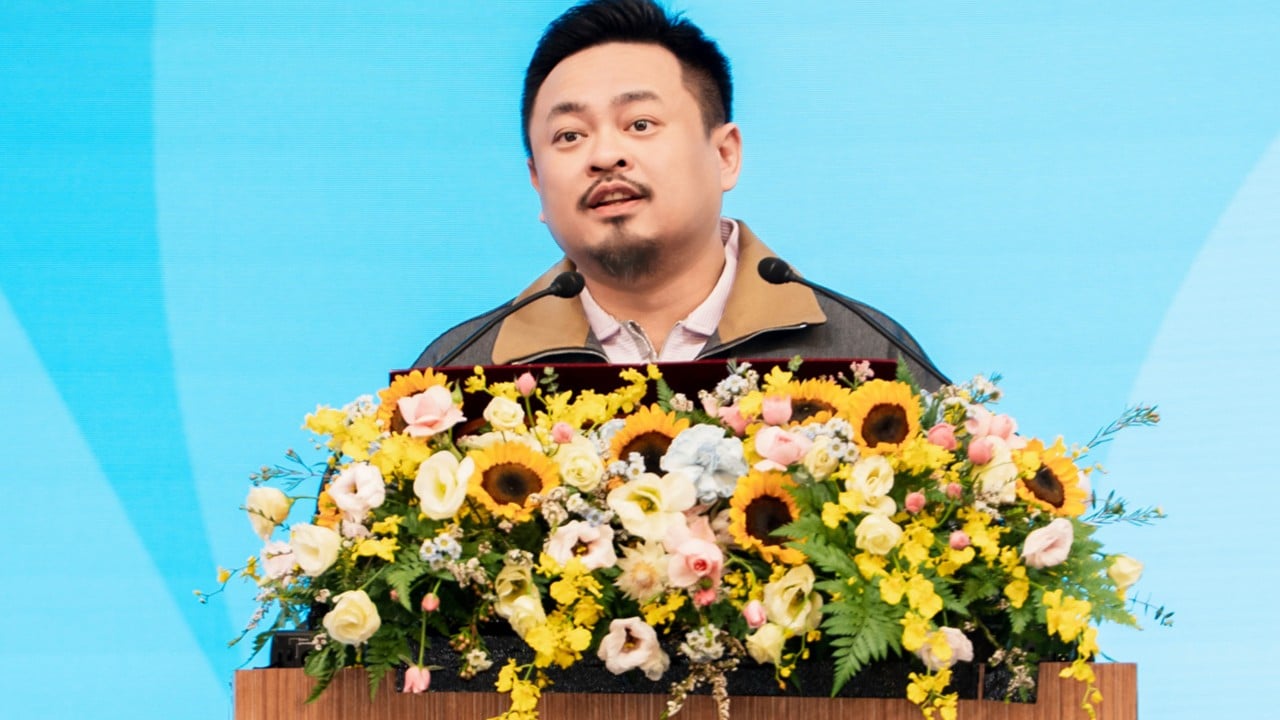
For more than three decades, APEC has operated on a carefully stitched compromise. Since 1991, Taiwan has participated as a full member under the designation "Chinese Taipei," while its sitting president has not attended the Economic Leaders' Meeting due to Beijing's objections, sending a high-profile envoy instead. This year, President Lai Ching-te named Acer Group Honorary Chairman Stan Shih as Taiwan's leader's representative to the summit—a figure rooted in technology and industry, someone who previously represented Taiwan at APEC back in 2007 and understands how supply chains bind economies together even when politics pulls them apart.
Consider what happens next: before the summit even convenes, friction shows up in the paperwork. Taipei has raised alarms that Beijing's invitation arrived via email rather than a customary formal invitation, and without using the established "Chinese Taipei" designation. Taiwanese officials have pressed Beijing to honor written assurances and uphold the consensus that all member economies participate on an equal, dignified, and secure footing. Meanwhile, Chinese spokespeople have pointed to established arrangements and reiterated their "one China" framing.
If you have never sat in a room where every word is a tripwire, this argument can sound like hair-splitting. I have watched enough diplomatic standoffs to know better. In high-stakes politics, small omissions are rarely accidents. They are tests. A missing title or an unusual delivery channel tests whether the other side will swallow the slight to stay in the room, or push back and risk being blamed for the disruption.
The Invisible Stakes Inside Every Handshake
Think of APEC protocol like a tightrope stretched over a canyon. The rope is made of years of precedent, mutual tolerance of ambiguity, and practical economic necessity. Every time a host alters the rules of arrival, escort, or naming, the rope sways. You do not need cannons firing to feel the tension; you only need to watch who gets left standing in the hallway while another delegation walks straight into the plenary hall.
Earlier in the year, travel for official APEC meetings inside mainland China already carried heavy scrutiny—from Labor Minister Hung Sun-han attending a ministerial gathering in Nanjing in September to ongoing debates over safety, guarantees, and what precedents were being set on the road to Shenzhen. Now, with the leaders' gathering in Shenzhen—and with major-power dynamics like a meeting between U.S. President Donald Trump and Chinese President Xi Jinping drawing global attention—Taiwan's delegation faces a delicate balancing act. Taipei wants its voice heard on artificial intelligence, semiconductors, and regional stability, without being treated as a subordinate or bargained over behind closed doors.
A host holds two levers at once: hospitality and leverage.
Beijing can roll out smooth logistics, orderly security, and polite formalities to project calm competence as a global host. Or it can tighten the screws—through strict movement limits, tightly choreographed encounters, or sharp rhetoric—to remind everyone in the hall who controls the venue and how it defines Taiwan's status.
Let's be honest: this territory is confusing, even for people who follow it every day. I sometimes catch myself wondering how a summit built around trade, digital innovation, and AI supply chains can turn a badge or a greeting into an existential drama. Yet that is the paradox of the Taiwan Strait. Chips, servers, and shipping lanes run on precision and trust, while sovereignty and identity run on memory and pride.
What Ordinary People Lose When Diplomacy Turns Frosty
Return for a moment to our hypothetical officer, Lin. Imagine her at midnight in a Shenzhen hotel corridor, checking a schedule that has changed three times in four hours. A phone buzzes. A junior colleague asks whether Taiwan's envoy will use the main entrance or a side corridor, whether photographers will be allowed near a brief exchange, or whether an insistence on equal treatment will spark a public row.
Lin feels the weight of two different worlds. Back in Taipei, families watch the news wondering whether cross-strait tensions are edging closer to daily life, while engineers in Hsinchu and Tainan keep global tech hardware humming. Across the water, diplomats and citizens in China view the issue through a century of historical grievance and national ambition. When reception at a summit becomes stiff or combative, nobody wins peace of mind.
History shows a clear behavioral pattern in moments like this. When hosts press too hard on political preconditions in multilateral economic forums, other economies start watching closely. Not always with loud speeches—governments are cautious—but with quiet calculation. Partners ask whether rules agreed upon in the past still hold when the host changes. If practical cooperation becomes hostage to every symbolic test, the room grows colder for everyone, not just the delegation at the center of the dispute.
Conversely, if Beijing receives Taiwan's representative with basic courtesy, predictable security, and respect for established APEC norms, it does not erase deep political disagreements. It simply proves that a tense room can still hold basic human decency and practical dialogue.
Reading the Room Beyond the Headlines
When coverage of Shenzhen arrives, do not look only for dramatic walkouts or grand breakthroughs. Look at the smaller details that tell the real story:
- How the envoy is greeted and seated: Whether the reception reflects established APEC practice or introduces new friction.
- What gets talked about in the open: Whether discussions stay anchored in practical issues like AI, supply chains, and regional resilience, or get drowned out by political lecturing.
- How Taipei responds to pressure: Whether Taiwan's delegation holds firm on dignity and equal footing while keeping channels open with regional partners.
None of these details are trivial. In diplomacy, tone is often the truest forecast of the weather ahead. A cold greeting does not automatically mean a storm, and a polite nod does not mean spring has arrived, yet both reveal how much room exists to breathe.
Picture the conference doors swinging open in Shenzhen, cameras clicking, translators adjusting their headsets, and a single nameplate resting on a polished table—quiet, small, and carrying the weight of millions of lives.